This page contains affiliate links. If you purchase through them we may earn a small commission at no extra cost to you. Learn more
UK Outdoor Law and Safety — Your Complete Practical Guide
Legal disclaimer
This is general information, not legal advice. Laws change — verify current legislation before acting on anything you read here.
Quick Summary
- UK outdoor law is a patchwork — rules differ between England, Wales, Scotland, and Northern Ireland
- Most things people worry about ([wild camping](/guides/wild-camping), carrying a knife, foraging) are legal in specific circumstances
- Ignorance of the law isn't a defence, but the rules are actually pretty reasonable once you know them
Why You Need to Know This
Here's the thing — most people who spend time outdoors in the UK are unknowingly breaking at least one law. Not because they're reckless, but because nobody ever told them the rules. And honestly, the rules aren't always obvious.
Can you carry a knife while hiking? Sometimes. Can you camp wherever you like? Depends where you are. Can you pick those wild blackberries? Yes. Can you dig up that interesting-looking plant? Absolutely not.
This guide gives you the overview. We've broken UK outdoor law into the topics that actually matter to people who spend time in the countryside, on the hills, or just pottering around local green spaces. Each topic has its own detailed guide linked below.
The Big Topics
Knife Law
Probably the most misunderstood area of UK outdoor law. The short version: you can carry a non-locking folding blade under 3 inches (7.62 cm) without any reason at all. Anything beyond that — including lock knives, fixed blades, and multitools with locking mechanisms — requires a "reasonable excuse."
Going hiking with a fixed-blade bushcraft knife? That's generally fine. Popping into Tesco with one on your belt? Not so much.
Read our full UK knife law guide for the complete breakdown.
Wild Camping
This is where it gets properly complicated, because the law is different depending on which part of the UK you're in.
England and Wales: Wild camping is technically trespass on most land. Trespass is a civil matter, not criminal, but landowners can ask you to leave. Our wild camping law guide for England and Wales explains the grey areas and how to camp responsibly.
Scotland: You have a legal right to wild camp under the Land Reform (Scotland) Act 2003 and the Scottish Outdoor Access Code. There are still responsibilities though. See our Scottish wild camping law guide.
Dartmoor: A special case that's been through the courts recently. Read our Dartmoor-specific guide for the latest position.
Right to Roam
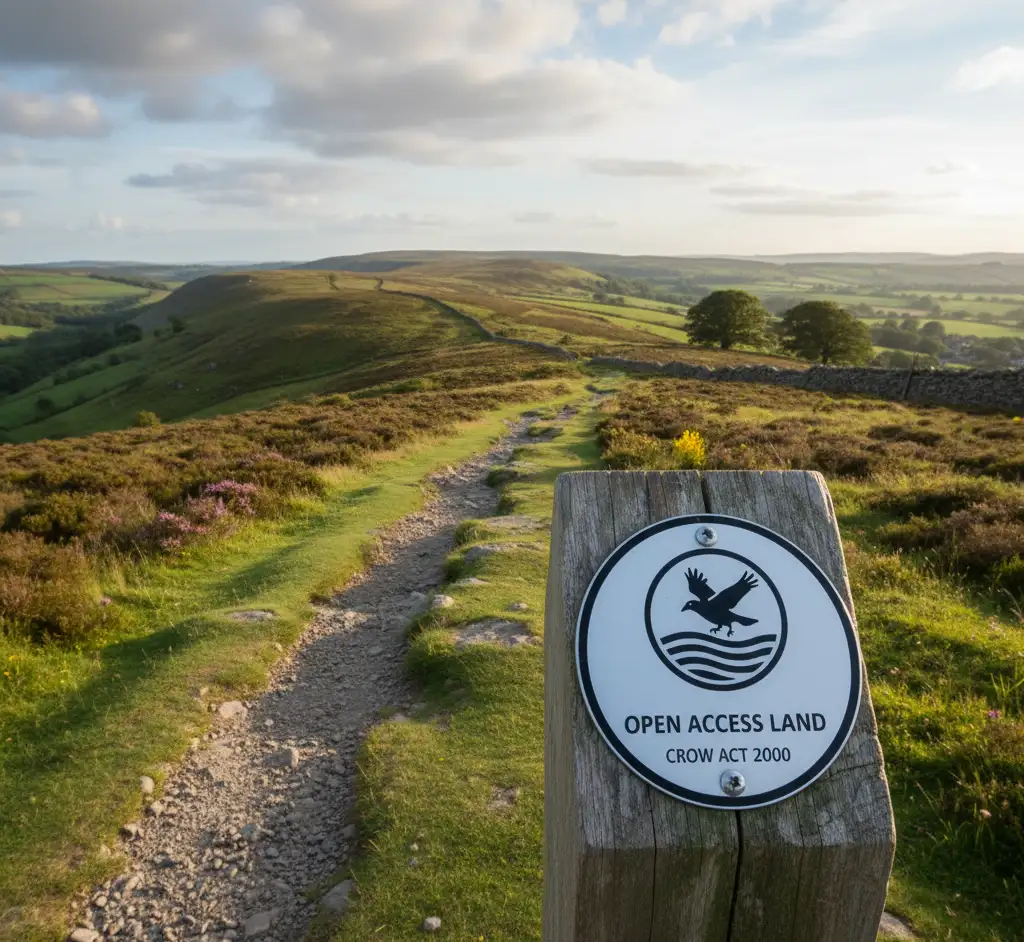
The Countryside and Rights of Way Act 2000 (CRoW Act) gives you the right to walk on mapped "access land" in England and Wales — but it doesn't let you do whatever you want. Cycling, camping, and horse riding aren't included unless specifically permitted.
Scotland's access rights are much broader. Our right to roam guide covers the lot.
Foraging
You can pick wild fruit, foliage, fungi, and flowers from plants growing wild — as long as the picking is for personal use and you're not on land where you're trespassing. What you absolutely cannot do is uproot any wild plant without the landowner's permission. Certain protected species are off-limits entirely.
The key legislation is Section 4 of the Theft Act 1968 and the Wildlife and Countryside Act 1981. Our foraging law guide has the details.
Campfires
There's no blanket law banning campfires in the UK, but you'll almost always need the landowner's permission. On open access land under the CRoW Act, fires are restricted. National parks and forestry commission land have their own rules, and during dry spells, fire risk warnings can make any open fire a terrible idea.
Full details in our campfire law guide.
Drones
If you're flying a drone outdoors, you need to know the Civil Aviation Authority (CAA) rules. Anything 250g or over requires registration and an operator ID. National parks, nature reserves, and many beauty spots have additional restrictions or outright bans.
Our drone law guide covers registration, no-fly zones, and how to stay legal.
Trespass
Trespass in England and Wales is overwhelmingly a civil matter — you're not going to get arrested for walking across a field. But there are exceptions, and aggravated trespass is a criminal offence. Knowing the difference matters.
Read our trespass law guide for the full picture.
Liability and Insurance
Who's responsible if something goes wrong outdoors? What if you injure yourself on someone's land? What about mountain rescue costs? The answers might surprise you.
Our outdoor liability guide covers insurance, the Occupiers' Liability Acts, and what happens when things go sideways.
England, Wales, Scotland — Why It Matters
One of the biggest traps people fall into is assuming the law is the same across the UK. It isn't. Scotland has its own legal system and significantly more progressive access legislation. England and Wales share most laws but have some regional differences. Northern Ireland has its own rules again.
Throughout our guides, we're clear about which jurisdiction we're covering. If you're planning a trip that crosses borders — say, walking from England into Scotland — the rules literally change when you cross the line.
Common Myths
"You can't carry any knife outdoors." Wrong. You can carry a non-locking folding knife with a blade under 3 inches without any specific reason.
"Wild camping is illegal everywhere in England." Not quite. It's trespass, but trespass is civil, not criminal. And some areas like Dartmoor have specific provisions.
"Right to roam means you can go anywhere." Nope. It applies to mapped access land and has clear limitations on what activities are covered.
"Mountain rescue will charge you." They won't. Mountain rescue in the UK is a charity-funded volunteer service and they don't charge for callouts.
"You need a licence to forage." Not for personal picking of wild fruit and fungi. But commercial foraging and uprooting plants are different matters.
Stay Legal, Stay Safe
The outdoor laws in the UK exist for good reasons — protecting the environment, respecting landowners, and keeping people safe. They're not there to stop you enjoying the countryside. Once you understand the basics, you'll find they're actually pretty reasonable.
Have a read through the specific guides linked above. Know the rules for where you're heading. And if in doubt, the golden rule of UK outdoor access is simple: leave no trace, cause no damage, and be respectful.
Bookmark this page as your starting point. We keep all our law guides updated when legislation or case law changes, so you'll always have the current position.
Getting Started: Essential Kit for Legal Outdoor Adventures
Whatever outdoor activity you're planning, a few key items help you stay legal, safe, and prepared. These are the basics that every outdoor enthusiast should carry.
Victorinox Classic SD
Amazon UK35mm
7 functions
22g
Non-locking
Pros
- +100% legal to carry anywhere in the UK — no excuses needed
- +Tiny and light enough for a keyring
- +Scissors, blade, tweezers, and more
Cons
- −Blade is too small for serious outdoor tasks
The one knife you can carry every day, everywhere, without worrying about UK knife law. Non-locking blade under 3 inches — it doesn't get more legal than this.
View dealAffiliate link — we may earn a small commission at no extra cost to you
Ordnance Survey Explorer Map (1:25,000)
Amazon UK1:25,000
Varies by sheet
Rights of way, access land, boundaries
Paper (Active versions are waterproof)
Pros
- +Shows access land, rights of way, and land boundaries
- +Essential for understanding where you can legally go
- +No battery required
Cons
- −Paper versions aren't waterproof
- −Need to buy the right sheet for your area
Understanding UK outdoor law starts with knowing where you are and what rights you have there. An OS map shows access land, rights of way, and boundaries — the legal landscape, literally.
View dealAffiliate link — we may earn a small commission at no extra cost to you
Lifesystems Trek First Aid Kit
Amazon UK36 pieces
350g
Waterproof roll-up
Blister care, wound closure, burns dressing
Pros
- +Covers the most common outdoor injuries
- +Lightweight and compact
- +Reduces your liability if you're leading a group
Cons
- −No medications included
Carrying a first aid kit isn't just good practice — if you're leading a group, not having one could be seen as negligent. This one covers the essentials without weighing you down.
View dealAffiliate link — we may earn a small commission at no extra cost to you
Ready to gear up?
Use our kit builder to get a complete packout list tailored to your trip type, terrain, and budget — with prices and buy links.
Related reading

UK Knife Law — What You Can Legally Carry Outdoors in Britain
A clear guide to UK knife law covering folding knives, fixed blades, lock knives, and what counts as a reasonable excuse for carrying one outdoors.
Wild Camping Law in England & Wales: What's Actually Legal
The legal position on wild camping in England and Wales — trespass, landowner permission, and how to camp responsibly without getting moved on.
Wild Camping Law in Scotland: Your Right to Roam and Camp
Scotland's wild camping rights under the Land Reform Act 2003 and Scottish Outdoor Access Code — what you can do, where you can camp, and your responsibilities.
Right to Roam in the UK: CRoW Act and Access Rights Explained
What the Countryside and Rights of Way Act 2000 actually lets you do, where access land is, and how Scottish access rights differ.