This page contains affiliate links. If you purchase through them we may earn a small commission at no extra cost to you. Learn more
UK Drone Law for Outdoor Enthusiasts — Rules and Regulations
Legal disclaimer
This is general information, not legal advice. Laws change — verify current legislation before acting on anything you read here.
Quick Summary
- Drones weighing 250g or more must be registered with the CAA and you need a flyer ID
- You cannot fly within 150 metres of residential, commercial, industrial, or recreational areas without specific permissions
- Many national parks and nature reserves restrict or ban drone flying — always check locally
The Basics
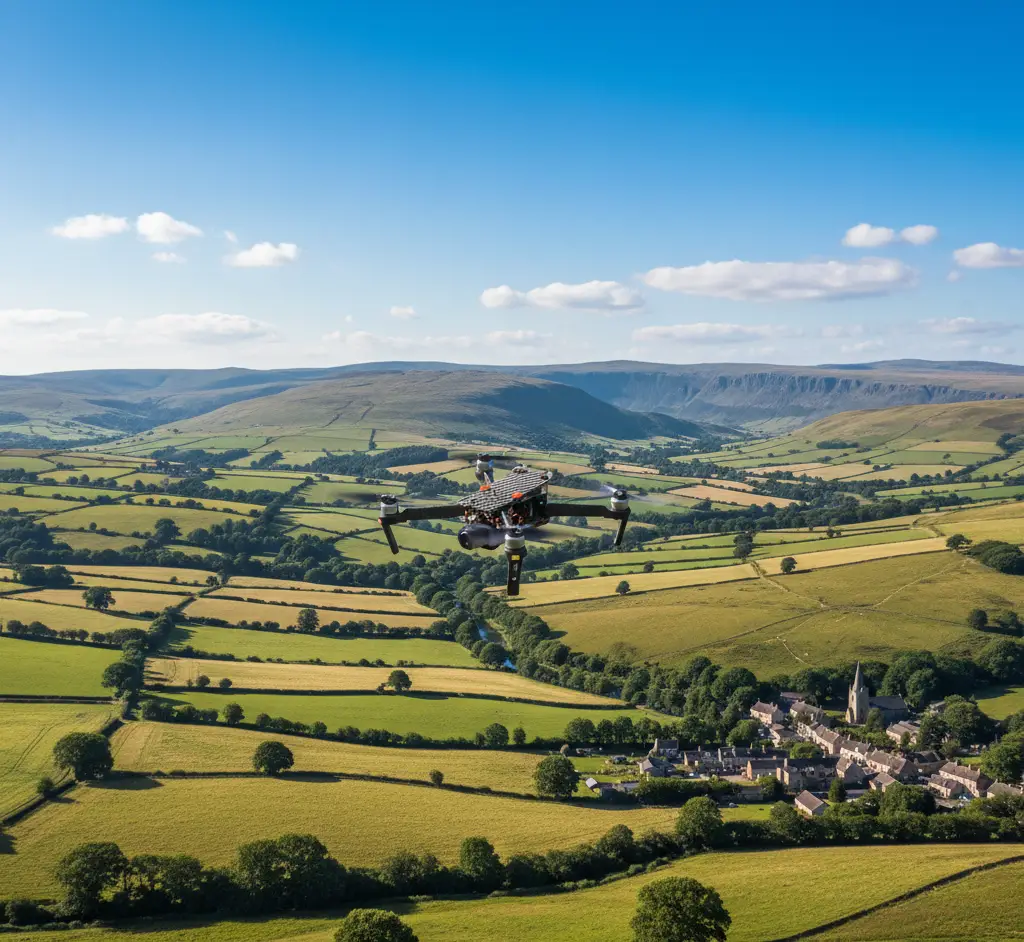
Taking a drone into the outdoors opens up incredible photography and video opportunities. But UK drone law is more detailed than many people realise, and getting it wrong can land you with a fine of up to £1,000 for failing to register — or much more for serious breaches.
The Civil Aviation Authority (CAA) regulates all drone (or "unmanned aircraft") activity in the UK. The rules apply whether you're flying in your back garden or on top of a mountain.
Registration and IDs
Who Needs to Register?
If you're flying a drone or model aircraft that weighs 250g or more (or any drone fitted with a camera, regardless of weight), you need:
- An Operator ID — this is registered to you and must be displayed on every drone you own. It costs £10.33 per year (as of 2026) and needs renewing annually.
- A Flyer ID — you get this by passing a free online theory test on the CAA website. It proves you understand the rules.
If you're only flying a drone under 250g without a camera (rare these days), you don't need to register. But the moment there's a camera on it — even a tiny one — registration applies.
The Theory Test
The Flyer ID test is free and taken online through the CAA's Register My Drone service. It covers airspace rules, safety, privacy, and basic drone law. It's multiple choice and most people pass first time. Your Flyer ID is valid for 5 years.
The Flying Rules
Open Category
Most recreational drone flying falls under the Open Category, which is split into subcategories (A1, A2, A3). For outdoor enthusiasts flying standard consumer drones, the key rules are:
For drones under 250g (sub-250g class, e.g., DJI Mini series):
- Can fly over uninvolved people (but not crowds)
- Must stay below 120 metres (400 feet) altitude
- Must keep the drone in visual line of sight at all times
- Must not fly within airport flight restriction zones
For drones 250g to 2kg:
- Must not fly within 50 metres of uninvolved people in A3 subcategory
- Must stay below 120 metres altitude
- Must keep the drone in visual line of sight
- Should fly 150 metres away from residential, commercial, industrial, or recreational areas when flying in A3
For drones over 2kg:
- Must fly at least 150 metres from residential, commercial, industrial, or recreational areas
- Must not fly within 150 metres of any uninvolved person
- More restrictive rules apply
The 120-metre (400 feet) altitude limit applies to ALL recreational drone flights. Going above this without specific CAA permission is a serious offence.
No-Fly Zones
Certain areas are permanently restricted:
- Airports and airfields: Flight restriction zones (FRZs) extend several kilometres around airports. Flying in an FRZ without permission is a criminal offence.
- Military areas: Restricted airspace over military bases and training areas.
- Central London: A permanent no-fly zone over much of central London.
- Prisons: Cannot fly within 400 metres of a prison.
- National infrastructure: Power stations, government buildings, etc.
Use the NATS Drone Assist app or the CAA's online drone map to check for restrictions before every flight.
National Parks and Nature Reserves
Here's where it gets particularly relevant for outdoor enthusiasts. National parks and nature reserves have their own drone policies, which often go beyond the CAA rules:
National Parks
Most national parks in England and Wales either discourage or restrict drone flying:
- Lake District: Drones are banned on National Trust land within the park (which is a large proportion of it). The National Park Authority strongly discourages drone use.
- Snowdonia (Eryri): No drone flying on NPA-managed land without permission.
- Peak District: Restricted on NPA land. Permission required.
- Yorkshire Dales, North York Moors, Brecon Beacons: Various restrictions apply.
- Dartmoor: Drones restricted on common land.
In Scotland, NatureScot and individual landowners may restrict drone use, particularly near sensitive wildlife sites.
Nature Reserves and SSSIs
- RSPB reserves: Drones are banned on all RSPB reserves.
- Natural England NNRs: Permission required, rarely granted.
- Wildlife Trust reserves: Generally banned without specific permission.
- SSSIs: While there's no automatic ban, disturbing protected species with a drone is an offence under the Wildlife and Countryside Act 1981.
As a general rule: if the land is managed for nature conservation, assume drones aren't welcome unless you've confirmed otherwise. The disturbance to wildlife — particularly ground-nesting birds and raptors — can be severe.
Privacy
Even in remote outdoor locations, privacy law applies. Under the UK GDPR and Data Protection Act 2018, capturing images or footage of identifiable individuals without their knowledge can raise privacy concerns.
Practically speaking, this is less of an issue on a remote hillside than in a busy park. But if your footage captures people at a wild swimming spot, a secluded campsite, or on private property, you need to be mindful.
Insurance
Recreational drone flying doesn't require insurance by law, but it's strongly recommended. If your drone causes damage to property or injury, you could be personally liable. Several providers offer recreational drone insurance from around £50-70 per year.
Practical Tips for Outdoor Drone Flying
- Check the CAA drone map before every flight. Every single time.
- Check the national park or reserve's drone policy. Phone or email if it's not clear online.
- Watch the weather. Wind, rain, and cold temperatures affect drone performance significantly. Mountain weather can change rapidly.
- Carry spare batteries. Cold weather hammers battery life. Keep spares in an inside pocket to stay warm.
- Land immediately if you see low-flying aircraft. Helicopters (including mountain rescue) can appear quickly in mountainous terrain.
- Don't chase wildlife. It's distressing for animals and potentially illegal if they're protected species.
- Be considerate of others. Drones are noisy. People come to the outdoors for peace and quiet. Think about whether your flight will impact other people's experience.
Penalties
- Flying without registration: Up to £1,000 fine
- Flying in a restricted zone: Up to £2,500 fine
- Endangering aircraft: Unlimited fine and up to 5 years in prison
- Breaching the Air Navigation Order: Various penalties depending on severity
Recommended Gear for Legal Outdoor Drone Flying
DJI Mini 4K
Amazon UK249g (sub-250g class)
4K/30fps
31 minutes
10km
Pros
- +Under 250g — fewer restrictions than heavier drones
- +Can fly over uninvolved people (not crowds)
- +Excellent camera quality for the size
Cons
- −Still needs Operator ID registration (has a camera)
- −Struggles in strong wind
The smart choice for outdoor drone photography in the UK. At exactly 249g, it falls into the lightest regulatory category, giving you more flexibility on where you can fly.
View dealAffiliate link — we may earn a small commission at no extra cost to you
Lowepro DroneGuard BP 200
Amazon UKDrone + 3 batteries + controller
1.1kg (empty)
Customisable dividers
Laptop sleeve, weatherproof
Pros
- +Keeps your drone protected on hikes
- +Fits hiking gear alongside drone kit
- +Comfortable enough for all-day carry
Cons
- −Adds weight to an already heavy hiking pack
If you're carrying a drone into the outdoors, a proper drone backpack protects your investment and distributes weight better than stuffing it in a regular rucksack.
View dealAffiliate link — we may earn a small commission at no extra cost to you
Further Reading
Ready to gear up?
Use our kit builder to get a complete packout list tailored to your trip type, terrain, and budget — with prices and buy links.
Related reading
UK Outdoor Law and Safety — Your Complete Practical Guide
A plain-English guide to UK outdoor laws covering wild camping, knife law, foraging, right to roam, drones, and campfires.
Right to Roam in the UK: CRoW Act and Access Rights Explained
What the Countryside and Rights of Way Act 2000 actually lets you do, where access land is, and how Scottish access rights differ.
Best Outdoor Safety Gear for UK Hikers and Campers 2026
Best first aid kits, fire starters and emergency safety gear for UK outdoor adventures in 2026. Tested and compared for hikers and campers.
Best Emergency Blankets for UK Hikers and Campers 2026
Best emergency blankets and survival blankets for UK outdoor use in 2026. Mylar, bivvy-style and reusable options tested and compared.