This page contains affiliate links. If you purchase through them we may earn a small commission at no extra cost to you. Learn more
Wild Camping Law in Scotland: Your Right to Roam and Camp
Legal disclaimer
This is general information, not legal advice. Laws change — verify current legislation before acting on anything you read here.
Quick Summary
- Scotland gives you a legal right to wild camp under the Land Reform (Scotland) Act 2003
- The right comes with responsibilities — you must follow the Scottish Outdoor Access Code
- Some areas have seasonal camping management zones with specific restrictions
Scotland Is Different
If you've read our guide to wild camping law in England and Wales, you'll know that south of the border, camping is technically trespass. Scotland is a completely different story.
The Land Reform (Scotland) Act 2003 established statutory access rights that include wild camping. This isn't just toleration — it's a legal right, enshrined in legislation. Scotland has some of the most progressive access laws in Europe, and wild camping is explicitly part of that.
The Legal Basis
Section 1 of the Land Reform (Scotland) Act 2003 gives everyone statutory rights of access to most land and inland water in Scotland for recreational and educational purposes. Section 6 confirms that these rights can be exercised by camping.
However — and this is important — these rights are only exercisable if you do so responsibly, as defined by the Scottish Outdoor Access Code. The Act and the Code go hand in hand. You can't have the right without the responsibility.
The Scottish Outdoor Access Code
The Scottish Outdoor Access Code sets out what "responsible access" means in practice. For wild camping, the key points are:
Where You Can Camp
- On most unenclosed land
- Away from buildings, roads, and historic structures
- Away from enclosed fields of crops or livestock
Where You Should Not Camp
- In enclosed fields (especially with crops or animals)
- Near houses or buildings — give them a wide berth
- On land where you'd cause damage or obstruction
- In the same spot for more than 2-3 nights (to avoid impact on the ground)
How to Camp Responsibly
- Use lightweight tents — not elaborate setups
- Travel in small groups
- Take all litter away with you — everything
- Don't cause any damage to the land or fences
- Go to the toilet well away from open water, paths, and buildings (and bury waste)
- Be considerate of other people's privacy and peace
The Code specifically mentions keeping groups small and moving on after a couple of nights. The right is designed for lightweight, low-impact camping — not for setting up a semi-permanent base camp.
Campfires in Scotland
The access rights do allow fires, but the Scottish Outdoor Access Code is very specific about how:
- Keep fires small and under control
- Use dead wood found on the ground, not live trees
- Never light fires on peaty ground (it can smoulder underground for weeks)
- Remove all traces of your fire before you leave
- Don't light fires during dry spells or when there's a high fire risk
- Never light fires near buildings, fences, or woodland
For more on fire law generally, see our campfire law guide.
Camping Management Zones
Some popular areas in Scotland have introduced seasonal camping management zones where bylaws add extra rules on top of the general access rights. The most significant are around Loch Lomond and The Trossachs National Park.
Loch Lomond and The Trossachs
Since 2017, camping management zones operate from March to September in parts of this national park. Within these zones, you need a camping permit (available online, and currently free or low-cost). Camping without a permit in a management zone can result in a fixed penalty notice.
The zones cover the east side of Loch Lomond, parts of the Trossachs, and several other lochside areas. Outside these zones, the normal access rights apply.
Cairngorms National Park
The Cairngorms has no camping-permit management zones like Loch Lomond's, so the Scottish Outdoor Access Code's wild camping rights apply across the park. However, since 1 April 2026 the park operates a formal Fire Management Byelaw:
- Covers the full 1,748 sq miles of the park, including Aviemore and Braemar
- Period — 1 April to 30 September each year
- Bans open fires AND barbeques (including disposable BBQs)
- Penalty — up to £500 on conviction
The byelaw is a legal instrument, not guidance. It overrides the general Outdoor Access Code permission to light fires during the fire season. Outside that window the access code rules apply as normal. Always use a gas stove in the Cairngorms if you're camping between April and September.
What About Motorhomes and Campervans?
Here's where people often get confused. The access rights under the Land Reform Act apply to non-motorised access. Driving a motorhome onto wild land and parking up is not covered by the access rights.
However, parking on a public road and then walking to camp nearby is fine — you're exercising your access right on foot. The distinction is between accessing land on foot (covered) and driving onto land (not covered).
Many popular areas have specific restrictions on overnight parking of campervans and motorhomes, particularly around the Highlands and NC500 route.
Seasonal Considerations
Scotland's weather means wild camping has distinct seasonal challenges:
- Stalking season (August to October): Be aware of deer stalking on Highland estates. It's not illegal to camp during stalking season, but checking with estates and avoiding active stalking areas is both courteous and safe. The Heading for the Scottish Hills service provides contact details for estates.
- Lambing season (March to May): Avoid fields with ewes and lambs. Keep dogs under close control or on a lead.
- Midge season (June to September): Not a legal issue, but it'll test your commitment to wild camping more than any legislation.
When Access Rights Don't Apply
The access rights can be restricted or suspended in certain circumstances:
- Land around houses and buildings (sufficient for reasonable privacy)
- Land on which crops are growing
- Golf courses (when in use)
- Airfields, railways, and military land
- Land where a court order restricts access
- School grounds
- Construction sites
Enforcement
If you're camping irresponsibly — leaving litter, causing damage, camping in a management zone without a permit — you can face enforcement action. Rangers and police can ask you to move. In camping management zones, fixed penalty notices can be issued.
For the vast majority of wild campers who follow the Code, enforcement is simply not an issue. Scotland's access rights are well-established and widely respected by both campers and landowners.
It's a Privilege Worth Protecting
Scotland's access rights are genuinely special. Very few countries give their people such broad freedom to enjoy the outdoors. But these rights exist because of a culture of responsibility — take that away, and the pressure to restrict access grows.
Every time you camp responsibly in Scotland, you're helping to protect these rights for everyone. Every dumped bag of rubbish or scorched patch of ground gives ammunition to those who'd like to see access curtailed.
Camp well. Leave no trace. Enjoy one of the best outdoor access frameworks in the world.
Essential Kit for Scottish Wild Camping
Scotland's access rights make wild camping straightforward legally, but the weather, midges, and terrain demand proper kit. These items handle the unique challenges of camping north of the border.
Vango F10 Helium UL 1 Tent
Amazon UK1.3kg
1 person
3000mm HH
DAC NFL
Pros
- +Genuinely lightweight for backpacking
- +Handles Scottish wind and rain
- +Good ventilation reduces condensation
Cons
- −Tight for taller campers
- −Single-door design
A lightweight tent built for Scottish conditions. Light enough to carry into remote glens, tough enough to handle the weather when you get there.
View dealAffiliate link — we may earn a small commission at no extra cost to you
Smidge Insect Repellent (75ml)
Amazon UK20% Saltidin (Picaridin)
8 hours
75ml
Yes
Pros
- +Specifically designed for Scottish midges
- +DEET-free so won't damage clothing or gear
- +Long-lasting protection
Cons
- −Need to reapply after heavy sweating
The Scottish midge can ruin a wild camp faster than any weather. Smidge is the local favourite for a reason — it works against the species that make summer evenings unbearable.
View dealAffiliate link — we may earn a small commission at no extra cost to you
MSR PocketRocket 2 Stove
Amazon UK73g
3.5 min (1L)
Screw-on gas canister
Fits inside a mug
Pros
- +Reliable in Scottish weather conditions
- +Fast boil time for hot drinks — essential in the cold
- +Lightweight for multi-day trips
Cons
- −Performance drops in very strong wind without a windshield
Hot food and drinks are non-negotiable in the Scottish hills. A reliable stove means you can camp anywhere with confidence, from a Munro bealach to a remote lochside.
View dealAffiliate link — we may earn a small commission at no extra cost to you
Ready to gear up?
Use our kit builder to get a complete packout list tailored to your trip type, terrain, and budget — with prices and buy links.
Related reading
UK Outdoor Law and Safety — Your Complete Practical Guide
A plain-English guide to UK outdoor laws covering wild camping, knife law, foraging, right to roam, drones, and campfires.
Wild Camping Law in England & Wales: What's Actually Legal
The legal position on wild camping in England and Wales — trespass, landowner permission, and how to camp responsibly without getting moved on.
Right to Roam in the UK: CRoW Act and Access Rights Explained
What the Countryside and Rights of Way Act 2000 actually lets you do, where access land is, and how Scottish access rights differ.
Campfire Law in the UK — When and Where Fires Are Legal
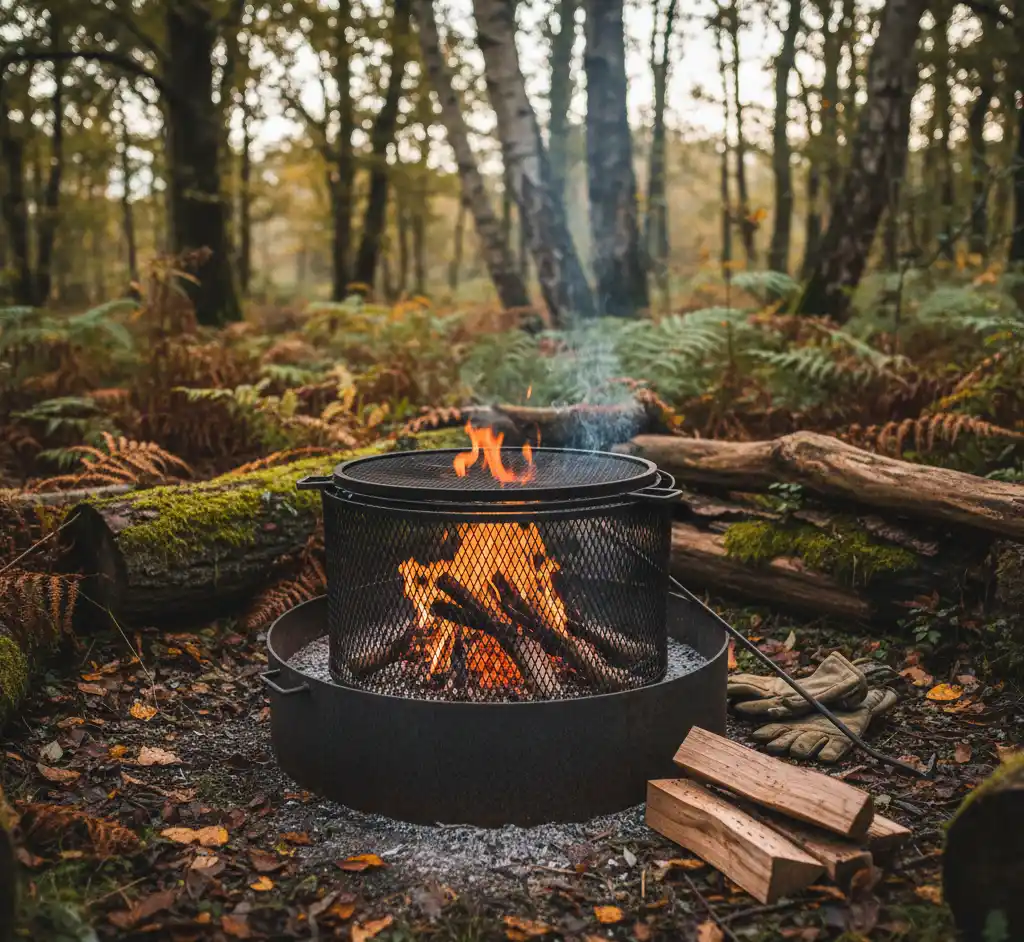
UK campfire law explained — when you can light a fire outdoors, landowner permission, CRoW Act restrictions, and Forestry Commission rules.