This page contains affiliate links. If you purchase through them we may earn a small commission at no extra cost to you. Learn more
Wild Swimming Law in the UK: Is It Legal and What Are Your Rights?
Legal disclaimer
This is general information, not legal advice. Laws change — verify current legislation before acting on anything you read here.
Quick Summary
- No law specifically bans wild swimming in the UK, but swimming in private water without permission is civil trespass
- In Scotland, the Land Reform (Scotland) Act 2003 gives a statutory right of access to most inland water for swimming
- Reservoirs often have byelaws making swimming a criminal offence — not just trespass
- The CRoW Act 2000 access rights in England and Wales do not extend to water
Is Wild Swimming Legal?
The short answer is: it depends where you are in the UK, and who owns the water.
There is no specific legislation in England or Wales that makes wild swimming unlawful as an activity in itself. However, rivers, lakes, and reservoirs are almost always on private land or have private riparian ownership. Swimming in those waters without permission is civil trespass — a matter between you and the landowner, not a criminal offence in most cases. The exception is reservoirs and certain sites where byelaws have been made, converting what would otherwise be a civil matter into a criminal one.
Scotland is considerably more permissive. The Land Reform (Scotland) Act 2003 provides statutory access rights that explicitly include inland water and non-motorised activities including swimming.
England and Wales: The CRoW Act Does Not Cover Water
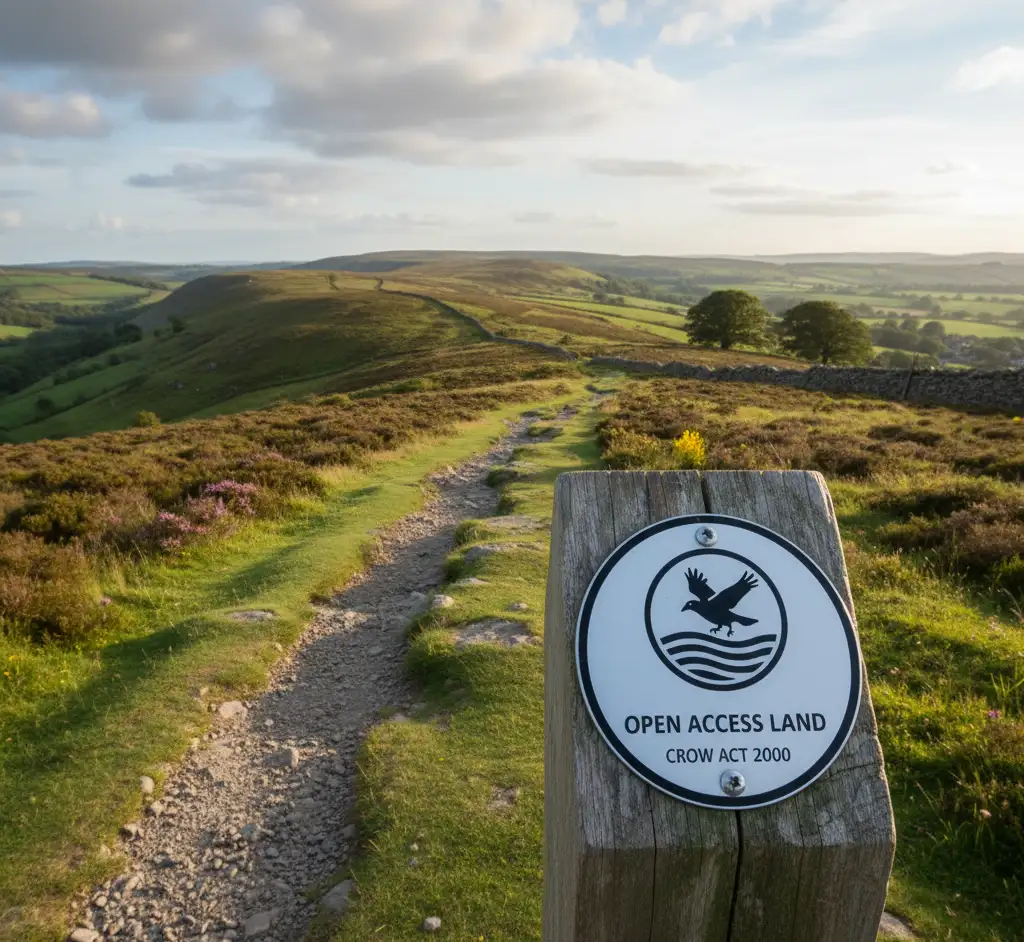
The Countryside and Rights of Way Act 2000 (CRoW Act) introduced a right of access on foot to mapped "access land" — open country such as mountain, moorland, heath, and down. Section 2 of the Act defines that right, and it is explicitly a right to be there on foot. The Act does not extend access rights to rivers, lakes, or other water bodies.
This means that even if you are lawfully walking on access land next to a river or lake, the moment you enter the water, you have no statutory right to be there. You are now in a position that depends entirely on the ownership of the riverbed or lake bed, and whether the owner has given you permission.
Some rivers and waterways are covered by navigation rights — either public navigation rights (such as on the River Thames, which is managed by the Environment Agency) or rights established by statute for specific navigable rivers. Public navigation rights do not automatically include swimming, but they do generally mean entry to the water is not trespass for navigation purposes.
What Is Riparian Ownership?
The person who owns the bank of a river typically owns the bed of the river to the mid-point (the medium filum principle). They also own the fishing rights and have a say in what happens in and on the water adjacent to their land.
Swimming in a river without the riparian owner's permission is civil trespass. In practice, the consequences are mild — the riparian owner can ask you to leave, and if you refuse they can take civil action. They cannot have you arrested for simply swimming unless specific byelaws apply. However, this does not make it legal.
Reservoirs and Private Lakes
Reservoirs operated by water companies represent the most legally significant category for wild swimmers:
- They are private property, typically owned by water companies such as Anglian Water, Thames Water, or Severn Trent.
- Many water companies have made byelaws under statutory powers that prohibit entry to reservoirs. Breaching a byelaw is a criminal offence, not merely a civil wrong. Fines under such byelaws vary but are typically up to £500.
- Some water companies have introduced managed wild swimming programmes, opening specific reservoirs to swimmers under controlled conditions with safety measures in place. This does not generalise — check the specific reservoir.
- Private lakes and farm ponds are private property. Swimming without permission is trespass.
Do not assume that because a reservoir appears on a map as open water, you are entitled to swim in it. Check the water company's byelaws before entering. Some specifically create criminal liability for unauthorised swimming, not just civil trespass.
Scotland: Statutory Access Rights Include Swimming
Scotland's position is fundamentally different. The Land Reform (Scotland) Act 2003 created access rights covering "land" as defined in Section 32, which includes rivers, lochs, reservoirs, and other inland water. The access rights apply to non-motorised activities including walking, cycling, and swimming.
This means that in Scotland, swimming in a river or loch is generally lawful under statute, provided you exercise your access rights responsibly. The Scottish Outdoor Access Code, issued under Section 10 of the Act, sets out what responsible behaviour looks like in and near water:
- Avoid polluting water sources used for drinking.
- Take care near weirs, sluices, and other structures.
- Respect fish farms, fish trap operations, and nesting birds.
- Do not obstruct boats or other legitimate water users.
- Take particular care in reservoirs operated as water supplies.
Even in Scotland, water company reservoirs may have additional management restrictions, and responsible behaviour is a condition of the access right.
Safety and Liability
Wild swimming carries genuine physical risks that the law does not eliminate:
- Cold water shock: Immersion in cold water can trigger an involuntary gasping reflex and cardiac stress even in fit swimmers. UK rivers and lochs are cold year-round.
- Currents and flow: River currents can be far stronger than they appear, particularly after rainfall. Weirs create powerful underwater currents.
- Submerged hazards: Underwater rocks, debris, shopping trolleys, and broken glass are common in UK inland waterways.
- Water quality: Waterways in England and Wales suffer from agricultural run-off, sewage overflow events, and cyanobacteria (blue-green algae) blooms. The Environment Agency advises against swimming in most English rivers.
- Depth and visibility: Water depth can be deceptive from the surface.
Landowner Liability
The Occupiers' Liability Act 1957 governs the duty of care owed to lawful visitors to land. The Occupiers' Liability Act 1984 governs the more limited duty owed to trespassers.
In the case of natural water bodies, courts have consistently held that the dangers are either obvious, or fall under the general principle that landowners are not obliged to protect individuals from the consequences of their own choices. The leading House of Lords decision in Tomlinson v Congleton Borough Council [2003] UKHL 47 established that a landowner was not liable for the serious injuries sustained by a visitor who dived into a shallow lake against clear warning signs. The free actions of the individual, and the obviousness of the risk, negated the duty.
This does not mean landowners can never be liable — it means the courts take a realistic approach to what constitutes acceptable risk in outdoor recreation.
Practical Position for Wild Swimmers in England and Wales
Given the law as it stands, the safest practical positions are:
- Swim in designated swimming sites — formal outdoor swimming venues, lidos, and commercially managed wild swimming sites operate with appropriate permissions and safety measures.
- Swim with the landowner's permission — many rivers have fishing clubs or estates that permit swimming. Some are surprisingly approachable.
- Use navigable rivers where public navigation rights apply — the River Thames, River Severn, and other major navigable rivers are generally lawful to enter.
- Accept the trespass position on other waters — many wild swimmers do swim in rivers and lakes without specific permission, accepting that it is civil trespass. The law is what it is; the enforcement reality is that riparian owners rarely pursue swimmers. This is not the same as it being legal.
Before entering any water in England and Wales, check the Environment Agency's water quality bathing water records and any site-specific blue-green algae warnings. The legal position is one thing — actual water quality is another, and getting it wrong can make you seriously ill.
Related Guides
- Right to roam — the CRoW Act access rights and their limits
- Trespass law — what civil trespass means in practice
- Wild camping in Scotland — Scotland's broad access rights framework
Ready to gear up?
Use our kit builder to get a complete packout list tailored to your trip type, terrain, and budget — with prices and buy links.
Related reading

UK Outdoor Law and Safety — Your Complete Practical Guide
A plain-English guide to UK outdoor laws covering wild camping, knife law, foraging, right to roam, drones, and campfires.
Right to Roam in the UK: CRoW Act and Access Rights Explained
What the Countryside and Rights of Way Act 2000 actually lets you do, where access land is, and how Scottish access rights differ.

Trespass Law in the UK: Civil vs Criminal Trespass Explained
What happens if you trespass in the UK — civil trespass explained, aggravated trespass, and what landowners can and can't do.

Best Outdoor Safety Gear for UK Hikers and Campers 2026
Best first aid kits, fire starters and emergency safety gear for UK outdoor adventures in 2026. Tested and compared for hikers and campers.