This page contains affiliate links. If you purchase through them we may earn a small commission at no extra cost to you. Learn more
Wild Camping on Dartmoor: The Law After the Supreme Court's 2025 Ruling
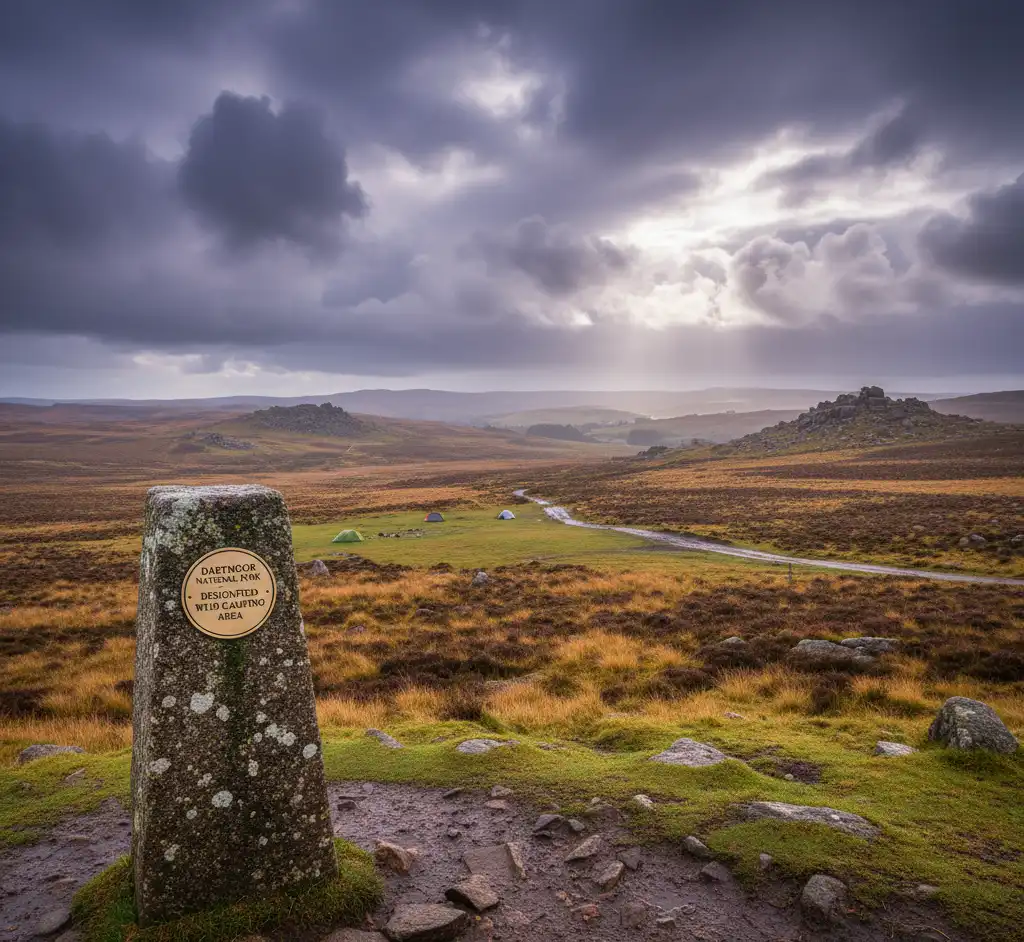
Legal disclaimer
This is general information, not legal advice. Laws change — verify current legislation before acting on anything you read here.
Quick Summary
- The Supreme Court confirmed on 21 May 2025 that backpack camping on the Dartmoor commons is lawful under the Dartmoor Commons Act 1985
- Dartmoor is the only place in England with a statutory right to wild camp on common land — roughly 36,000 hectares
- You must still follow DNPA byelaws: camp on the commons (not enclosed land), no open fires, leave no trace, check the permitted-[camping map](/map)
The Short Version
Wild camping on Dartmoor is on the firmest legal footing it has ever been. A four-year legal challenge ended on 21 May 2025 when the Supreme Court confirmed that the Dartmoor Commons Act 1985 grants the public a statutory right to backpack camp on the commons. There is no higher UK court, so the question is settled.
You can pitch a lightweight tent on the registered Dartmoor commons — around 36,000 hectares of open moorland — without needing the landowner's prior permission. You must still comply with Dartmoor National Park Authority byelaws: no fires, no camping near roads or reservoirs, no camping on enclosed farmland, stay no more than two nights in the same spot, and leave no trace.
The Legal Basis: Dartmoor Commons Act 1985
The statutory right sits in a single Act of Parliament. Section 10(1) of the Dartmoor Commons Act 1985 grants the public a right of access to the registered commons "on foot and on horseback for the purpose of open-air recreation."
The courts have held that "open-air recreation" includes backpack camping — not just daytime walking. That interpretation is what the 2023–2025 litigation tested, and it was upheld at the highest level.
The Act covers only the registered commons — roughly 36,000 hectares of open moorland inside the National Park. It does not cover enclosed farmland, private gardens, or land outside the commons. Camping on those remains trespass without the landowner's permission, just like anywhere else in England.
The 2023–2025 Court Cases
The legal challenge was brought by Alexander and Diana Darwall, owners of the 4,000-acre Blachford estate on the southern moor.
- January 2023 — High Court ruled for the landowners. Mr Justice Flaux held in Darwall v Dartmoor National Park Authority that "open-air recreation" under the 1985 Act did not include sleeping overnight. The right to camp was removed.
- July 2023 — Court of Appeal reversed. The Court of Appeal held that camping was a form of open-air recreation and reinstated the right. The DNPA had appealed the High Court's decision; the Court of Appeal agreed with them.
- 21 May 2025 — Supreme Court confirmed the right. The Darwalls appealed to the Supreme Court, which rejected their appeal. The judgment confirmed that backpack camping falls within the public's statutory right of access under the 1985 Act.
The case is widely known as Cherry v Dartmoor NPA (after Lewis Cherry, the lead public campaigner), though formally it was brought by the landowners against the Authority.
The Supreme Court ruling is final. There is no further appeal in UK law. Future changes to the right would require new primary legislation through Parliament.
DNPA Byelaws — What You Must Still Follow
A statutory right of access isn't a free-for-all. The DNPA makes byelaws under Section 11 of the 1985 Act and Section 90 of the National Parks and Access to the Countryside Act 1949. The byelaws govern how you use the right. Relevant rules for campers:
- Camp only on the registered commons — not on enclosed farmland, private gardens, or areas fenced off by the landowner
- Stay clear of exclusion zones — roads, car parks, reservoirs, residential areas, archaeological sites, and specific zones the DNPA has excluded on its permitted-camping map
- Backpack camping only — lightweight kit that you carry in on foot. No vehicles, no trailers, no large group encampments
- Maximum two consecutive nights in the same location
- Small parties — generally no more than a few tents
- No open fires — anywhere on the commons, regardless of conditions. Use a gas stove on a heat-resistant surface
- Leave no trace — pack out all rubbish including food waste and human waste where facilities are not available
- Keep away from livestock, grazing animals, and military firing ranges — check firing times on the Dartmoor website before heading to the northern moor
The DNPA publishes an official permitted-camping map marking both the commons and the exclusion zones. Check it before every trip — the boundaries are specific and the map is the definitive reference.
Outside the Commons
If you camp anywhere on Dartmoor that is not on the registered commons — for example, on enclosed farmland, private moorland inside the park boundary, or any land outside the park — the rules revert to the rest of England: camping without the landowner's permission is civil trespass. See our wild camping guide for England and Wales for that wider picture.
Some landowners on Dartmoor are happy to grant permission on request. A polite ask is always worth a try.
Campfires
Don't. Fires are prohibited across the Dartmoor commons byelaws. The moorland peat can smoulder underground for days after a surface fire appears to be out, and the vegetation is notoriously flammable. The DNPA treats fire offences seriously.
A gas stove is the right tool — see the kit list below. For the wider UK fire legal framework, read our campfire law guide.
The Bigger Picture
Dartmoor was the flashpoint, but the ripple effect is UK-wide. The four-year legal fight energised the right-to-roam movement and raised pressure on Parliament to extend similar access rights to other parts of England. Several MPs have tabled private members' bills on right-to-roam since the Supreme Court ruling.
For now the position is: Dartmoor has it; nowhere else in England does. That's what makes the moor special, and it's why wild campers have an even stronger interest in camping well — the stronger the track record, the harder future challenges become.
Practical Tips
- Check the DNPA permitted-camping map before you go. Save it offline — phone signal on the moor is patchy.
- Arrive late, leave early. Low-visibility camping keeps the whole system low-friction.
- Stay on the commons. A single well-publicised trespass gives ammunition to future challengers.
- Gas stove, no fire. Non-negotiable.
- Leave it cleaner than you found it. Carry out everything.
Dartmoor is one of the best wild camping spots in Britain — granite tors, open skies, genuine remote feel within a few hours of most of southern England. The right is hard-won and worth protecting by camping well.
What to Take for a Dartmoor Wild Camp
Dartmoor's designated areas are remote, exposed, and often boggy. The weather on the moor can change rapidly, and there's minimal shelter from wind. Here's what makes a Dartmoor camp comfortable and compliant with the bylaws.
Because fires aren't permitted, a reliable stove is essential for cooking. Lightweight shelter that you can carry in your pack is a requirement of the bylaws — you need to be backpack camping, not car camping. And proper navigation is critical given the moor's featureless terrain and notorious mist.
Recommended Dartmoor Camping Kit
MSR PocketRocket 2 Stove
Amazon UK73g
3.5 min (1L)
Screw-on gas canister
Fits inside a mug
Pros
- +No fire needed — keeps you compliant with Dartmoor bylaws
- +Reliable in wind with a bit of shielding
- +Fast boil time for hot meals and brews
Cons
- −No integrated windshield — use a separate one in exposed conditions
The stove to pack instead of firewood on Dartmoor. Reliable, lightweight, and means you can cook without breaking the no-fire rules.
View dealAffiliate link — we may earn a small commission at no extra cost to you
Alpkit Soloist Tent
Amazon UK1.5kg
1 person
3000mm HH
40 × 12cm
Pros
- +Light enough for genuine backpack camping
- +Handles Dartmoor wind well
- +Good value for a solo tent
Cons
- −Tight for taller campers
- −Single-wall design can suffer condensation
A lightweight solo tent that meets Dartmoor's backpack-camping requirement. Light enough to carry in, sturdy enough to handle an exposed moor.
View dealAffiliate link — we may earn a small commission at no extra cost to you
Silva Ranger Compass
Amazon UKBaseplate with mirror
1:25k and 1:50k
Adjustable
52g
Pros
- +Essential for navigating Dartmoor in mist
- +Mirror allows accurate bearings at distance
- +No batteries to die on the moor
Cons
- −Requires map-reading knowledge to use effectively
Dartmoor in mist is notoriously disorienting — featureless bog in every direction. A compass and OS map are non-negotiable for finding your way to camp and back.
View dealAffiliate link — we may earn a small commission at no extra cost to you
Ready to gear up?
Use our kit builder to get a complete packout list tailored to your trip type, terrain, and budget — with prices and buy links.
Related reading
UK Outdoor Law and Safety — Your Complete Practical Guide
A plain-English guide to UK outdoor laws covering wild camping, knife law, foraging, right to roam, drones, and campfires.
Wild Camping Law in England & Wales: What's Actually Legal
The legal position on wild camping in England and Wales — trespass, landowner permission, and how to camp responsibly without getting moved on.
Campfire Law in the UK — When and Where Fires Are Legal
UK campfire law explained — when you can light a fire outdoors, landowner permission, CRoW Act restrictions, and Forestry Commission rules.
Trespass Law in the UK: Civil vs Criminal Trespass Explained
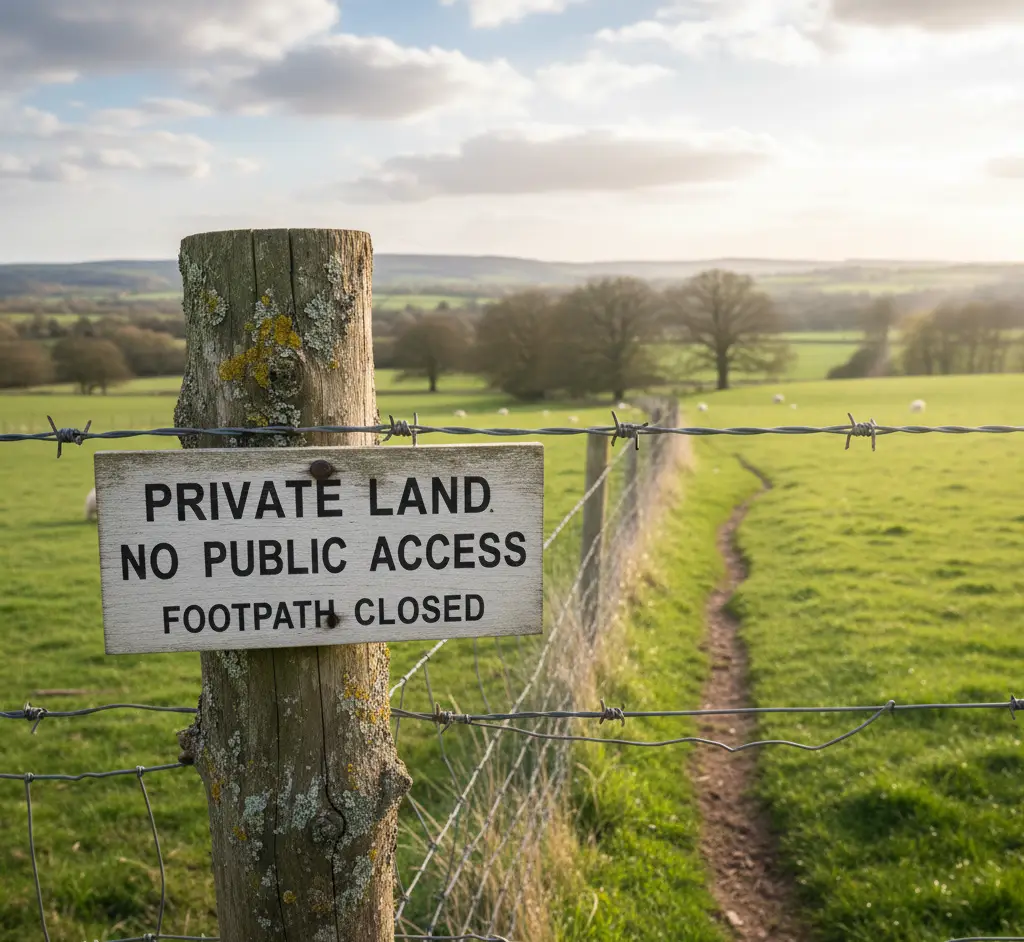
What happens if you trespass in the UK — civil trespass explained, aggravated trespass, and what landowners can and can't do.