This page contains affiliate links. If you purchase through them we may earn a small commission at no extra cost to you. Learn more
Emergency Heating Without Gas — Safe Ways to Stay Warm
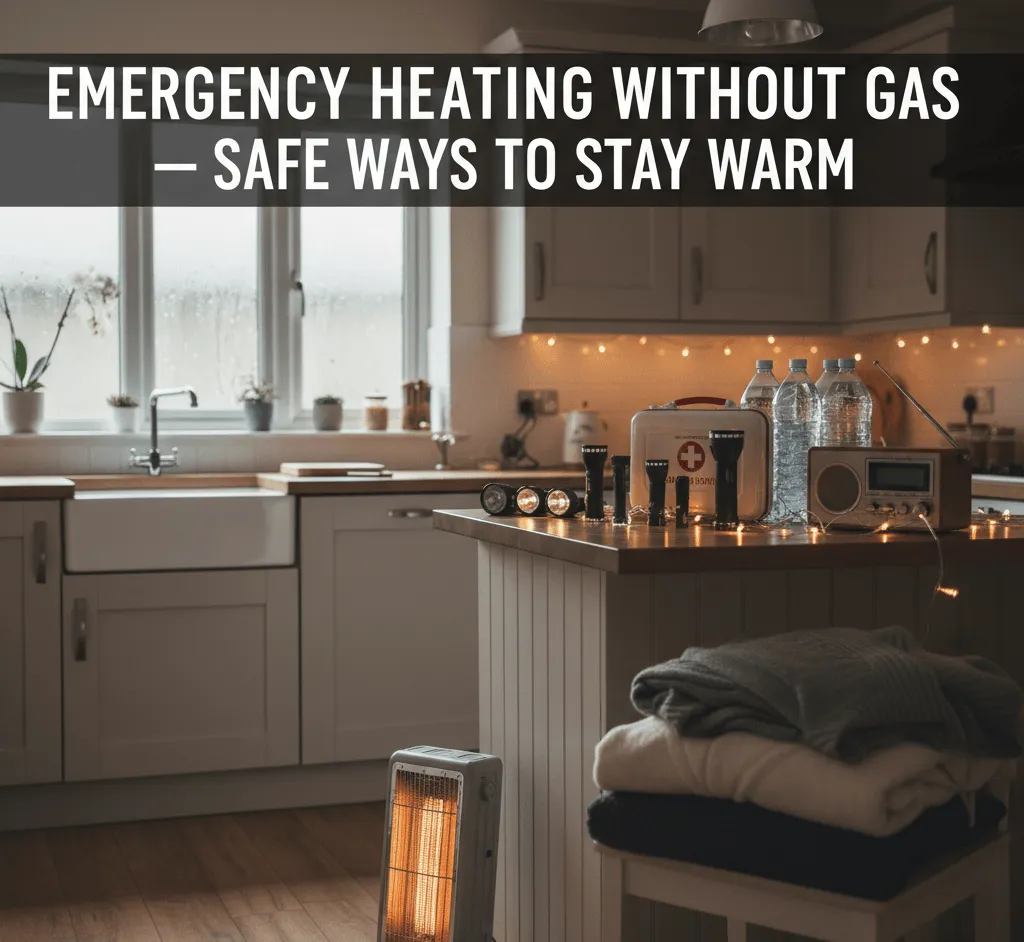
Quick Summary
- A gas boiler failure does not mean you have no options — electric heaters and layering can keep you warm safely
- Never use BBQs, patio heaters, camping stoves, or generators indoors — they produce carbon monoxide and kill
- The 'candle heater' you've seen online does not work — it produces negligible heat and is a fire risk
When the Boiler Goes Off in Winter
A boiler breakdown in January is miserable. But in the hours or days it takes to get a repair, you need to keep warm — especially if there are elderly people, young children, or anyone with a health condition in the house.
The solutions are straightforward. So are the dangers. This guide covers both.
First: Do You Have Power?
Your options divide depending on whether the power is also out.
If you have electricity but no gas, you have good options. Electric heating is safe to use indoors, effective, and widely available.
If you have neither gas nor electricity — for example during a major storm outage — your options are more limited, but thermal management (retaining body heat and reducing heat loss from the building) can keep you safe for many hours.
Using Electric Heaters Safely
Electric heaters are the most practical solution for a gas-free emergency. You do not need a special installation — any standard 13-amp socket will work.
Types Worth Having
Oil-filled radiators are the best all-round choice for emergency use. They heat up slowly but retain heat well and are very safe — the surface does not get hot enough to burn, and they do not dry out the air or produce fumes.
Panel heaters are slim, lightweight, and heat a room quickly. They use more electricity to maintain temperature than oil-filled radiators but are effective.
Fan heaters heat a room very quickly and are inexpensive to buy. Running costs are higher than other types as they draw more power for continuous use.
Storage heaters — if you have them — use off-peak electricity and cannot be turned up on demand, but they will add background warmth.
Safe Use
- Keep heaters at least one metre from curtains, furniture, and bedding
- Never drape clothes over a heater to dry them
- Turn off heaters when you leave the room for extended periods and before going to sleep, unless the heater has an overheating cutoff and tip-over protection
- Do not run extension leads under rugs or through doorways
- Do not use outdoor or camping electrical equipment indoors unless it is CE/UKCA marked for indoor use
Focus on one room
Hot Water Bottles and Thermal Mass
Hot water bottles are underrated. Filled with near-boiling water, a standard 2-litre bottle retains useful warmth for several hours. They are safe, cheap, and highly effective for keeping individuals warm in bed or on a sofa.
Practical uses:
- Pre-warm a bed before sleeping
- Tuck one inside a sleeping bag or under a blanket
- Place one at the foot of a duvet for children
- Use a cover or wrap in a towel to avoid direct skin contact burns
Gel hand warmers (the type activated by clicking a metal disc and then boiled to reset) are useful for pockets and extremities.
Thermal Layering Indoors
The same principles that apply outdoors work indoors too. It is not about how thick a single layer is — it is about trapping warm air in multiple layers.
The Indoor Layering Approach
- Base layer — A thin thermal top and leggings close to the skin, wicking moisture
- Mid layer — A fleece or thick jumper for insulation
- Outer layer — A large cardigan, dressing gown, or indoor jacket
- Extremities — Thermal socks (the single most effective change), hat or beanie indoors, thin gloves if needed
- Blankets — A high-tog duvet or sleeping bag on a sofa provides substantial warmth
Wool and fleece retain warmth even when slightly damp. Avoid cotton as the only layer next to skin in very cold conditions.
Retaining Heat in the Building
- Close all internal doors to keep warmth in the room you are using
- Hang heavy curtains or drape blankets over windows at dusk — glass loses heat rapidly
- Block draughts under doors with rolled towels or purpose-made draught excluders
- Avoid opening external doors unnecessarily
- The upper floors of a house are generally warmer than the ground floor — consider moving activity and sleeping upstairs
What About Sleeping Bags?
A sleeping bag rated to 0°C or below will keep an adult comfortably warm in a UK home even without any heating, as long as it is used properly (with a base layer, inside a duvet if possible). This is not a comfort measure — it is a genuine cold-weather survival tool.
If you have a household with young children or elderly relatives, a 3-season sleeping bag per person is worth keeping in the house. It weighs almost nothing and takes up one cupboard shelf.
What You Must Never Use Indoors
This section is not alarmist — it describes real risks that kill people in the UK every year, almost always during power cuts and heating emergencies.
These will kill you — no exceptions
This applies to garages too, even with the door open. CO concentrations can build quickly in any enclosed or partially enclosed space.
The Candle Heater Myth
You may have seen instructions online for making a "candle heater" using tea lights and flower pots. This does not work. Candles convert nearly all their energy into heat, but a candle produces around 50 watts of heat — roughly equivalent to a single light bulb. A small room requires several kilowatts to heat. You would need hundreds of candles, which would create a serious fire risk and significantly worsen air quality.
Candles are useful for light in a power cut. They will not meaningfully heat a room.
If You Cannot Heat the Property
If the temperature inside your home is falling despite your best efforts, this is a medical risk — particularly for elderly people, infants, and anyone with a respiratory or cardiovascular condition. Hypothermia begins when core body temperature drops below 35°C.
Options if the situation becomes serious:
- Go to a family member or friend's home — The most obvious solution, and often overlooked
- Contact your local council — Most councils operate emergency welfare lines in severe weather and can arrange temporary accommodation
- Libraries, community centres, and warm banks — Many local authorities open these during cold snaps
- Call 111 if someone in the household is showing symptoms of cold-related illness — shivering that stops, confusion, extreme tiredness
If someone collapses or loses consciousness, call 999 immediately.
What You Need
| Item | Notes |
|---|---|
| Oil-filled radiator | 1kW or 1.5kW, with thermostat and tip-over protection |
| Fan heater | Fast backup heat for a single room |
| Thermal base layers | Per person — wool or synthetic |
| Sleeping bags (3-season) | Per person — a genuine emergency backup |
| Hot water bottles (2 litre) | One per person, with a cover |
| Draught excluders | For main external doors |
| CO alarm | Essential if using any fuel-burning appliance; see our CO safety guide |
| Spare blankets | Wool or high-tog duvets |
Key Contact Numbers
| Service | Number |
|---|---|
| Gas Emergency Service | 0800 111 999 |
| NHS 111 (non-emergency) | 111 |
| Emergency services | 999 |
| Power cut reporting | 105 |
A gas failure in winter is an inconvenience, not a crisis, if you have the right equipment and know what to do. Prepare before the cold weather arrives and you will handle it without difficulty.
Ready to gear up?
Use our kit builder to get a complete packout list tailored to your trip type, terrain, and budget — with prices and buy links.
Related reading
Boiler Failure Emergency: What to Do When Your Heating Dies
What to do when your boiler breaks down in the middle of winter — temporary heating options, finding emergency plumbers, and your rights as a tenant.
Power Cut Preparation for UK Homes: Full Checklist
How to prepare for power cuts in the UK — torches, batteries, food preservation, heating alternatives, and keeping your phone charged.
Winter Readiness for UK Homes: Seasonal Prep Guide
Prepare your UK home for winter — pipe lagging, boiler servicing, draught-proofing, de-icer supplies, and staying warm when it's freezing.
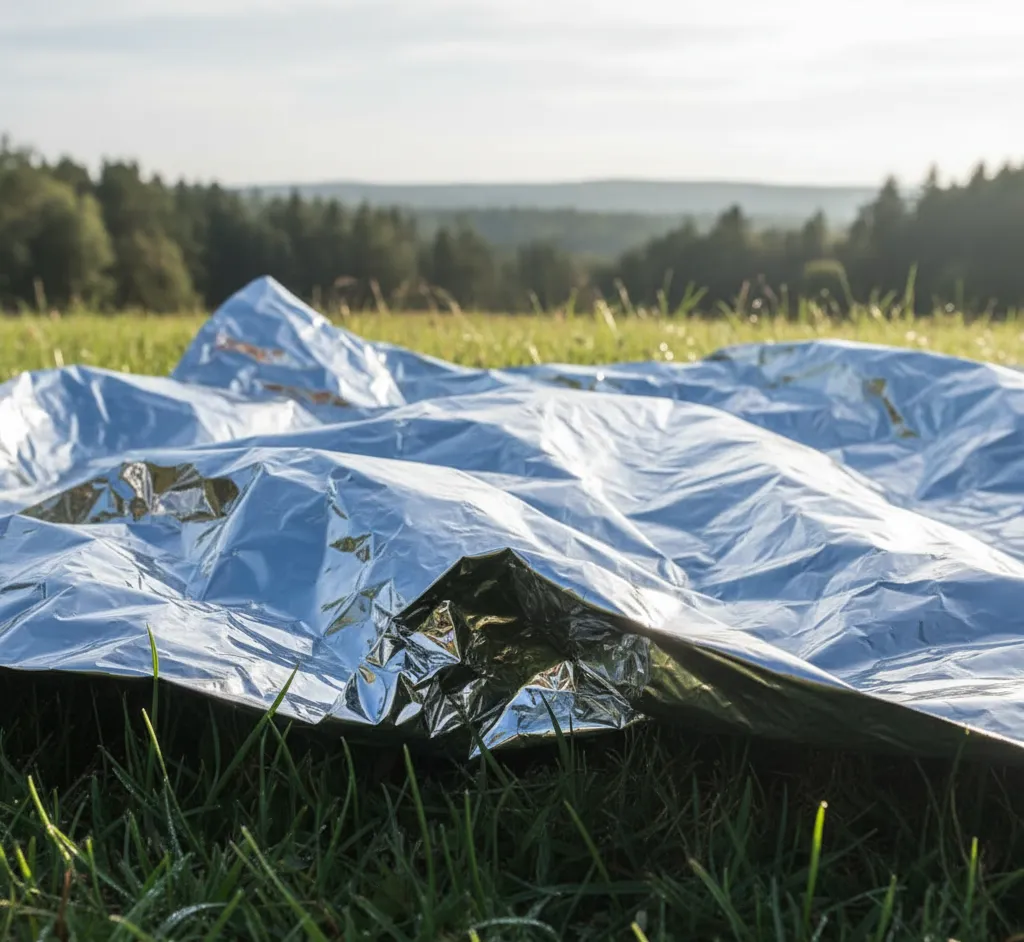
Best Emergency Blankets for UK Hikers and Campers 2026
Best emergency blankets and survival blankets for UK outdoor use in 2026. Mylar, bivvy-style and reusable options tested and compared.