This page contains affiliate links. If you purchase through them we may earn a small commission at no extra cost to you. Learn more
Hiking Day Pack Essentials — What to Carry on UK Trails 2026
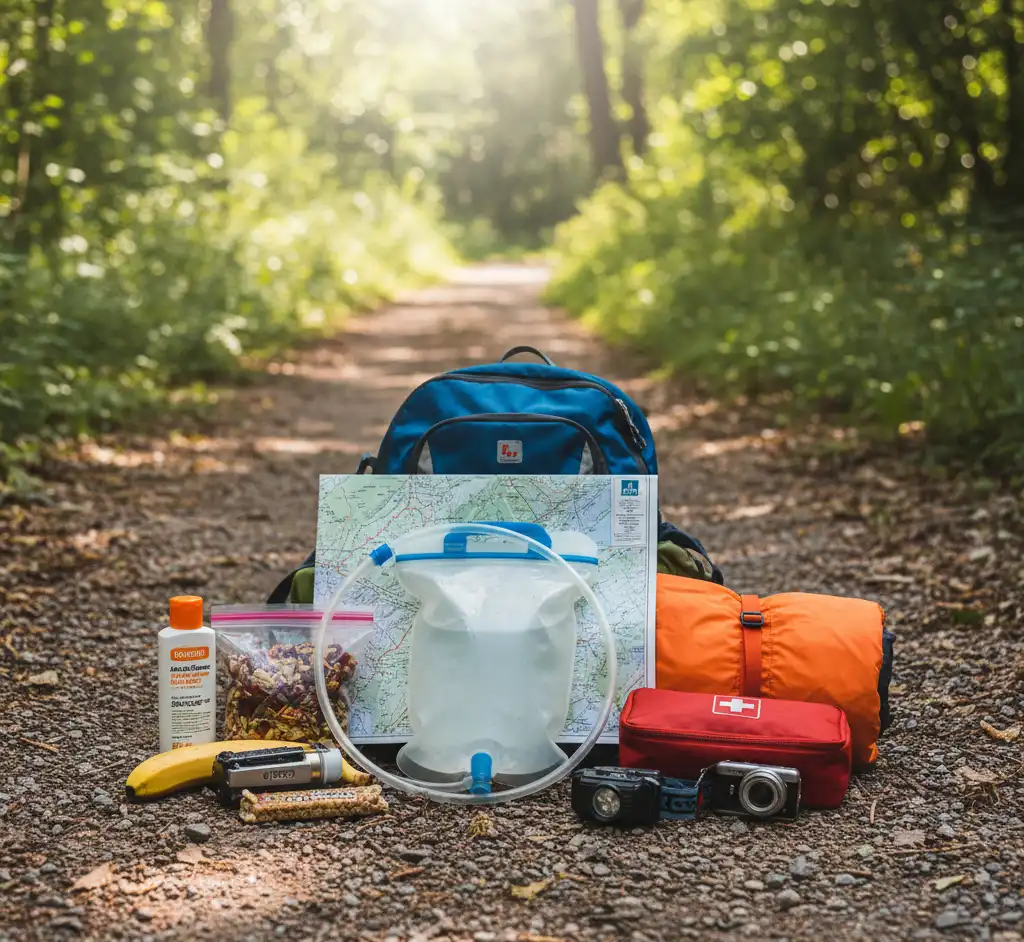
The Non-Negotiables
These items go in your pack on every walk, regardless of weather forecast or distance. UK weather changes fast, paths aren't always clear, and a 3-hour walk can become a 6-hour walk if things go wrong.
Navigation
- OS map (1:25,000 Explorer series) in a waterproof case
- Compass (Silva Ranger, ~£30)
- Phone with OS Maps app (offline maps downloaded)
- Route plan left with someone at home
Emergency
- Head torch + spare batteries
- Emergency bivvy or bothy bag
- Whistle
- First aid kit
- Fully charged mobile phone
Clothing
- Waterproof jacket (always, even if forecast is clear)
- Waterproof trousers (for mountain walks)
- Spare warm layer (fleece or down jacket)
- Hat and gloves (year-round on mountains)
- Spare socks
Food & Water
- 1L water minimum (2L in summer)
- Lunch + emergency food (energy bars that stay in your pack permanently)
- Flask of hot drink in cold weather
The Complete Day Pack List
| Item | Weight | Notes |
|---|---|---|
| Rucksack (20–30L) | 500–800g | Water-resistant, comfortable |
| Waterproof jacket | 300–500g | Always packed |
| Waterproof trousers | 200–350g | For mountain walks |
| Spare fleece | 300–400g | Even in summer |
| Hat + gloves | 100g | Year-round on mountains |
| Map + case | 150g | OS 1:25k |
| Compass | 50g | Know how to use it |
| Head torch + batteries | 100g | Even for morning starts |
| First aid kit | 170g | Including personal meds |
| Emergency bivvy | 110g | Or bothy bag (300g) |
| Whistle | 10g | On your rucksack strap |
| Phone + charger cable | 250g | Charged, offline maps ready |
| Water (1L) | 1,000g | More in summer |
| Lunch + snacks | 400g | Plus emergency food |
| Sun cream + sunglasses | 100g | Yes, even in the UK |
| Total | ~3.5–4kg | Before lunch |
What to Leave Behind
- Full camping stove (for day walks, a flask is enough)
- Books and entertainment (you're walking, not sitting)
- Multiple changes of clothes (one spare set is plenty)
- Excessive first aid gear (basic kit covers day walks)
- Laptops, tablets, speakers (leave them in the car)
Before You Leave
- Check the weather — Mountain Weather Information Service (MWIS) for hills, Met Office for lowland
- Tell someone your route — where you're going, when you expect to be back
- Check daylight hours — leave enough time to finish in daylight
- Fill your water bottles — don't rely on finding water en route
Recommended Products
Osprey Stratos 36
Amazon UK36L
1.36kg
AirSpeed
Pros
- +AirSpeed ventilation
- +Rain cover included
- +Hydration compatible
Cons
- −Two sizes only
- −Not ultralight
The best all-round day pack for UK hiking.
View dealAffiliate link — we may earn a small commission at no extra cost to you
Lifesystems Trek First Aid Kit
Amazon UK170g
30+
Pros
- +Compact essentials
- +Tick remover
- +Waterproof
Cons
- −Basic quality
- −No SAM splint
Non-negotiable for every day walk.
View dealAffiliate link — we may earn a small commission at no extra cost to you
Sawyer Squeeze
Amazon UK85g
0.1 micron
Pros
- +85g negligible weight
- +Unlimited lifespan
- +Effective filtration
Cons
- −Needs back-flushing
- −Pouches wear out
Lightweight water security for any day walk with stream access.
View dealAffiliate link — we may earn a small commission at no extra cost to you
The Non-Negotiable Day Pack Contents
Every UK day walk, every time: waterproof jacket, warm layer, hat and gloves (yes, even in summer above 600m), map, compass, head torch, first aid kit, emergency shelter, whistle, food, water, phone with offline maps, and power bank.
This weighs about 3-4kg and fits in a 20-30L pack. It has saved lives. Carry it.
What People Forget
Sunscreen and sunglasses (UV at altitude is strong), spare socks (wet feet are miserable feet), blister care (address hot spots immediately), and enough food for delays. Plan for 2 hours longer than expected - getting lost, injuries, or slow terrain always adds time.
Kit Organisation
A well-organised kit is usable in a hurry. Use colour-coded dry bags or labelled compartments so you can find what you need quickly, especially in emergencies where stress reduces your ability to think clearly. Practice locating items in your kit in the dark — you may need to use it at night during a power cut or emergency.
Regular Testing
Every item in your kit should be tested periodically. Torches need battery checks. Food needs rotation before expiry. Medications need expiry date verification. Water containers need cleaning. First aid supplies need replenishing after use. Set a calendar reminder every 6 months to audit your kit.
Scaling Your Kit
Start with the essentials and build up over time. You do not need to buy everything at once. The core of any emergency kit — water, food, warmth, light, first aid — can be assembled for under 50 pounds using items from Decathlon, Poundland, and your existing wardrobe. Add specialist items as budget allows. A basic kit today is infinitely better than a perfect kit you never get around to building.
Sharing Knowledge
Once you have built your kit, encourage family members and friends to do the same. Share what you have learned about practical preparedness. The UK government recommends every household should be able to sustain itself for 72 hours without external assistance. Most households are not prepared for even 24 hours. Be the exception.
Ready to gear up?
Use our kit builder to get a complete packout list tailored to your trip type, terrain, and budget — with prices and buy links.