This page contains affiliate links. If you purchase through them we may earn a small commission at no extra cost to you. Learn more
Festival Survival Kit: Best Gear for UK Festivals 2026
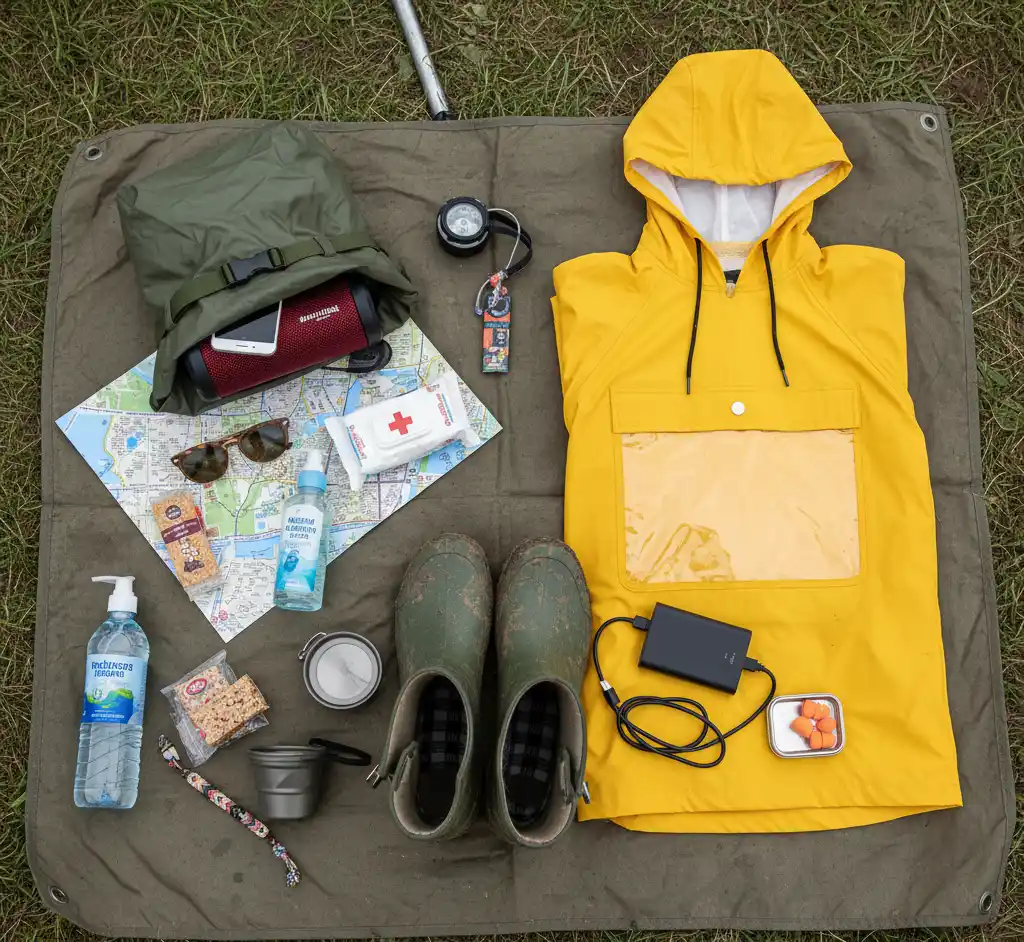
The Festival Kit That Actually Matters
Forget the LED hula hoop. These are the things that make the difference between "best weekend ever" and "never again."
Essential Festival Kit
Footwear & Clothing
- Wellies — Dunlop or Muck Boot. Not cheap fashion wellies — proper ones (~£25–40)
- Waterproof jacket — packable, with a hood. Don't rely on ponchos
- Warm layers — nights are cold even in summer. Fleece + base layer
- Spare socks — at least 3 pairs. Dry socks are joy
- Sunhat + sunscreen — UK festivals can surprise you with sun too
Shelter
- Decent tent — Vango Nevis or similar, NOT a £20 throwaway (~£60–80)
- Tarp or gazebo — shared space for socialising in rain
- Sleeping bag — comfort-rated to 5°C minimum
- Roll mat or camping mat — comfort and insulation from cold ground
- Inflatable pillow — small luxury, big difference
Hygiene
- Toilet roll — multiple rolls, in a dry bag
- Hand sanitiser — large bottle
- Wet wipes — baby wipes for pseudo-showers
- Dry shampoo
- Toothbrush and toothpaste
- Bin bags — for dirty/wet clothes, rubbish, and emergency rain cover
- Small towel — microfibre packs small
Survival Essentials
- Head torch — red light mode for not blinding campmates at 4am
- Earplugs — essential for sleep. Campsite noise doesn't stop at midnight
- Phone charger/power bank — 20,000mAh for a full weekend
- Cash — some vendors are card-only, some are cash-only
- Dry bag — 10L minimum for keeping valuables dry
- Gaffer tape — fixes everything from tent poles to blisters
Food & Drink
- Reusable water bottle — refill stations are standard now
- Snacks — cereal bars, nuts, fruit for when you don't want to queue
- Camping stove — check festival rules first, some don't allow them
- Instant coffee/tea bags — a morning brew changes everything
Pro Tips
- Flag your tent — a distinctive flag or ribbon makes finding your tent in a sea of identical ones much easier
- Arrive early — camp near toilets (but not too near) and on higher ground (water runs downhill)
- Photo your campsite location — take a photo with landmarks when you're sober
- Bring more warm clothes than you think — it's always colder than expected at 3am in a field
Recommended Products
Vango Nevis 200
Amazon UK2.5kg
3,000mm
2
Pros
- +Properly waterproof unlike festival tents
- +Reusable for years
- +Good porch
Cons
- −Heavier
- −More expensive than pop-up
The tent that survives multiple festivals and keeps you dry.
View dealAffiliate link — we may earn a small commission at no extra cost to you
Decathlon BL100 Lantern
Amazon UK100
3x AAA
70g
Pros
- +Eight pounds
- +Light enough to carry all weekend
- +AAA batteries
Cons
- −Not bright
- −Plastic
Cheap enough that losing it at a festival does not matter.
View dealAffiliate link — we may earn a small commission at no extra cost to you
Festival Survival Essentials
Beyond the obvious (tent, sleeping bag, wellies): ear plugs for sleeping, dry bags for phone and wallet, portable phone charger, baby wipes (your shower replacement), duct tape for repairs, bin bags (rain poncho, ground sheet, waste), head torch, and cash (card machines fail in fields).
The Wellies Question
Bring them. Even in July. Even if the forecast says dry. UK festivals and mud are inseparable. Cheap wellies from Shoe Zone (8-15 pounds) are fine. Expensive Hunter wellies get just as muddy.
Kit Organisation
A well-organised kit is usable in a hurry. Use colour-coded dry bags or labelled compartments so you can find what you need quickly, especially in emergencies where stress reduces your ability to think clearly. Practice locating items in your kit in the dark — you may need to use it at night during a power cut or emergency.
Regular Testing
Every item in your kit should be tested periodically. Torches need battery checks. Food needs rotation before expiry. Medications need expiry date verification. Water containers need cleaning. First aid supplies need replenishing after use. Set a calendar reminder every 6 months to audit your kit.
Scaling Your Kit
Start with the essentials and build up over time. You do not need to buy everything at once. The core of any emergency kit — water, food, warmth, light, first aid — can be assembled for under 50 pounds using items from Decathlon, Poundland, and your existing wardrobe. Add specialist items as budget allows. A basic kit today is infinitely better than a perfect kit you never get around to building.
Sharing Knowledge
Once you have built your kit, encourage family members and friends to do the same. Share what you have learned about practical preparedness. The UK government recommends every household should be able to sustain itself for 72 hours without external assistance. Most households are not prepared for even 24 hours. Be the exception.
Ready to gear up?
Use our kit builder to get a complete packout list tailored to your trip type, terrain, and budget — with prices and buy links.