This page contains affiliate links. If you purchase through them we may earn a small commission at no extra cost to you. Learn more
Home Emergency Kit: Best Picks for UK Households 2026
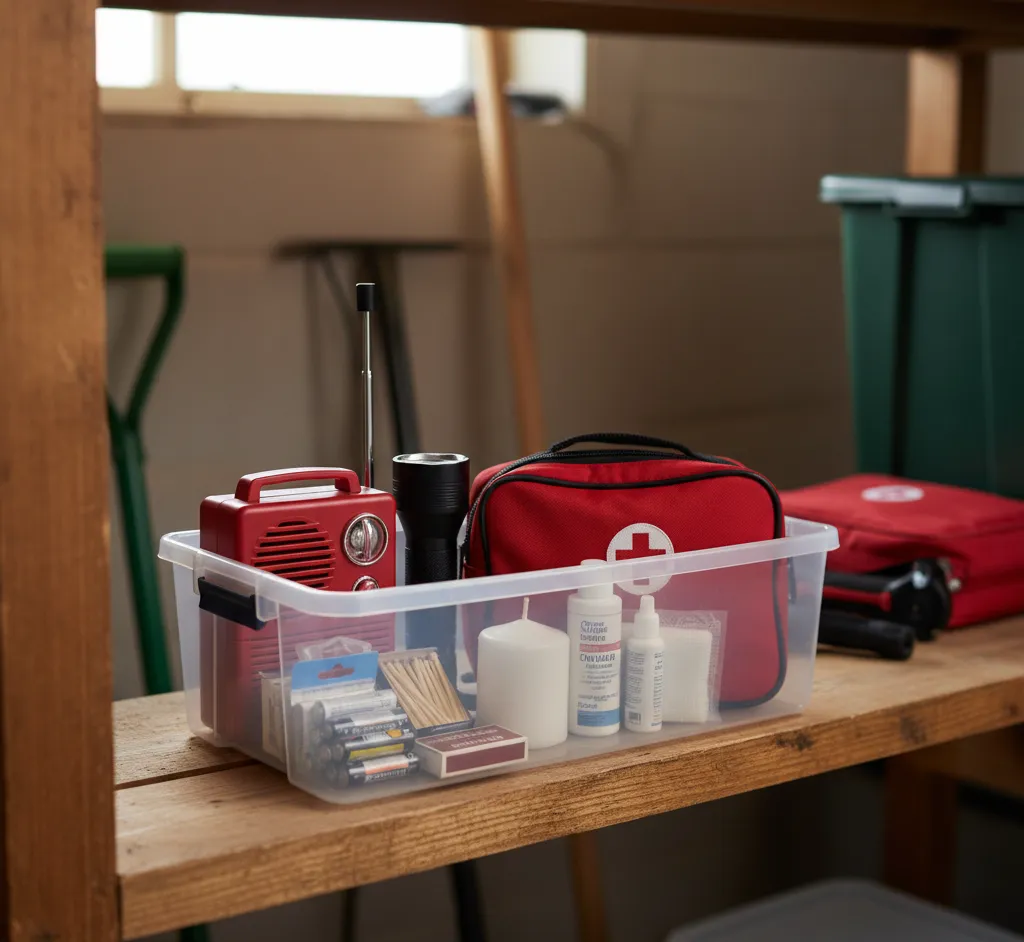
What a Home Emergency Kit Covers
This isn't your grab bag (that's for evacuations). This is supplies to keep you comfortable at home when:
- Power goes out for days
- Water supply is disrupted
- Roads are impassable (snow, flooding)
- Shops are closed or supply chains fail
Storm Arwen (2021), Storm Eunice (2022), and various flooding events have shown that UK infrastructure isn't as resilient as we assume.
Complete Home Emergency Kit
Water
- 6L per person (3 days at 2L/day for drinking)
- Extra for cooking, washing, pets
- Water purification tablets as backup
- Fill bathtub if you get warning of supply disruption
Food (No-Cook Options)
- Tinned food: beans, soup, tuna, fruit (with ring-pulls or a tin opener)
- Crackers, oatcakes, bread (freeze a loaf)
- Peanut butter, jam, honey
- Cereal bars, dried fruit, nuts
- UHT milk, instant coffee/tea
- Chocolate (morale is important)
Light
- LED torches (at least 2) with spare batteries
- Camping lantern (battery-powered)
- Candles + matches (use with care — not around children unattended)
- Head torch for hands-free light
Warmth (If Heating Fails)
- Extra blankets and sleeping bags
- Warm clothing layers
- Hot water bottles
- If you have a fireplace: firewood and matches
- Draft excluders for doors
Communication
- Battery-powered or wind-up radio (DAB/FM) — Roberts Play 10 (~£30) is excellent
- Fully charged power bank
- Car charger for phones (if needed)
- Written list of emergency contacts
- Whistle (for signalling if trapped)
First Aid & Hygiene
- Comprehensive first aid kit
- Prescription medications (keep a 7-day buffer)
- Basic toiletries
- Bin bags
- Hand sanitiser
- Baby supplies if applicable
Tools & Extras
- Cash: £50–100 in small notes
- Torch batteries (lots)
- Manual tin opener
- Multi-tool or basic tools
- Duct tape
- Important documents (copies)
Cost Breakdown
| Category | Budget |
|---|---|
| Water (containers + purification) | £10 |
| Food (3-day supply, 2 people) | £25 |
| Lighting (torch + lantern + batteries) | £20 |
| Radio | £20–30 |
| First aid | £15 |
| Misc (cash, tools, tape) | £15 |
| Total (2-person household) | ~£100–115 |
You probably already have half of this in your cupboards. Gather what you have, buy what's missing, and store it all together.
Storage
Keep everything in one or two plastic boxes, clearly labelled, in an accessible location — not the loft. Everyone in the household should know where it is. A cupboard near the front door or under the stairs works well.
Recommended Products
Wind-Up Emergency Radio
Amazon UKWind-up + solar
FM/AM
Built-in
Pros
- +No batteries needed
- +Solar backup
- +Built-in torch
Cons
- −DAB reception variable
- −Basic sound
Essential for power cuts when phones run out of battery.
View dealAffiliate link — we may earn a small commission at no extra cost to you
Petzl Tikkina
Amazon UK250
3x AAA
Pros
- +Reliable
- +Hands-free light
- +AAA batteries
Cons
- −No red light
- −Not rechargeable
The head torch for finding your way during a power cut.
View dealAffiliate link — we may earn a small commission at no extra cost to you
Lifesystems Trek First Aid Kit
Amazon UK170g
30+
Pros
- +Ready to use
- +Compact
- +Widely available
Cons
- −Basic quality
- −Supplement needed
The foundation first aid kit for every UK home.
View dealAffiliate link — we may earn a small commission at no extra cost to you
UK Home Emergency Scenarios
The most likely home emergencies in the UK: power cuts (average 1-2 per year), flooding (1 in 6 UK properties at risk), storms (increasing frequency), gas leaks, and water supply disruption. Your home kit should handle 72 hours of self-sufficiency for all household members.
The Minimum Home Kit
Stored in an accessible location: 3 days water (2L per person per day), 3 days non-perishable food, torch and spare batteries, battery/wind-up radio, first aid kit, prescription medications (7-day supply), cash, copies of important documents, warm blankets, and a phone charging solution.
Kit Organisation
A well-organised kit is usable in a hurry. Use colour-coded dry bags or labelled compartments so you can find what you need quickly, especially in emergencies where stress reduces your ability to think clearly. Practice locating items in your kit in the dark — you may need to use it at night during a power cut or emergency.
Regular Testing
Every item in your kit should be tested periodically. Torches need battery checks. Food needs rotation before expiry. Medications need expiry date verification. Water containers need cleaning. First aid supplies need replenishing after use. Set a calendar reminder every 6 months to audit your kit.
Scaling Your Kit
Start with the essentials and build up over time. You do not need to buy everything at once. The core of any emergency kit — water, food, warmth, light, first aid — can be assembled for under 50 pounds using items from Decathlon, Poundland, and your existing wardrobe. Add specialist items as budget allows. A basic kit today is infinitely better than a perfect kit you never get around to building.
Sharing Knowledge
Once you have built your kit, encourage family members and friends to do the same. Share what you have learned about practical preparedness. The UK government recommends every household should be able to sustain itself for 72 hours without external assistance. Most households are not prepared for even 24 hours. Be the exception.
Ready to gear up?
Use our kit builder to get a complete packout list tailored to your trip type, terrain, and budget — with prices and buy links.