This page contains affiliate links. If you purchase through them we may earn a small commission at no extra cost to you. Learn more
Office Emergency Kit for UK Workplaces — Essentials 2026
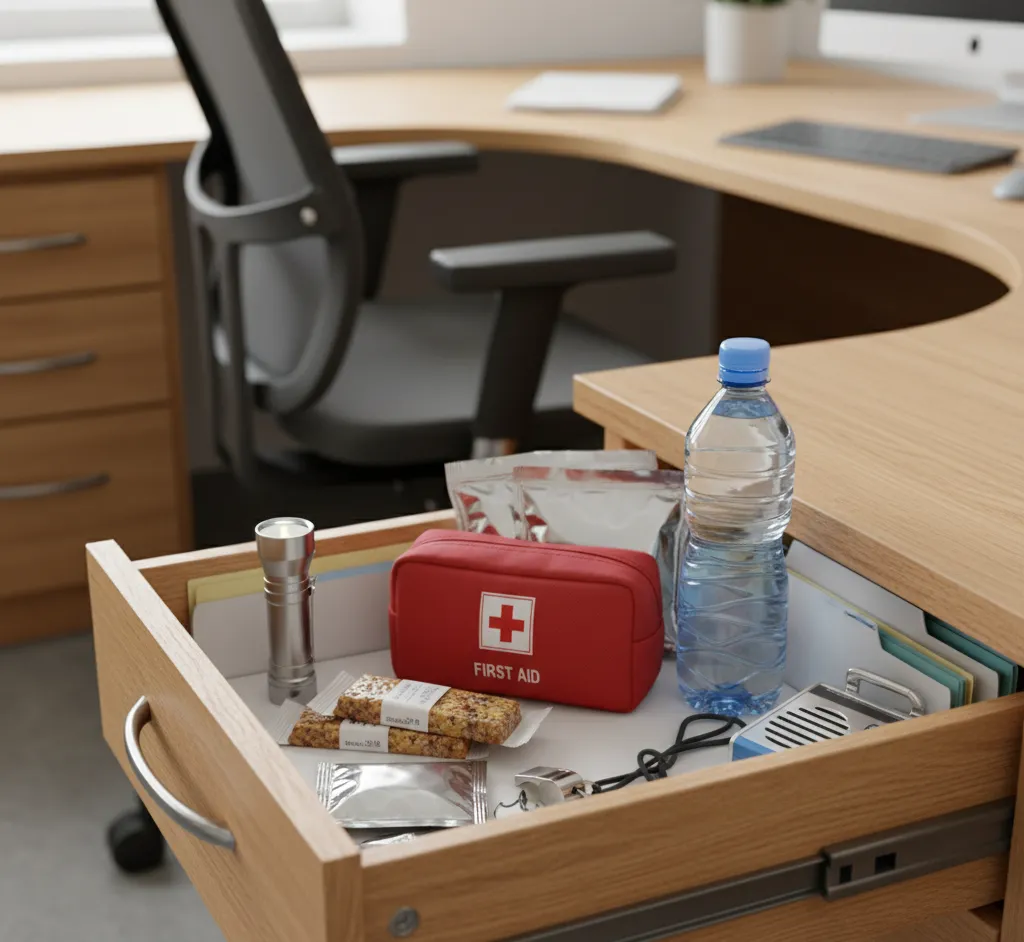
Why an Office Kit?
You spend roughly a third of your waking life at work. Power cuts, building lockdowns, severe weather preventing travel home, or transport strikes can leave you stranded at the office for hours — or overnight.
A small kit in your desk drawer means you're comfortable, fed and able to get home safely.
Personal Desk Kit (Under £30)
Essentials
- Small torch — a keyring LED (~£5) or small AA torch
- Phone charger — cable + small power bank (~£10)
- Water — 1L bottle, refilled regularly
- Snacks — cereal bars, nuts, dried fruit (rotate monthly)
- Cash — £20 in small notes and coins (for taxis, shops if card machines are down)
Comfort
- Warm layer — fleece or jumper kept at your desk
- Comfortable shoes — if you wear heels or dress shoes, keep trainers for a potential long walk home
- Rain jacket — compact packable type
Health
- Basic first aid — plasters, paracetamol, ibuprofen, antihistamines
- Prescription medications — small backup supply
- Sanitary products — if applicable
Getting Home
- Local map — printed, in case phone dies and you need to walk
- Transport info — alternative bus routes, train lines, taxi numbers (written down)
- Car supplies — if you drive, ensure your car kit is stocked (see our car kit guide)
What the Office Should Provide
Under UK health and safety law, employers must provide:
- First aid kits (adequate for the number of staff)
- Trained first aiders
- Fire extinguishers and evacuation plans
- Emergency lighting
They should also consider:
- Emergency water supply
- Thermal blankets
- Battery-powered emergency lights
- Wind-up radio
If your workplace doesn't have these, raise it with your health and safety representative. It's not excessive — it's required.
The "Getting Home" Problem
The biggest office emergency scenario isn't a disaster — it's transport failure. Train strikes, severe weather, or a fuel shortage could leave you needing to get home without your usual method. Think about:
- Can you walk home? How far is it? Do you have comfortable shoes and a route in mind?
- Alternative transport — bus routes you don't normally use, colleagues who live nearby
- Staying overnight — is there a sofa, floor space, or a nearby hotel? Keep a toothbrush in your kit
Recommended Products
Anker PowerCore 5000
Amazon UK5,000mAh
130g
Pros
- +One full phone charge
- +Pocket-sized
- +Cheap
Cons
- −Only one charge
- −Basic
Keeps your phone alive to get home during transport disruption.
View dealAffiliate link — we may earn a small commission at no extra cost to you
Lifesystems Pocket First Aid Kit
Amazon UK80g
15+
Pros
- +Fits in a desk drawer
- +Basic essentials
- +Very compact
Cons
- −Very basic
- −Limited contents
The minimum first aid for your desk drawer.
View dealAffiliate link — we may earn a small commission at no extra cost to you
Why Keep a Kit at Work?
Transport disruptions, power cuts, or emergencies can strand you at work for hours or force you to walk home. A small office kit ensures you can stay warm, fed, and connected. Keep in a desk drawer or locker: comfortable walking shoes, waterproof jacket, power bank, snacks, water bottle, torch, first aid basics, cash, and any medications.
The Walk-Home Kit
If public transport fails: comfortable shoes (essential if you commute in heels or dress shoes), waterproof jacket, phone power bank, snack bars, water, torch (if your route involves dark sections), small first aid kit, and cash for emergencies.
Kit Organisation
A well-organised kit is usable in a hurry. Use colour-coded dry bags or labelled compartments so you can find what you need quickly, especially in emergencies where stress reduces your ability to think clearly. Practice locating items in your kit in the dark — you may need to use it at night during a power cut or emergency.
Regular Testing
Every item in your kit should be tested periodically. Torches need battery checks. Food needs rotation before expiry. Medications need expiry date verification. Water containers need cleaning. First aid supplies need replenishing after use. Set a calendar reminder every 6 months to audit your kit.
Scaling Your Kit
Start with the essentials and build up over time. You do not need to buy everything at once. The core of any emergency kit — water, food, warmth, light, first aid — can be assembled for under 50 pounds using items from Decathlon, Poundland, and your existing wardrobe. Add specialist items as budget allows. A basic kit today is infinitely better than a perfect kit you never get around to building.
Sharing Knowledge
Once you have built your kit, encourage family members and friends to do the same. Share what you have learned about practical preparedness. The UK government recommends every household should be able to sustain itself for 72 hours without external assistance. Most households are not prepared for even 24 hours. Be the exception.
Ready to gear up?
Use our kit builder to get a complete packout list tailored to your trip type, terrain, and budget — with prices and buy links.