This page contains affiliate links. If you purchase through them we may earn a small commission at no extra cost to you. Learn more
Solo Moorland Wild Camping Kit Guide — UK Gear for 2026
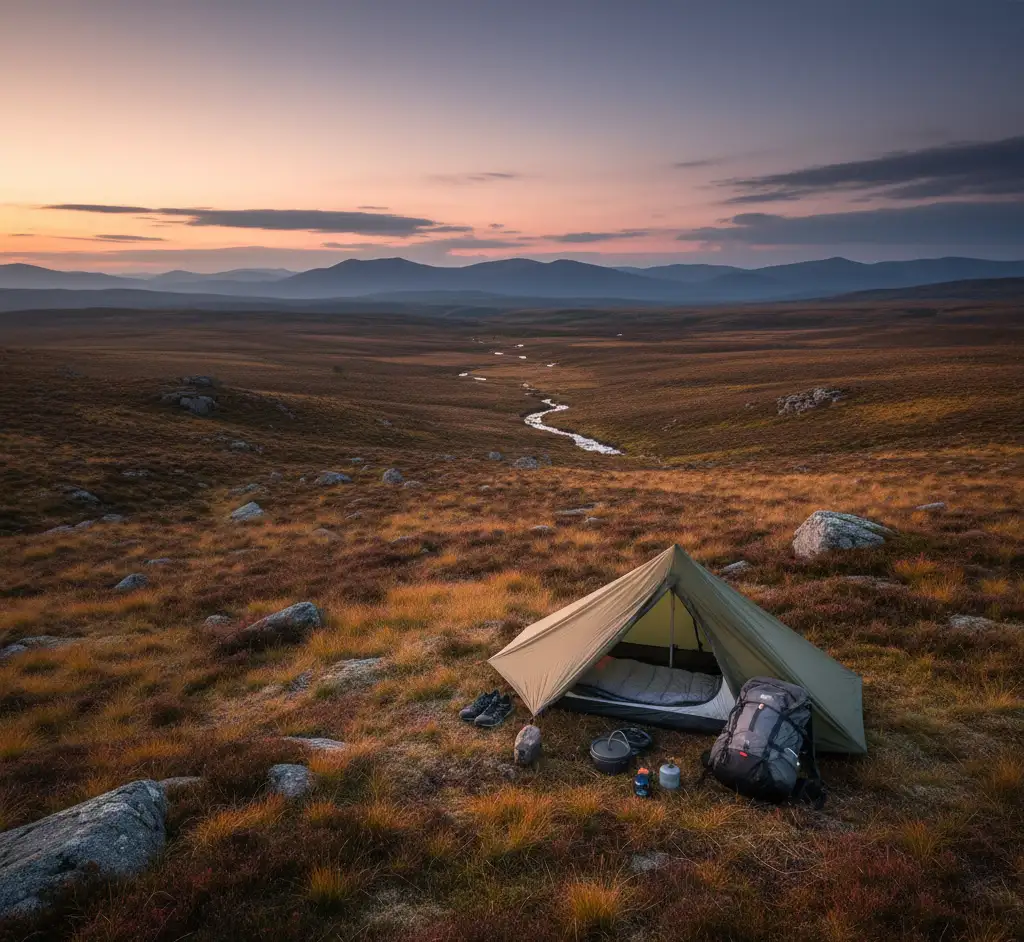
The Scenario
Solo wild camping on open moorland — Dartmoor, the Pennines, North York Moors, or similar exposed terrain. Minimal tree cover, potential for wind and rain, navigation in poor visibility.
Key Moorland Challenges
- Wind — no natural shelter on open moors. Your tent must handle sustained gusts
- Wet ground — peat bogs, marshy ground. Good site selection is critical
- Navigation — few landmarks in fog. Map and compass skills are essential
- Midges (Scotland, summer) — insect protection or head net
- Isolation — you're on your own. Self-sufficiency is non-negotiable
Moorland-Specific Advice
Pitch below the ridge, not on it. Wind on an exposed summit will destroy your sleep and potentially your tent. Drop 50m below the ridgeline for wind protection while keeping good drainage.
Avoid peat hags. They look sheltered but they hold water. Pitch on short grass near (but not in) streams.
No fires. Peat is flammable when dry and wildfire on moorland is devastating. Stove only.
Check the weather obsessively. MWIS (Mountain Weather Information Service) is your friend. Moorland in poor weather is navigational suicide without strong skills.
Key Product Recommendations
OEX Phoxx 1 V2
Amazon UK1.75kg
3,000mm
1
Pros
- +1.75kg backpackable
- +Waterproof
- +Packs small
Cons
- −Tight interior
- −Cramped porch
The best-value solo tent for moorland wild camping.
View dealAffiliate link — we may earn a small commission at no extra cost to you
Alpkit Pipedream 400
Amazon UK850g
-3C
Pros
- +Three-season warmth
- +Hydrophobic down
- +Good value
Cons
- −Duck down
- −Zip can snag
The sweet-spot sleeping bag for solo moorland camping.
View dealAffiliate link — we may earn a small commission at no extra cost to you
Soto WindMaster
Amazon UK67g
Excellent
Pros
- +Wind-resistant on open moorland
- +67g ultralight
- +Good simmer
Cons
- −Pot supports sold separately
- −Pricier than PocketRocket
The stove that handles open moorland wind.
View dealAffiliate link — we may earn a small commission at no extra cost to you
Solo Moorland Wild Camping
Moorland wild camping is exposed, remote, and magical. The key challenges: wind (always), rain (usually), bog (frequently), and navigation (essential). Camp low, below the ridge but above the bog. Use natural features for wind shelter. Carry enough water or know your water sources.
Solo Safety
Tell someone your route and expected return time. Carry a charged phone with offline maps. Check the weather forecast before heading out. Carry emergency shelter, first aid, and navigation equipment. Know when to turn back. Solo camping is brilliant but responsibility for your safety rests entirely with you.
Building Your Kit Gradually
You do not need to buy everything at once. Start with shelter and sleep (the most critical items for comfort and safety), then add cooking, then upgrade clothing. Most experienced campers have built their kit over years, upgrading one item at a time as budget and experience allow.
Second-Hand Gear
Quality outdoor gear holds its value and lasts for years. Check eBay, Facebook Marketplace, Alpkit's Used Gear section, and outdoor gear swap meets for second-hand bargains. A used Osprey pack at half price is often better value than a new budget pack at full price. Inspect zips, seams, and waterproofing before buying.
Weight vs Comfort Balance
Every camping trip involves a weight-comfort trade-off. Car camping: maximise comfort, ignore weight. Weekend backpacking: balance both. Ultra-distance: minimise weight ruthlessly. Match your gear choices to your trip type. There is no virtue in carrying ultralight gear when you are car camping, and no sense carrying luxury items when you are hiking 25km per day.
Seasonal Adjustments
UK camping spans temperatures from -10C to 25C depending on season and altitude. No single kit covers everything perfectly. Build a modular system: core items (tent, pack, stove) that work year-round, plus seasonal additions (warmer bag, insulated mat, extra layers for winter; lighter bag, sun protection for summer). This is more efficient and cheaper than owning separate summer and winter kits.
Ready to gear up?
Use our kit builder to get a complete packout list tailored to your trip type, terrain, and budget — with prices and buy links.
Related reading
Autumn Camping Guide for the UK — Tips, Gear and Best Spots
Autumn camping in the UK — shorter days, stunning colours, and quieter trails. How to camp comfortably from September to November.
Hammock Camping Guide for the UK — Setup, Gear and Advice
Everything you need to know about hammock camping in the UK — setup, insulation, tree straps, and when hammocks beat tents.
Solo Camping Guide — Safety, Confidence & Enjoyment
A practical guide to solo camping in the UK — how to stay safe, build confidence, and enjoy the unique rewards of camping alone.
Build your kit
Get a tailored packout list with prices and buy links.
Start building