This page contains affiliate links. If you purchase through them we may earn a small commission at no extra cost to you. Learn more
Neighbourhood Emergency Planning — Prepare Your Street
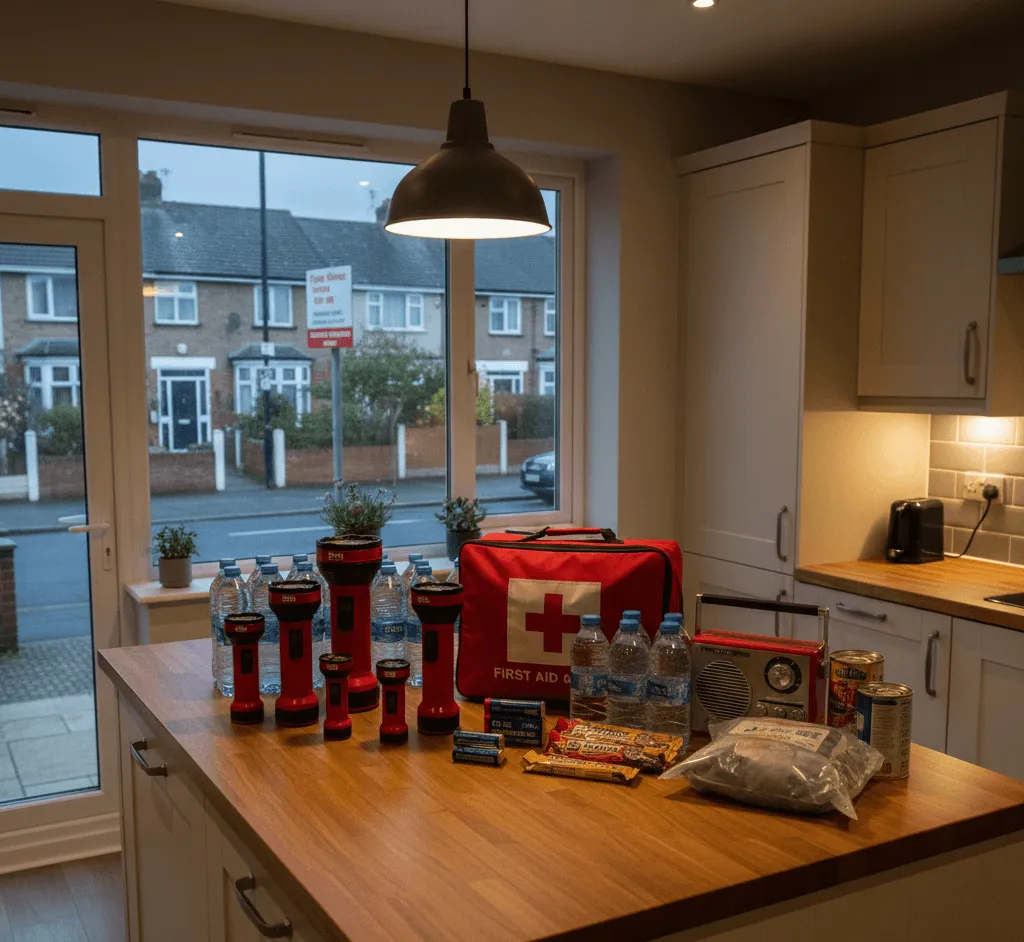
Quick Summary
- Community resilience begins with knowing who lives near you — most UK streets are unprepared for this
- A simple WhatsApp group and a shared list of vulnerable residents can save lives in a crisis
- Local councils have emergency planning teams — most welcome contact from community groups
Why Your Street Needs a Plan
Individual household preparedness matters. But when a real emergency hits — a major flood, a prolonged power cut, a severe storm, a gas explosion — the response that actually helps people is almost always community-level.
In recent major UK emergencies, from the flooding in Cumbria and Yorkshire to winter storms across Scotland and Wales, it was neighbours helping neighbours that made the difference in the hours before official support arrived. People who knew each other's names, knew who lived alone, knew who had mobility problems — those communities coped better.
This guide is about building that capacity before you need it.
Start Small: Just Get to Know Your Neighbours
The most important preparedness action most people in the UK can take is not buying a water filter or building a 72-hour kit. It is knocking on the doors of the people who live next to them.
You do not need to make this dramatic or formal. Introduce yourself. Exchange phone numbers. Find out if anyone lives alone, has a disability, uses electricity-dependent medical equipment, or has young children.
That conversation — five minutes on a doorstep — is the foundation of everything else.
Who to Identify First
- Elderly residents living alone — Particularly those over 75. Cold weather and power cuts are medical emergencies for many older people
- Disabled residents — Those with mobility limitations, hearing or visual impairments, or conditions affecting their ability to evacuate
- People on medical equipment — Dialysis machines, oxygen concentrators, powered wheelchairs, and electric stairlifts all fail during power cuts
- Families with young children — May need help during evacuation or if a parent is incapacitated
- Non-English speakers — May not receive or understand emergency broadcast communications
Set Up a Communication System
WhatsApp or Signal Group
A neighbourhood messaging group is the most practical tool for immediate communication during and after an emergency. It works even on limited mobile data when broadband is down. Agree a norm upfront: this group is for emergencies and community safety, not general chat.
A Paper Contact List
Do not rely entirely on smartphones. A simple printed list of household addresses and phone numbers — shared with all participants — means you have backup if phones run flat. Keep one on your fridge.
Identify a Meeting Point
Agree a location where residents can gather if an emergency requires evacuation. This should be:
- Away from likely hazard areas (not directly by the flood-prone river or under power lines)
- Accessible on foot, without crossing hazardous areas
- Identifiable to people who are new to the street
Form or Join a Community Resilience Group
Community resilience groups (sometimes called Emergency Community Response Volunteers, Neighbourhood Emergency Plans, or Community Emergency Planning groups) are recognised by local authorities across the UK. They do not require formal registration to function, but many councils provide support and resources to established groups.
What a Group Typically Does
- Maintains a list of vulnerable residents and their needs
- Stores shared emergency equipment (see below)
- Coordinates with the local council's emergency planning team
- Runs occasional awareness exercises or information sessions
- Acts as a point of contact for emergency services during a local incident
How to Start One
- Identify two or three interested neighbours — you do not need a committee
- Contact your local council's emergency planning team (most have one; find it on the council website or call the main switchboard)
- Register with the Community Resilience Development Framework — a government resource that provides templates and guidance
- Consider linking up with existing local voluntary organisations: St John Ambulance, the British Red Cross, or your local Voluntary Sector Support organisation
Parish and town councils can help
Shared Emergency Equipment
A community does not need to duplicate everything — some equipment is more useful as a shared resource. If your group agrees to pool anything, keep a written record of where it is stored and who is responsible.
Practical Shared Resources
| Item | Notes |
|---|---|
| Portable power bank / charging station | For charging phones when power is out |
| Pump (manual or electric) | Useful for minor flooding events |
| Sandbags (unfilled) and sand | Pre-positioned in flood-risk areas |
| Megaphone or loud-hailer | For communicating across a street during noise |
| Basic first aid kit | Beyond what individual households carry |
| High-visibility vests | For volunteers coordinating traffic or access |
| Community generator | Only if someone is trained to use it safely |
Linking Up with Local Authorities
Your local council's emergency planning team exists specifically to support community preparedness. They can:
- Advise on local hazard risks (flooding, industrial sites, infrastructure)
- Provide template emergency plans and guidance documents
- Register your group with their emergency response network
- Notify your group directly during a declared emergency in your area
- Connect you with other local groups and the voluntary sector
To find your contact:
- Search your council's website for "emergency planning" or "community resilience"
- Call the main council switchboard and ask for the emergency planning team
- In some areas, this function sits within the local fire service
The Cabinet Office Briefing Rooms (COBR) process and formal civil contingencies work ultimately rests with county and unitary councils in England, and equivalent bodies in Scotland, Wales, and Northern Ireland. Your district or borough council is usually the right starting point for community-level work.
Electricity Priority Services Register
Ensure any household in your street with electricity-dependent medical equipment is registered on the Priority Services Register with their distribution network operator. This is free and means the household gets priority contact during power cuts, and can receive practical support during extended outages. Register via the DNO's website or by calling 105.
What to Do During an Emergency
Even without a formal plan in place, the principles are straightforward:
- Check vulnerable neighbours first — Knock on doors. Are they safe? Do they need to evacuate? Do they need medication retrieved?
- Share information — Use your group messaging channel to share what you know about the situation as it develops
- Direct people to help — Know the local authority's emergency helpline number before you need it
- Don't obstruct the emergency services — Coordinate with them rather than around them. Make yourself identifiable as a community volunteer if you are coordinating
- Monitor for secondary risks — After a flood, structural damage, gas leaks, and electrical hazards become live concerns
Do not put yourself at risk
After the Emergency
Recovery is often where community groups provide most value. In the immediate aftermath:
- Continue welfare checks on vulnerable residents
- Help with practical tasks where appropriate (clearing debris, collecting prescriptions)
- Document any damage for insurance or local authority record purposes
- Report ongoing hazards (blocked drains, damaged infrastructure) to the council
- Debrief as a group — what worked, what was missing, what to improve
Long-term, consider whether the emergency has identified gaps in your community's preparedness — equipment that was missing, residents who were not on your list, communication channels that didn't work.
Key Resources and Contacts
| Organisation | What They Offer | Contact |
|---|---|---|
| Your local council emergency team | Local hazard advice, plan templates | Council website |
| Cabinet Office (Prepare UK) | National guidance and resources | gov.uk/prepare |
| British Red Cross | Community resilience training | redcross.org.uk |
| St John Ambulance | First aid training | sja.org.uk |
| Wilderness Medical Training | Remote / outdoor first aid training | wildernessmedicaltraining.co.uk |
| DNO (electricity) | Priority Services Register | Via 105 |
| NHS 111 | Non-emergency medical advice | 111 |
| Emergency services | Life-threatening emergencies | 999 |
A street that knows itself is a street that copes. You do not need a formal plan, a committee, or a budget to start — just a conversation with the person next door.
Ready to gear up?
Use our kit builder to get a complete packout list tailored to your trip type, terrain, and budget — with prices and buy links.
Related reading
Emergency Preparedness for UK Homes: Your Complete Guide
A practical guide to emergency preparedness for UK homes covering floods, storms, power cuts, and everything in between.
Emergency Preparedness for Elderly People in the UK
How to help elderly relatives and neighbours prepare for emergencies — medical equipment during power cuts, grab bags, and checking in during crises.

UK Flood Preparation: How to Protect Your Home in 2025
Practical flood preparation advice for UK homes including sandbags, flood barriers, insurance, and what to do before, during, and after a flood.

Best Emergency Blankets for UK Hikers and Campers 2026
Best emergency blankets and survival blankets for UK outdoor use in 2026. Mylar, bivvy-style and reusable options tested and compared.