This page contains affiliate links. If you purchase through them we may earn a small commission at no extra cost to you. Learn more
Wet Weather Camping — How to Camp Comfortably in UK Rain
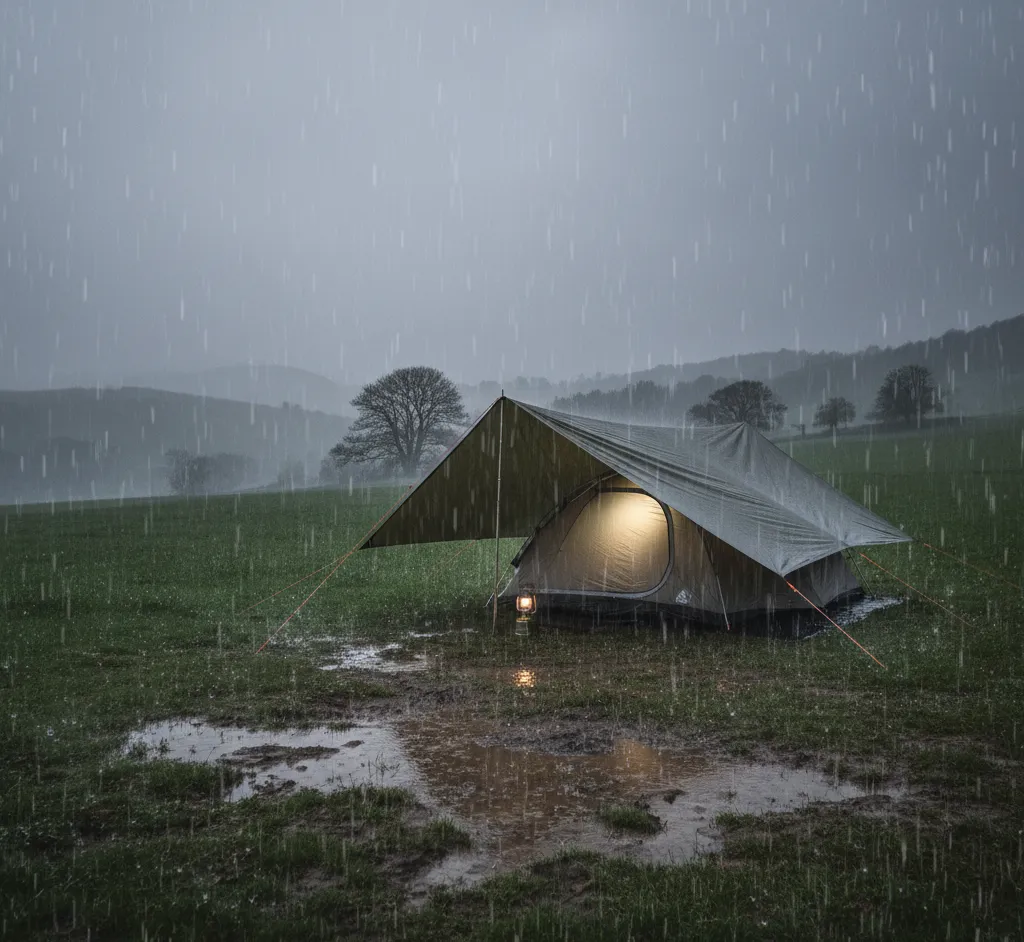
Wet Weather Camping — How to Camp in the Rain
If you're going to camp in the UK, you're going to camp in the rain. It's not a question of if — it's a question of when and how much. Some of the best wild camps happen in wet weather, but only if you're prepared for it. Camping miserably wet and cold is no fun for anyone.
Mindset
First, the mental game. Rain doesn't have to ruin a camp. Some of the most atmospheric, memorable nights outdoors happen in bad weather — the sound of rain on a tarp, mist rolling through valleys, the satisfaction of being warm and dry when everything outside is sodden.
The key shift is this: you don't need to stay completely dry. You need to stay warm. Warm and a bit damp is fine. Cold and wet is dangerous.
Site Selection
Where you pitch matters more in rain than any other condition.
Good Choices
- Slightly elevated ground — water runs downhill. Don't be at the bottom.
- Well-drained soil — grass, gravel, or sandy ground rather than peat or clay.
- Natural shelter — the lee side of a wall, ridge, or woodland edge. This reduces wind-driven rain.
- Firm ground — avoid anywhere that's already boggy. It'll only get worse.
Bad Choices
- Valley bottoms — cold air and water both pool here
- Beside streams — water levels can rise dramatically overnight in heavy rain
- Under solitary trees — lightning risk
- On slopes — water will run under your tent
- Anywhere flat and low — it's flat and low for a reason, and that reason often involves water
Streams and rivers can rise extremely fast in heavy rain, especially in mountain areas. A trickling beck can become a torrent in hours. Never camp on a riverbank or flood plain during unsettled weather.
Gear for Wet Weather
Tent
Your tent is your shelter — it needs to work properly in rain.
- Check waterproofing before the trip. Re-proof the flysheet if it's more than a year old or water isn't beading on the surface.
- Seam seal if the tent is new or seams are showing wear.
- Pitch taut — a sagging flysheet allows water to pool and eventually drip through.
- Groundsheet — make sure the tent groundsheet is intact. A footprint (separate ground cloth) adds protection but shouldn't extend beyond the tent (or it channels water underneath).
Tarp
A separate tarp is the single best wet weather upgrade you can make:
- Pitch it over your cooking area for dry food prep
- Create a sheltered space for sitting outside the tent
- Use it as extra cover over your tent in extreme rain
- A 3x3m tarp is versatile and doesn't weigh much
Dry Bags
The most important wet weather gear you own:
- Sleeping bag — always in a dry bag, non-negotiable
- Spare dry clothes — in a separate dry bag
- Electronics — phone, battery pack, in a dry bag or waterproof case
- Food — doesn't need to be waterproof but keeping it dry is nicer
Use a bin liner inside your rucksack as a cheap and effective waterproof liner. It weighs nothing and ensures your sleeping bag and spare clothes stay bone dry even if the rucksack soaks through.
Waterproof Clothing
- Jacket — a properly waterproof jacket (not water-resistant) with taped seams. This is your most important wet weather garment.
- Trousers — waterproof overtrousers. Side zips make them easier to put on over boots.
- Gaiters — keep water from running into your boots from above.
- Hat — a brimmed hat keeps rain off your face better than a jacket hood.
Staying Dry in Camp
Setting Up
- Pitch your tent quickly and efficiently. Practice at home so you're not fumbling in the rain.
- If possible, pitch the flysheet first (or use a tent where inner and flysheet pitch together).
- Get your kit inside before it gets wet.
In the Tent
- Change into dry clothes as soon as you're in the tent.
- Wet clothes go in the porch, not inside the sleeping area.
- Keep the groundsheet dry — don't walk into the inner tent with wet boots.
- Open vents for airflow even in rain — condensation from breathing and damp clothes will soak the inside of a sealed tent.
Cooking
Cook in the tent porch if conditions demand it:
- Keep the stove stable on a flat surface
- Ensure ventilation — never cook in a sealed tent
- Be aware of fire risk — nylon melts
- Have water nearby to douse any mishaps
Under a separate tarp is better if you have one.
Drying Things
Accept that some things will stay wet until you get home. Prioritise keeping these dry:
- Sleeping bag
- The clothes you'll sleep in
- Tomorrow's base layers
- Electronics
Everything else can be wet. Wet walking clothes are uncomfortable but not dangerous if you have dry sleeping clothes.
Dealing with Condensation
Condensation is the hidden enemy of wet weather camping. Even if no rain gets in, your breath, body heat, and damp clothes create moisture that condenses on the inside of the tent.
Reducing condensation:
- Open vents — airflow is the main solution
- Don't cook inside the tent if possible
- Don't store wet clothes inside the sleeping area
- Wipe inner tent walls with a cloth in the morning
- Accept that some condensation is inevitable in humid conditions
Morale
Wet weather camping is a mental challenge as much as a physical one. Tips for keeping spirits up:
- Hot drinks — a cup of tea in the rain is transformative. Carry a flask.
- Good food — warm, filling food matters more in bad weather.
- A good book or podcast — entertainment for tent-bound evenings.
- Dry socks — putting on warm, dry socks after a wet day is one of life's simple pleasures.
- Perspective — tomorrow might be glorious. Some of the best mornings follow the worst nights.
After the Rain
When it stops, take advantage:
- Air your tent and sleeping bag
- Spread out damp kit to dry in any sun or wind
- Check your pitch for water pooling
- Enjoy the post-rain landscape — the air is clearest after a front passes, and the light can be extraordinary
When to Call It
There's a difference between character-building wet camping and genuine misery. Consider retreating if:
- Your sleeping bag is wet (hypothermia risk)
- You can't get warm despite eating and changing clothes
- Conditions are deteriorating with no improvement forecast
- Water is flooding your tent
- You're no longer enjoying any aspect of the experience
There's no shame in packing up and heading home. Good judgement is more valuable than stubbornness.
Recommended Wet Weather Gear
These three items make the biggest difference when conditions turn wet.
Berghaus Paclite 2.0 Waterproof Jacket
Amazon UK290g
Gore-Tex Paclite
28,000mm
High
Pros
- +Genuinely waterproof — not water-resistant, waterproof
- +Incredibly light for a Gore-Tex jacket
- +Packs into its own pocket
Cons
- −Not the cheapest option
- −Lacks pit zips
A properly waterproof jacket that weighs under 300g. When the rain hits, you'll be glad you invested.
View dealAffiliate link — we may earn a small commission at no extra cost to you
DD Hammocks Tarp 3x3
Amazon UK3m x 3m
790g
Polyester 190T
19
Pros
- +Creates a dry cooking and sitting area outside the tent
- +Multiple pitch options for different conditions
- +Affordable and robust
Cons
- −Adds weight to your pack
The single best wet weather upgrade. A dry space to cook and sit outside the tent transforms a rainy camp.
View dealAffiliate link — we may earn a small commission at no extra cost to you
Exped Fold Drybag 8L
Amazon UK8 litres
30g
PU-coated nylon
Roll-top
Pros
- +Keeps sleeping bag bone dry even in a soaked rucksack
- +Roll-top closure is reliable
- +Light enough to carry several
Cons
- −Not transparent — harder to find items inside
Your sleeping bag goes in a dry bag. Always. Non-negotiable. This one does the job reliably and cheaply.
View dealAffiliate link — we may earn a small commission at no extra cost to you
Rain is part of camping in the UK. Embrace it, prepare for it, and you'll find that some of your best camping memories involve weather that would keep most people indoors.
Ready to gear up?
Use our kit builder to get a complete packout list tailored to your trip type, terrain, and budget — with prices and buy links.
Related reading
Autumn Camping Guide for the UK — Tips, Gear and Best Spots
Autumn camping in the UK — shorter days, stunning colours, and quieter trails. How to camp comfortably from September to November.
Beginner's Guide to Wild Camping in the UK — Getting Started
A complete step-by-step guide to wild camping for first-timers — what you need, how to find a spot, and how to have a brilliant first night outdoors.
Lightweight Camping Guide — Going Ultralight in the UK
How to reduce your camping pack weight without sacrificing comfort or safety — practical ultralight tips for UK wild camping.
Best Rucksacks for Hiking and Wild Camping UK 2026
Best rucksacks and backpacks for hiking and camping in the UK 2026. Day packs to multi-day expedition rucksacks compared.