This page contains affiliate links. If you purchase through them we may earn a small commission at no extra cost to you. Learn more
Winter Camping Gear UK: Cold-Weather Kit for November–February
Who Should Be Winter Camping?
Be honest with yourself before packing for a December or January wild camp. UK winter camping requires:
- Confident navigation in low visibility, potentially snow-covered terrain
- Real experience with three-season camping (not just a few summer trips)
- Understanding of hypothermia, frostbite, and cold injury prevention
- Physical fitness for carrying heavier packs on shorter winter days
- A willingness to accept genuine risk and plan accordingly
If you're not there yet, autumn camping is the bridge. Cold nights, short days, challenging weather — without the additional hazard of frozen ground, ice-covered terrain, and temperatures that can kill gear and people.
For those who are ready: winter camping in the UK can be extraordinary. Frozen landscapes, complete solitude on popular hills, and the deep satisfaction of genuinely challenging yourself. The gear cost is significant but justified.
Shelter: Four-Season Tents Are Not Optional
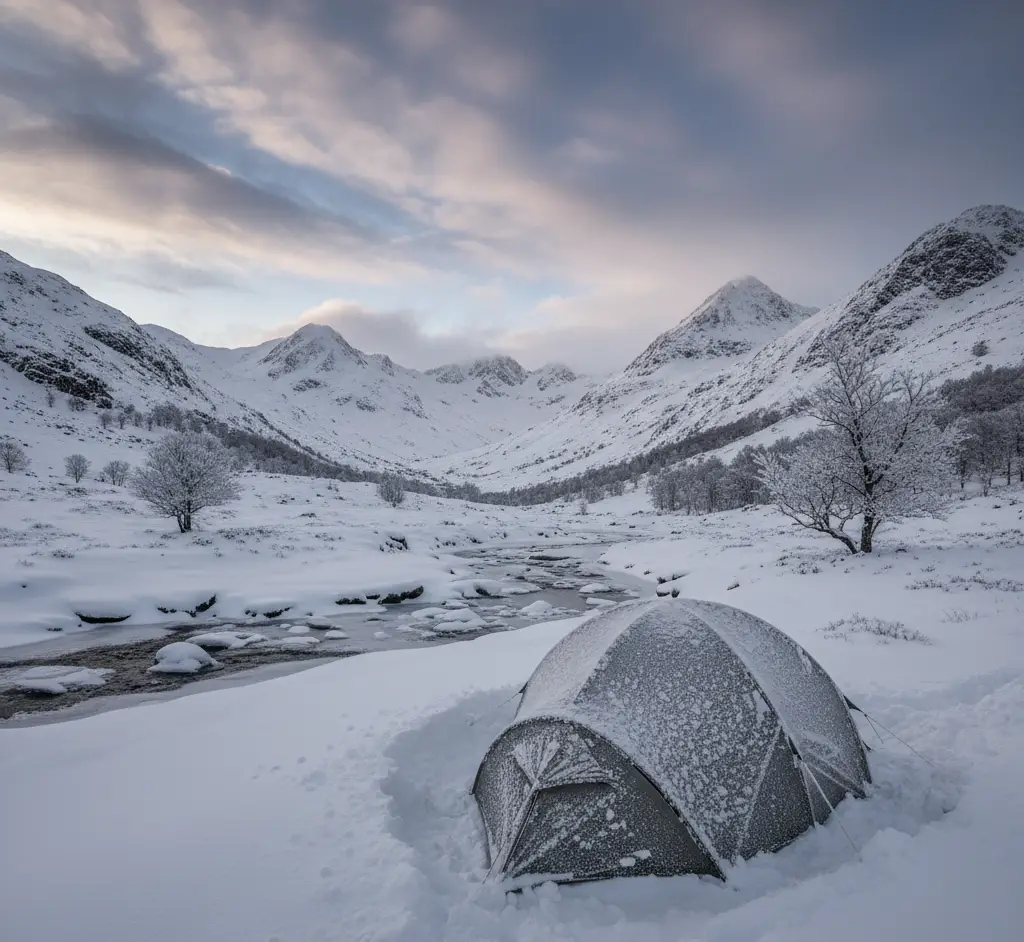
In true winter conditions — snow loading, sustained high wind, temperatures well below freezing — the structural difference between a three-season and four-season tent is the difference between shelter and a collapse at 2am.
Four-season tents feature:
- Geodesic pole geometry — distributes snow load, resists deformation in wind
- Fewer mesh panels — keeps warmth in and drives snow out
- Stronger poles — typically 8.5mm or 9mm DAC or Easton aluminium
- Snow valances — ground-level flaps that snow weighs down, sealing the base
The Terra Nova Quasar Plus (£550) is the benchmark UK winter tent. It has survived conditions that would destroy most three-season designs. The MSR Access 2 (£700) is the premium expedition option — lighter than it should be for what it handles.
Budget reality: a strong three-season tent (MSR Hubba Hubba, Hilleberg Akto if you can stretch to ~£600) can handle UK winter conditions in non-extreme scenarios. But for sustained winter use, budget for a proper four-season design.
Always carry MSR Blizzard Stakes (~£10 for 4) or equivalent snow pegs. Standard pegs pull out in frozen ground and soft snow.
Sleeping System: The Temperature Rating Matters
This is the most critical gear decision in winter camping. A sleeping bag that's not rated cold enough does not just make you cold — it creates genuine hypothermia risk overnight.
For UK winter camping:
- Sleeping bag comfort rating: -10°C to -15°C
- Don't rely on lower limit ratings — these are survival minimums, not sleep temperatures
- Down vs. synthetic: down wins on warmth-to-weight at this temperature range, but must stay dry
The Rab Neutrino 800 (~£400) is the benchmark UK winter sleeping bag — 800+ fill power goose down with hydrophobic treatment, comfort rating to -9°C. It's expensive and worth every pound.
The Mountain Equipment Helium 600 (~£350) is a strong alternative at a slight saving. For those who struggle to warm up, the Rab Neutrino Endurance 600 at -10°C comfort offers more thermal insurance.
Sleeping mat is equally important in winter. Cold ground conducts heat away from your body relentlessly. The minimum R-value for winter camping is 5:
- Thermarest NeoAir XTherm (~£250) — R-value 6.9, 430g, the best winter mat available
- Exped DownMat 9 (~£280) — R-value 8.5 for the coldest conditions
Pair your mat with a thin foam mat underneath. The foam provides backup insulation if the inflatable deflates, and adds meaningful R-value for minimal weight.
Sleeping Bag Liners
A Thermolite or fleece liner adds 5–8°C of warmth and, critically, keeps the interior of your expensive down bag clean. Clean bags maintain loft better. The Sea to Summit Reactor Extreme liner (~£55) is the warmest liner available and is genuinely useful for winter cold.
Clothing: Winter Layering Is Different
Winter layering adds two items not present in other seasons: a dedicated down camp layer, and proper waterproof/windproof shell trousers.
Winter-specific clothing list:
- Heavyweight merino base layer (200gsm+) — the Icebreaker 260 Tech tee (~£75) is an excellent all-night base layer
- Fleece mid-layer — Rab Nexus Fleece (~£100)
- Down or synthetic insulated jacket — for camp. The Rab Microlight Alpine (~£180) is exceptional
- Hardshell waterproof jacket — GORE-TEX minimum. In real winter conditions, the Berghaus Paclite is not enough — upgrade to the Berghaus MTN Guide GTX (~£350) or equivalent
- Waterproof/windproof trousers — not optional
- Warm hat, balaclava, and neck gaiter — all three
- Two pairs of gloves — liner gloves inside insulated outer mitts. Wet gloves in winter are dangerous
- Winter boots — insulated, stiff enough for crampons if needed. The Scarpa Zodiac Plus GTX (~£210) handles everything from winter walks to Scottish winter climbing
Dress in layers you can add and remove without fully undressing. Managing body temperature is as critical in winter as in summer — sweating soaks your base layer and the moisture will chill you.
Cold Weather Hazards and Safety
Hypothermia is the primary risk in UK winter camping. It develops faster than most people expect, particularly when wet. Warning signs: uncontrollable shivering, confusion, slurred speech, clumsiness. Treatment: shelter, dry clothes, warm fluids, insulation. Prevention: stay dry, keep eating, keep moving, and get into your sleeping system before you get cold.
Frostbite is less common in UK conditions than true Arctic environments but possible in high wind at altitude. Exposed skin, particularly fingers, toes, nose and ears, is vulnerable. Cover everything. Check your extremities regularly.
Essential Safety Kit
- Group shelter / bothy bag — a Terra Nova Bothy Bag (~£40) is non-negotiable winter kit. If someone in your party cannot continue, a bothy bag provides immediate shelter while you assess the situation
- PLB or satellite communicator — strongly recommended for winter mountain camping. The Garmin inReach Mini 2 (~£300) sends GPS coordinates if you cannot self-rescue
- Navigation kit — map, compass, and GPS. All three in winter, not just your phone
- First aid kit — including SAM splint, emergency foil blankets, and knowledge of cold injury treatment
Stoves and Cooking in Freezing Conditions
Standard gas canisters (pure butane) fail below 0°C. For winter camping you need:
- Isobutane/propane mix canisters (MSR IsoPro, Primus PowerGas) — perform down to around -10°C
- OR a liquid fuel stove — the MSR WhisperLite Universal (~£110) runs on white gas and petrol and works in any temperature, including extreme cold
Warm the canister in your sleeping bag before cooking if temperatures are very low. The MSR WindBurner (~£170) is specifically designed for wind resistance and cold performance — the integrated pot-burner system traps heat more efficiently than open-system designs.
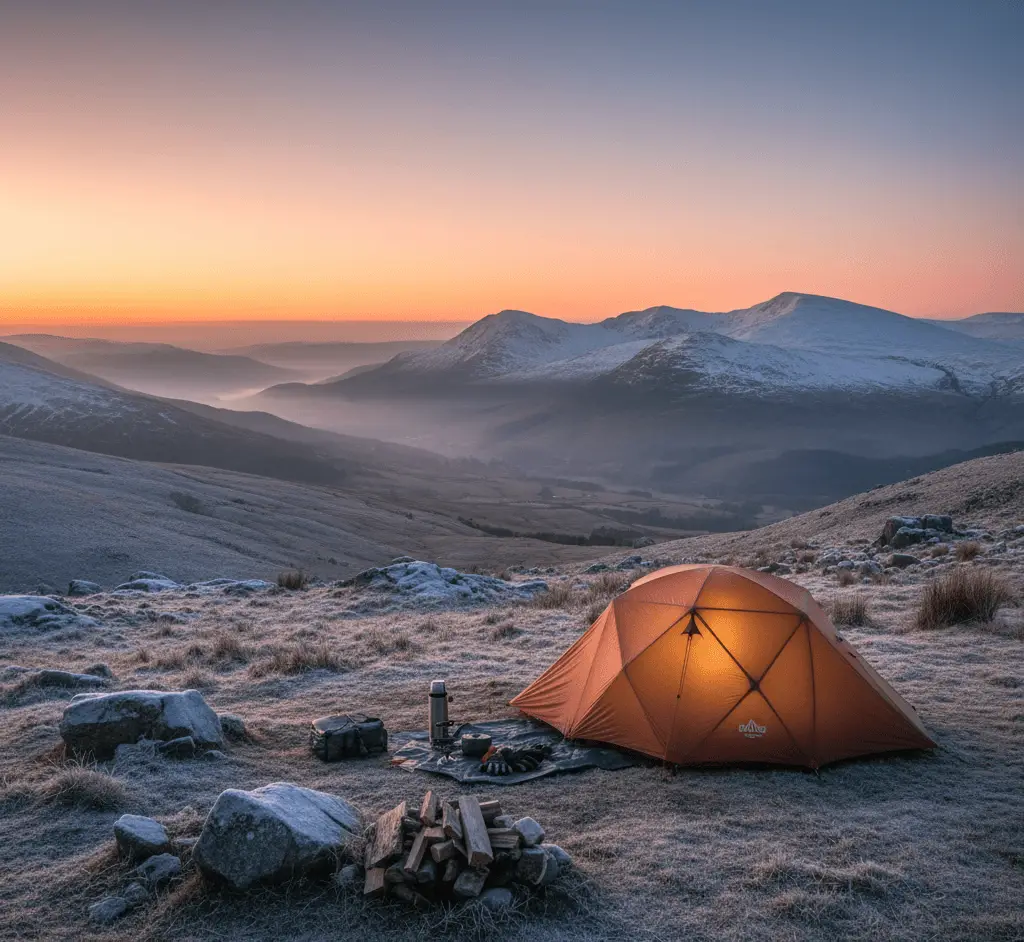
Carry a Thermos flask. Fill it with hot water before sleeping and you have warm drinks available at 3am without leaving your sleeping bag. This is not a luxury item in winter.
Battery and Electronics Management
Cold kills batteries faster than almost anything else. A phone at -10°C can drop from 40% to zero in minutes. Practical management:
- Keep your phone, power bank and spare batteries in an inner jacket pocket or sleeping bag overnight
- Use a separate GPS device for navigation — longer battery life than smartphones
- Carry a power bank (Anker 10,000mAh at ~£25) for recharging overnight
- The Black Diamond Spot 400-R head torch runs on a rechargeable battery — charge it fully, keep it warm
Winter Camping Gear Costs
Winter camping is expensive. There is no budget route to being genuinely safe in winter mountain conditions. The core gear investment:
| Item | Realistic Budget |
|---|---|
| Four-season tent | £400–£700 |
| Winter sleeping bag | £300–£450 |
| Winter sleeping mat | £200–£280 |
| Winter clothing set | £400–£600 |
| Safety kit (PLB/bothy/first aid) | £150–£400 |
Total minimum: £1,450–£2,430 for genuinely appropriate winter kit. This is not money wasted — quality winter gear lasts a decade or more with proper care. But be honest about whether you'll use it enough to justify the investment before committing.
For infrequent winter camping, consider hiring key items (tent and sleeping bag) from outdoor equipment hire companies. Alpkit, Cotswold Outdoor and various mountain centres offer hire schemes.
Ready to gear up?
Use our kit builder to get a complete packout list tailored to your trip type, terrain, and budget — with prices and buy links.