This page contains affiliate links. If you purchase through them we may earn a small commission at no extra cost to you. Learn more
Best Fire Starters for UK Camping and Survival 2026
The Fire-Starting Trinity
You need three things: ignition source, tinder, and knowledge. Two out of three won't cut it. Carry multiple ignition methods and practised tinder, and learn to build a fire lay before you need to rely on it.
Fire is one of the most useful survival tools available. It provides warmth, boils water, cooks food, signals for help, dries gear, and lifts morale. But starting a fire in wet UK conditions is genuinely challenging without the right tools and technique. Practise at home in dry conditions before you depend on it in the field.
Best Ignition Sources
1. Light My Fire Swedish FireSteel 2.0 — ~£12 (Best Firesteel)
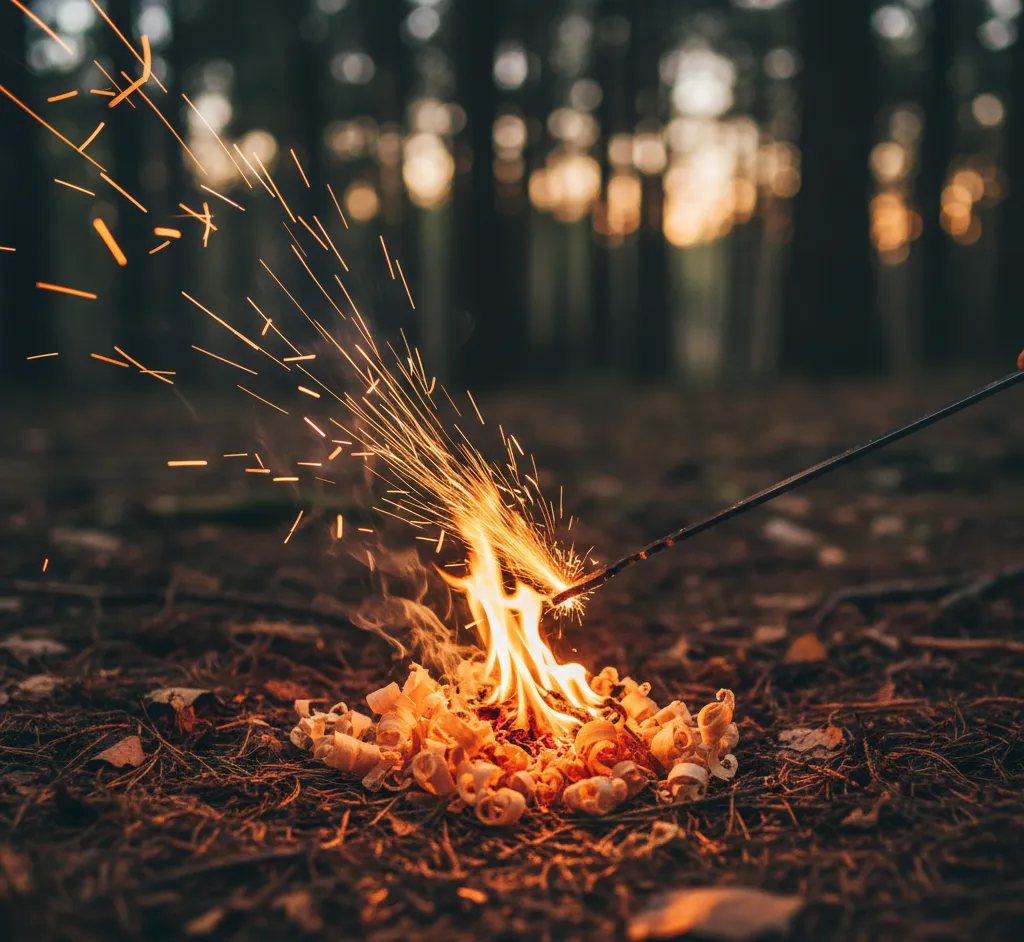
12,000 strikes at 3,000°C. Works when wet, works when cold, never runs out of fuel. The industry standard ferro rod. Pair with proper tinder and this is the most reliable fire starter you can carry.
Pros: Thousands of uses, works wet, works at altitude, sparks are incredibly hot Cons: Requires practice, needs good tinder, harder to use than a lighter
2. UCO Stormproof Matches — ~£6 (Best Matches)
Burn for 15 seconds even in wind and rain. Relight after being submerged in water. Carry these as a backup — they're virtually foolproof.
Pros: Work in terrible conditions, relight after submersion, easy to use Cons: Limited quantity per box, bulkier than a lighter, produce toxic fumes
3. BIC Mini Lighter — ~£2 (Best Primary)
Let's be honest — a BIC lighter is the fastest way to start a fire. Cheap, reliable, lights tinder instantly. The "boring" option that works 95% of the time.
Pros: Instant flame, cheap, easy, works every time (when dry) Cons: Can fail when wet or cold, runs out of fuel, breaks if dropped
4. Exotac titanLIGHT — ~£30 (Best Refillable Lighter)
Waterproof refillable lighter with a ferro rod built into the cap. Belt and braces in one tool. Titanium body, O-ring sealed. The premium option for people who want reliability without compromise.
Pros: Waterproof, refillable, built-in ferro rod backup, tough Cons: Expensive for a lighter, needs lighter fluid, small flame
5. Exotac nanoSTRIKER XL — ~£25 (Best Premium Ferro Rod)
Tungsten carbide striker with a replaceable ferro rod. Throws enormous sparks one-handed. More comfortable and effective than basic firesteels.
Pros: Massive sparks, one-handed operation, comfortable, replaceable rod Cons: Expensive, still needs good tinder
Light My Fire Swedish FireSteel 2.0
Amazon UK12,000
3,000°C
50g
75mm rod
Pros
- +12,000 strikes means it outlasts you
- +3,000°C sparks light cotton wool instantly
- +Works when wet, frozen, or at altitude
Cons
- −Requires practice — first attempts are frustrating
- −Needs dry tinder prepared in advance
The fire-starting tool that every outdoor kit should contain. Practise, and it'll never let you down.
View dealAffiliate link — we may earn a small commission at no extra cost to you
UCO Stormproof Matches
Amazon UK15 seconds each
25 per box
Yes
Relights after submersion
Pros
- +Burns for 15 seconds — enough to light damp tinder
- +Relights after complete submersion in water
- +Almost impossible to blow out in wind
Cons
- −Only 25 per box — finite supply
- −Produces unpleasant chemical fumes
The backup fire starter for your kit. When everything else fails, these work.
View dealAffiliate link — we may earn a small commission at no extra cost to you
Exotac titanLIGHT
Amazon UKTitanium
Refillable lighter fluid
Built-in ferro rod
O-ring sealed
Pros
- +Waterproof lighter that actually stays waterproof
- +Built-in ferro rod backup in the cap
- +Refillable — lasts indefinitely
Cons
- −Thirty quid for a lighter — a BIC costs £2
- −Needs lighter fluid refills
The premium fire-starting tool for people who want one item that does everything.
View dealAffiliate link — we may earn a small commission at no extra cost to you
Best Tinder
| Tinder | Ease of Use | Waterproof | Cost | Burns For |
|---|---|---|---|---|
| Cotton wool + Vaseline | Easy | Yes (with prep) | Pennies | 2–3 min |
| Tinder tabs (Esbit) | Very easy | Yes | ~£5/pack | 5 min |
| Birch bark (natural) | Moderate | Naturally | Free | 1–2 min |
| Fat wood | Easy | Naturally | Free (if found) | 3–5 min |
| Char cloth | Easy | No | DIY | 1 min |
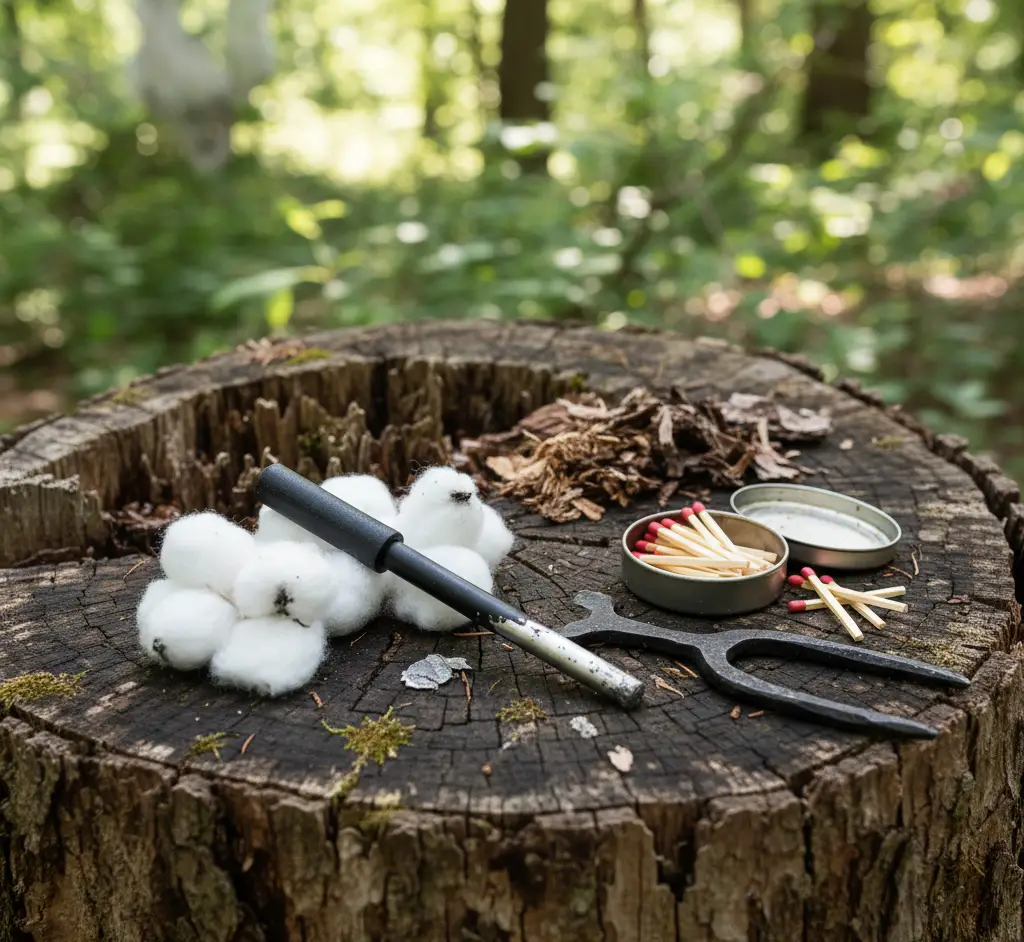
Our pick: Cotton wool balls smeared in Vaseline, stored in a 35mm film canister or small waterproof bag. Cheap, effective, catches sparks from a ferro rod easily. Make a batch at home before your trip. They weigh almost nothing and each one burns for 2-3 minutes — more than enough to get a fire established.
Building a Fire in Wet UK Conditions
The biggest challenge in UK fire-starting isn't the ignition — it's finding dry fuel. Here's the technique:
- Collect dead standing wood — wood off the ground is always wetter than wood still attached to dead branches
- Split larger pieces — the inside of wet wood is often dry. Split sticks with a knife to expose dry core
- Grade your fuel — tinder (cotton wool), kindling (pencil-thin sticks), fuel (thumb-thick sticks), sustaining (wrist-thick logs)
- Build a platform — lay thick sticks on the ground to keep your fire off damp earth
- Start small — resist the urge to pile on large wood too soon. Build gradually from tinder to kindling to fuel
UK Legal Considerations
You're allowed to carry fire-starting equipment in the UK. However:
- Don't light fires on open moorland during dry periods or fire warnings
- Check landowner permissions — many wild camping spots prohibit fires
- Never leave a fire unattended and fully extinguish before leaving
- Use existing fire rings where they exist, or use a fire pan/stove to avoid scorching ground
- Dartmoor, the Lake District and Snowdonia all have varying fire restrictions — check before you go
Ready to gear up?
Use our kit builder to get a complete packout list tailored to your trip type, terrain, and budget — with prices and buy links.