This page contains affiliate links. If you purchase through them we may earn a small commission at no extra cost to you. Learn more
Winter Driving Kit for UK Roads — Snow and Ice Gear 2026
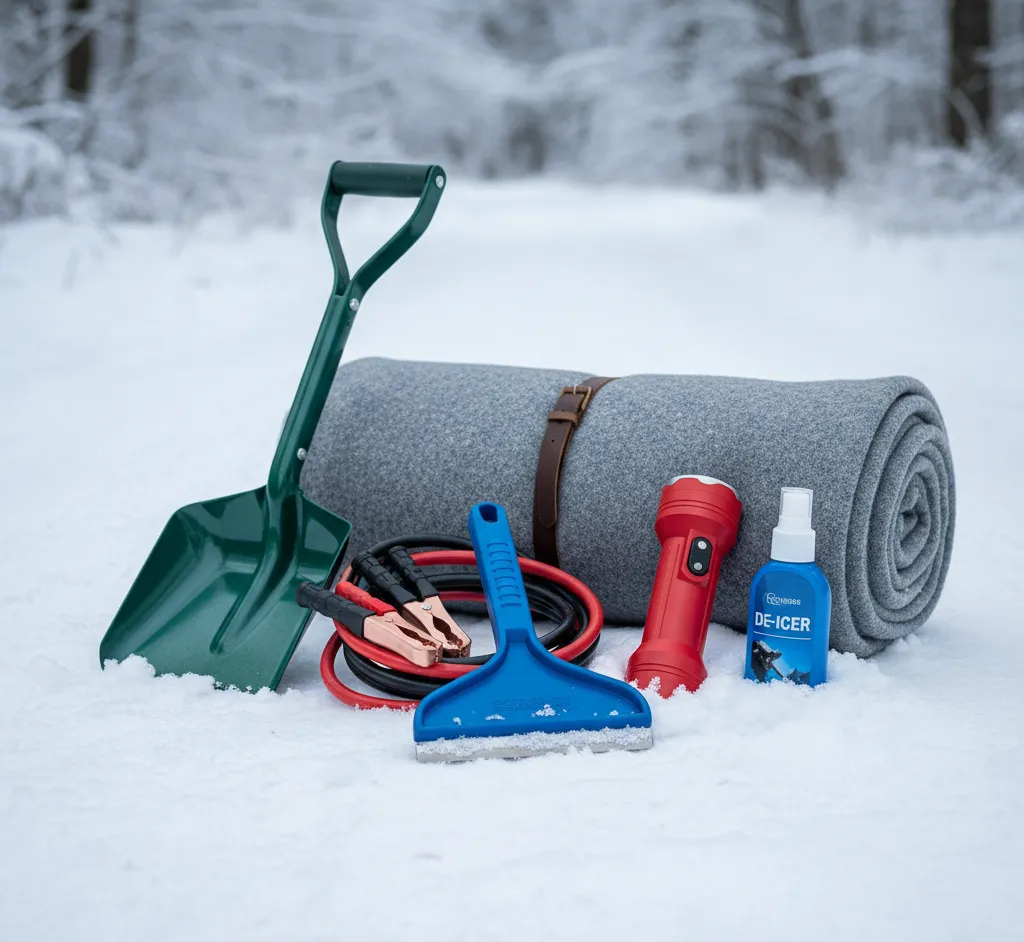
UK Winter Driving Reality
Every winter, people get stranded on UK roads. The M62, A66, and various A-roads across the Pennines and Scotland regularly close for snow and ice. Being stuck for 6–12 hours in your car isn't unusual during bad weather. A winter kit makes the difference between miserable and manageable.
Winter-Specific Additions
De-Icing
- Ice scraper — proper one, not a credit card (~£3)
- De-icer spray — 2 cans (~£5)
- Screen wash — topped up with winter concentration
Traction
- Cat litter or sand — small bag for grip under wheels on ice (~£3)
- Folding shovel — for digging out (~£10)
- Old carpet or cardboard — under wheels for grip (free)
Warmth
- Blanket — a thick fleece or wool blanket. If engine fails, the car gets cold fast
- Warm hat, gloves and scarf — spare set that lives in the car
- Hand warmers — disposable types last 6–8 hours (~£5 for 10)
- Warm socks — spare thick pair
Visibility
- Torch — with fresh batteries
- Hi-vis vest — essential if you're outside the car at night
- Warning triangle
Sustenance
- Thermos flask — fill before long winter journeys
- Chocolate and cereal bars — calorie-dense, long shelf life
- Water — 1L minimum (won't freeze in a car boot if above 0°C)
Complete Winter Car Kit List
| Category | Items | Cost |
|---|---|---|
| Year-round car kit | See car emergency kit guide | ~£75 |
| Ice scraper + de-icer | 2 items | £8 |
| Cat litter bag | Small bag | £3 |
| Folding shovel | 1 | £10 |
| Blanket | 1 | £8 |
| Spare warm clothes | Hat, gloves, socks | £10 |
| Hand warmers | Pack of 10 | £5 |
| Total winter additions | ~£44 |
Winter Driving Tips
- Clear ALL windows and mirrors before driving — not just a peephole in the windscreen. It's illegal to drive with obscured vision
- Check tyres — 3mm tread is the sensible minimum for winter (legal limit is 1.6mm but that's dangerously low in snow)
- Fill fuel regularly — don't let the tank drop below quarter in winter
- Drive to conditions — 20mph in snow is fine, 60mph is not
- If stranded, stay in the car — run the engine for 10 minutes per hour for heat, keep a window slightly open to prevent carbon monoxide buildup, and make sure the exhaust isn't blocked by snow
Recommended Products
RAC Winter Car Kit
Amazon UKBlanket, torch, shovel, de-icer
Winter-specific
Pros
- +Comprehensive winter items
- +De-icer and scraper
- +Warm blanket included
Cons
- −Seasonal focus
- −No food or water
The winter-specific addition to your year-round car kit.
View dealAffiliate link — we may earn a small commission at no extra cost to you
AA Emergency Warning Triangle
Amazon UKEU-compliant warning triangle
High
Pros
- +Legal requirement in many EU countries
- +Highly visible
- +Folds flat
Cons
- −UK not legally required but sensible
- −Lightweight plastic
Essential visibility for any breakdown, especially in poor winter light.
View dealAffiliate link — we may earn a small commission at no extra cost to you
Winter Driving Kit Contents
In your boot November-March: warm blanket, hat and gloves, de-icer and scraper, small folding shovel, cat litter or sand (for traction on ice), jump leads, tow rope, warning triangle, hi-vis vest, torch with spare batteries, phone charger, 2L water, energy bars, and a waterproof jacket.
If You Get Stranded
- Stay with your vehicle unless it is genuinely dangerous to do so
- Run the engine briefly (10 minutes per hour) for heat, but ensure the exhaust is clear of snow
- Crack a window slightly for ventilation to prevent CO poisoning
- Turn on hazard lights
- Call for help: breakdown service or 999 if on a motorway
- Stay visible: use warning triangle if safe to place it
Kit Organisation
A well-organised kit is usable in a hurry. Use colour-coded dry bags or labelled compartments so you can find what you need quickly, especially in emergencies where stress reduces your ability to think clearly. Practice locating items in your kit in the dark — you may need to use it at night during a power cut or emergency.
Regular Testing
Every item in your kit should be tested periodically. Torches need battery checks. Food needs rotation before expiry. Medications need expiry date verification. Water containers need cleaning. First aid supplies need replenishing after use. Set a calendar reminder every 6 months to audit your kit.
Scaling Your Kit
Start with the essentials and build up over time. You do not need to buy everything at once. The core of any emergency kit — water, food, warmth, light, first aid — can be assembled for under 50 pounds using items from Decathlon, Poundland, and your existing wardrobe. Add specialist items as budget allows. A basic kit today is infinitely better than a perfect kit you never get around to building.
Sharing Knowledge
Once you have built your kit, encourage family members and friends to do the same. Share what you have learned about practical preparedness. The UK government recommends every household should be able to sustain itself for 72 hours without external assistance. Most households are not prepared for even 24 hours. Be the exception.
Ready to gear up?
Use our kit builder to get a complete packout list tailored to your trip type, terrain, and budget — with prices and buy links.