This page contains affiliate links. If you purchase through them we may earn a small commission at no extra cost to you. Learn more
Travel Emergency Kit for UK Trips and Holidays Abroad 2026
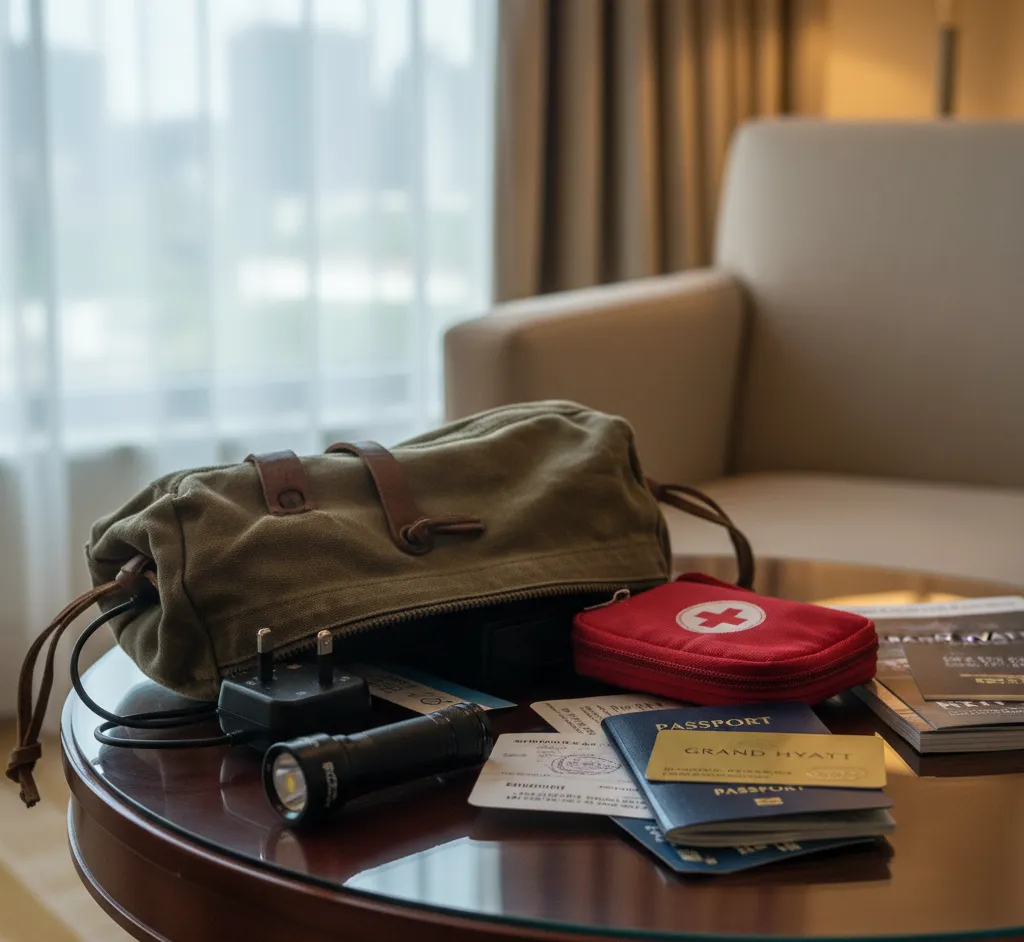
Travel Kit vs. Home Kit
Your travel kit needs to be small, light and airline-compliant. No gas canisters, no large liquids, no fixed-blade knives. Focus on the essentials you can't easily buy at your destination.
Core Travel Emergency Kit
Documents
- Passport copies (paper + digital on phone/USB)
- Travel insurance details
- Embassy/consulate contact numbers
- Credit card emergency numbers
- Accommodation addresses (printed)
- Return travel details (printed)
- Vaccination certificates if required
Health
- Prescription medications (in original packaging, with doctor's letter for controlled substances)
- Paracetamol and ibuprofen
- Antihistamines
- Rehydration sachets (Dioralyte)
- Anti-diarrhoea tablets (Imodium)
- Plasters and wound closures
- Insect repellent (DEET-based for tropical destinations)
- Sunscreen
Water Safety
- Water purification tablets (Oasis or Chlorine Dioxide)
- Sawyer Squeeze filter for hiking/rural travel
- Collapsible water bottle
Power & Communication
- Universal travel adaptor
- Small power bank (10,000mAh — airline-compliant)
- USB cables
- SIM card tool + local SIM or eSIM plan
Tools
- Small torch (keyring LED)
- Pen + small notebook
- Zip-lock bags (multiple sizes — waterproofing, organisation)
- Duct tape (wrap around a pen)
- Cable ties (multiple uses)
- Earplugs + eye mask
Emergency Cash
- £50 GBP in small notes
- $50 USD (widely accepted emergency currency)
- Local currency equivalent for your destination
What NOT to Pack
- Fixed-blade knives (checked luggage only)
- Gas canisters (not allowed on planes)
- Large liquid containers (100ml limit in hand luggage)
- Flares or fire starters with flammable components
Pro Tips
- Email yourself copies of all documents — accessible from any device with internet
- Split your cash — some in wallet, some in luggage, some in a money belt
- Register with FCDO — sign up to travel alerts for your destination
- Download offline maps — Google Maps or Maps.me for areas without data
Recommended Products
Lifesystems Adventurer First Aid Kit
Amazon UK300g
40+
Pros
- +Good balance of contents and weight
- +Waterproof pouch
- +More comprehensive than Trek
Cons
- −Not as compact as Trek
- −Still missing personal items
The first aid kit sized for travel emergencies.
View dealAffiliate link — we may earn a small commission at no extra cost to you
Nitecore NB10000
Amazon UK10,000mAh
150g
Pros
- +150g ultralight
- +Two phone charges
- +Slim for travel
Cons
- −More expensive than Anker
- −Hard to find in shops
The lightest power bank for keeping connected while travelling.
View dealAffiliate link — we may earn a small commission at no extra cost to you
Travel Emergency Kit Essentials
Beyond first aid: copies of passport and insurance (digital and paper), spare passport photos, emergency cash in local currency and GBP, power bank and universal adapter, basic medications (painkillers, antihistamines, rehydration sachets, anti-diarrhoea), water purification tablets, and a list of emergency contacts including embassy.
UK-Specific Travel
For domestic UK travel: ensure your breakdown cover is current, keep a car emergency kit, carry a paper map (phone signal fails in rural areas), and have cash (card readers fail). For rail travel: comfortable shoes in case you need to walk, power bank, snacks, and water.
Kit Organisation
A well-organised kit is usable in a hurry. Use colour-coded dry bags or labelled compartments so you can find what you need quickly, especially in emergencies where stress reduces your ability to think clearly. Practice locating items in your kit in the dark — you may need to use it at night during a power cut or emergency.
Regular Testing
Every item in your kit should be tested periodically. Torches need battery checks. Food needs rotation before expiry. Medications need expiry date verification. Water containers need cleaning. First aid supplies need replenishing after use. Set a calendar reminder every 6 months to audit your kit.
Scaling Your Kit
Start with the essentials and build up over time. You do not need to buy everything at once. The core of any emergency kit — water, food, warmth, light, first aid — can be assembled for under 50 pounds using items from Decathlon, Poundland, and your existing wardrobe. Add specialist items as budget allows. A basic kit today is infinitely better than a perfect kit you never get around to building.
Sharing Knowledge
Once you have built your kit, encourage family members and friends to do the same. Share what you have learned about practical preparedness. The UK government recommends every household should be able to sustain itself for 72 hours without external assistance. Most households are not prepared for even 24 hours. Be the exception.
Ready to gear up?
Use our kit builder to get a complete packout list tailored to your trip type, terrain, and budget — with prices and buy links.