This page contains affiliate links. If you purchase through them we may earn a small commission at no extra cost to you. Learn more
Emergency Grab Bag — Best Ready-Made UK Kits for 2026
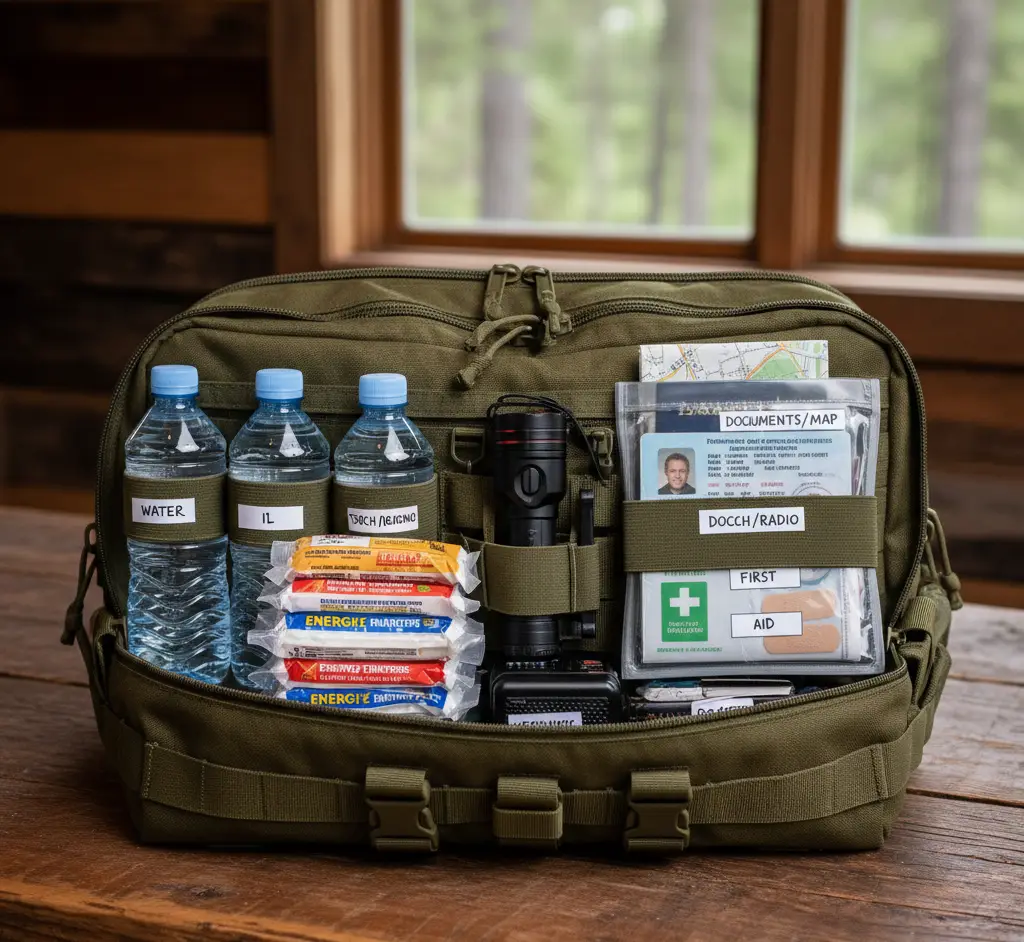
What's a Grab Bag For?
Flooding, fire, gas leak, structural damage — situations where you need to leave home quickly, possibly at 3am. You won't have time to think about what to pack. A grab bag means you grab one thing and go.
The Bag Itself
Use a 30–40L rucksack — not a duffel, not a suitcase. You might need to walk. A basic Decathlon bag (£15–20) is fine. It needs to be comfortable enough to carry for a few hours and water-resistant.
Complete Grab Bag Contents
Water & Food
- Water: 3L (three 1L bottles — replace every 6 months)
- Water purification tablets (Oasis, ~£5)
- Food: energy bars, nuts, dried fruit, crackers (3 days' worth, 2,000 cal/day)
- Small mess tin or collapsible cup
Shelter & Warmth
- Emergency bivvy bag (SOL, ~£12)
- Compact sleeping bag or heavy fleece
- Waterproof jacket (packable)
- Hat, gloves, spare socks
- Emergency blanket
Light & Power
- Head torch + spare batteries
- Small power bank (10,000mAh) + cables
- Battery-powered or wind-up radio (DAB/FM)
First Aid & Hygiene
- Compact first aid kit
- Prescription medications (7 days' supply — rotate regularly)
- Toiletries: toothbrush, wipes, hand sanitiser
- Toilet paper (half a roll, squashed flat)
- Bin bags (multiple uses — rain cover, waste, ground sheet)
Documents & Money
- Copies of: passport, driving licence, insurance documents, bank details
- USB drive with digital copies of important documents
- £50–100 in cash (small notes and coins — ATMs may not work)
- Emergency contact list (written, not just in your phone)
Tools & Extras
- Whistle
- Duct tape (wrap around a pencil to save space)
- Paracord — 10m
- Pen and notebook
- Local area map
- Spare house and car keys
- Phone charger cable
Weight Target
Aim for under 10kg total. You might need to carry this while stressed, tired, or with children. Heavy bags get left behind.
Maintaining Your Grab Bag
Set a phone reminder every 6 months:
- Replace water — stale water is still safe but tastes terrible
- Rotate food — eat the old stuff, put fresh in
- Check medications — replace expired prescriptions
- Test batteries and torch
- Update documents — new insurance, changed details
- Check clothing — seasonal appropriateness (winter gloves in summer aren't useful if you swap to a lighter bag)
One Per Person or One Per Household?
Ideally, one per adult. If that's not practical, one comprehensive household bag is better than nothing. At minimum, each person should have their own medications and a water bottle.
Recommended Products
Osprey Daylite 13L
Amazon UK13L
400g
Recycled nylon
Pros
- +Comfortable for carrying
- +13L fits essential grab bag contents
- +Durable and lightweight
Cons
- −No hip belt
- −Basic design
A comfortable, durable bag that works as a grab bag and everyday pack.
View dealAffiliate link — we may earn a small commission at no extra cost to you
Nitecore NB10000
Amazon UK10,000mAh
150g
USB-C + USB-A
Pros
- +Two phone charges in 150g
- +Slim for grab bag pocket
- +Dual output
Cons
- −Needs pre-charging
- −More expensive than Anker
The lightest way to keep your phone alive during an evacuation.
View dealAffiliate link — we may earn a small commission at no extra cost to you
SOL Emergency Bivvy
Amazon UK120g
Reflective
Sleeping bag
Pros
- +Emergency shelter in 120g
- +Reflects body heat
- +Orange for visibility
Cons
- −Single-use
- −Condensation
Twelve pounds of warmth insurance for your grab bag.
View dealAffiliate link — we may earn a small commission at no extra cost to you
Grab Bag Maintenance Schedule
Set a 6-monthly phone reminder:
- Replace water bottles
- Rotate food items (eat old ones, replace)
- Check medication expiry dates
- Test torch and batteries
- Update copies of documents
- Check clothing is seasonally appropriate
- Verify cash is still present
- Test power bank charge level
Where to Keep It
By the front door. Not in the loft, not in the garage, not under the bed. The entire point of a grab bag is grabbing it on the way out. If you have to think about where it is during a 3am evacuation, it has failed its purpose.
Kit Organisation
A well-organised kit is usable in a hurry. Use colour-coded dry bags or labelled compartments so you can find what you need quickly, especially in emergencies where stress reduces your ability to think clearly. Practice locating items in your kit in the dark — you may need to use it at night during a power cut or emergency.
Regular Testing
Every item in your kit should be tested periodically. Torches need battery checks. Food needs rotation before expiry. Medications need expiry date verification. Water containers need cleaning. First aid supplies need replenishing after use. Set a calendar reminder every 6 months to audit your kit.
Scaling Your Kit
Start with the essentials and build up over time. You do not need to buy everything at once. The core of any emergency kit — water, food, warmth, light, first aid — can be assembled for under 50 pounds using items from Decathlon, Poundland, and your existing wardrobe. Add specialist items as budget allows. A basic kit today is infinitely better than a perfect kit you never get around to building.
Sharing Knowledge
Once you have built your kit, encourage family members and friends to do the same. Share what you have learned about practical preparedness. The UK government recommends every household should be able to sustain itself for 72 hours without external assistance. Most households are not prepared for even 24 hours. Be the exception.
Ready to gear up?
Use our kit builder to get a complete packout list tailored to your trip type, terrain, and budget — with prices and buy links.