This page contains affiliate links. If you purchase through them we may earn a small commission at no extra cost to you. Learn more
UK Outdoor Weather in 2026: Early Heat, Spring Storms and Peat Fire Risk
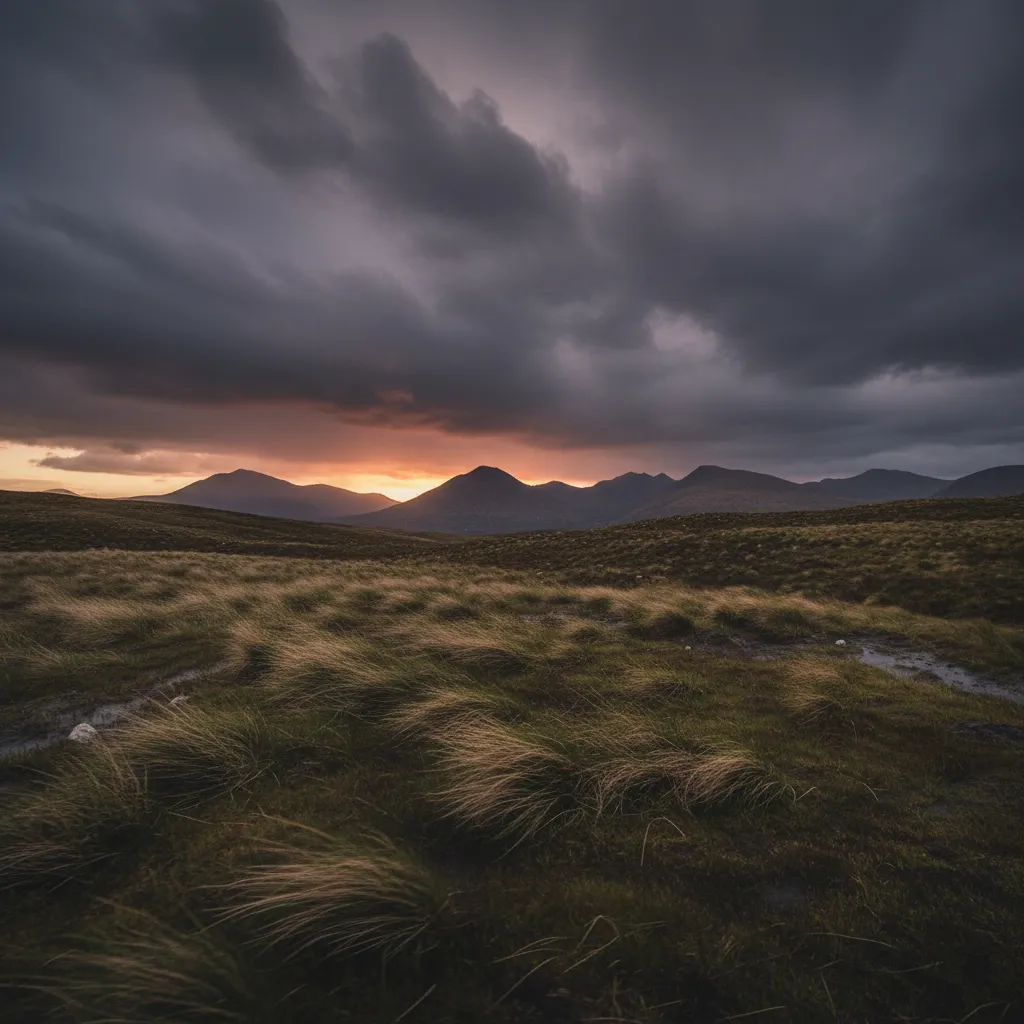
Quick Summary
- Storm Dave hit the UK over Easter 2026 with amber wind warnings — a named storm at prime walking season
- March 2026 was the UK's joint tenth warmest on record; spring temperatures reached 26°C in early April
- Cairngorms National Park fire byelaw now bans campfires and barbecues from 1 April to 30 September
A Strange Spring
The 2026 outdoor season opened with a weather pattern that does not fit the usual script. Winter 2025–26 ran wet and mild — the Met Office described February as "dull and mild" and confirmed the winter overall as notably wetter than average. Then, as walkers started planning Easter trips, the weather lurched in a different direction: record warmth for March, a named storm over the bank holiday weekend, and fire warnings appearing before many people had thought to swap their thermal base layers.
That combination — wet ground from a mild winter, fast drying in an unusually warm early spring, followed by storm disruption — is the pattern that creates problems for outdoor users who are planning based on last year's conditions rather than this year's data.
Storm Dave and the Easter Weekend
Storm Dave was named by the Met Office ahead of the Easter 2026 weekend. Amber wind warnings were confirmed for 4 April, making this a named storm at one of the busiest walking weekends of the year. Multiple warning articles were issued in the days before the storm crossed the UK.
An amber wind warning from the Met Office means serious disruption is expected. For walkers on exposed terrain, it means: exposed ridges become genuinely hazardous, forest paths carry real danger from falling branches and debris, and river crossings should be avoided entirely as spate conditions can develop quickly.
The Met Office weather warning system now runs on impact-based alerting rather than pure meteorological thresholds — yellow means be aware, amber means be prepared, and red means take action to protect yourself. Storm Dave sitting at amber over Easter was not a marginal call.
Amber wind warnings apply across large areas and the conditions within those areas vary. A sheltered valley walk may be manageable; an exposed ridge or coastal headland in the same warning zone may not be. Check Mountain Weather Information Service (MWIS) forecasts for upland areas specifically — they give terrain-specific text that general warnings do not.
The broader context matters here: winter 2025–26 left rivers higher than average across the UK. The MWIS and Met Office guidance on river crossings is unambiguous — just 6 inches of fast-moving water can knock an adult off their feet. After a wet winter followed by storm-level rainfall, rivers in spate should be treated as impassable unless there is a bridge.
An Unusually Warm March
March 2026 ranked as the UK's joint tenth warmest March on record. England was joint sixth warmest, Wales joint fourth. The final day of the month saw 20.9°C at Pershore in Worcestershire — the joint warmest day of the year to that point. By early April, a brief very warm spell pushed temperatures toward 26°C.
These numbers matter for outdoor planning in a way that is easy to underestimate. Spring walkers who have spent the winter in heavy layers often head out underprepared for heat. Heat exhaustion does not require July temperatures — it can develop in the low-to-mid 20s if you are working hard, carrying a heavy pack, and not drinking enough.
The NHS guidance on heat exhaustion points to tiredness, dizziness, rapid breathing, and pale clammy skin as early signs. The four-step response — shade, remove excess layers, rehydrate, cool the skin — works if you catch it early. If it tips into heatstroke (no sweating despite heat, confusion, seizures), call 999.
In spring heat, aim to have pale yellow urine throughout a full walking day. That is the practical hydration test. If it is going dark or you have not needed to stop to urinate since the morning, you are behind on fluids. Carry at least 2 litres for a full day out and more in warm conditions.
Sunscreen in April is not excess caution. UV exposure does not depend on feeling warm — it depends on UV index, which can reach moderate to high on bright April days in the UK. Repeated spring sunburn and its long-term skin cancer risk accumulate over years of outdoor activity.
Peat Fire Risk in the National Parks
The combination of wet winter soils and rapid spring warming creates a specific fire risk that is worth understanding directly. Peat is a carbon-rich material that makes up vast areas of the Scottish Highlands, the Lake District fells, the Peak District moorlands, and the Brecon Beacons. It holds moisture when conditions are wet, but when it dries it becomes highly flammable — and a peat fire does not just burn the surface.
Peat fires burn underground. They spread unseen, are very difficult to extinguish, and can burn for weeks or months. They devastate ground-nesting bird habitats. The 2020 Wareham Forest wildfire, which burned for over two weeks, was linked to disposable barbecues — and moorland fires can be at least as destructive.
The Scottish Outdoor Access Code is explicit: during prolonged dry periods, open fires must not be lit in or near forests, woods, farmland, or peaty ground. A dry April — following an unseasonably warm March — may qualify as prolonged dry conditions even if winter was wet overall.
The Cairngorms National Park Fire Management Byelaw came into force on 1 April 2026. Open fires and barbecues are banned across the entire park (1,748 square miles) from 1 April to 30 September. The fine is up to £500. This is the first time the byelaw has explicitly included barbecues. Camping stoves remain permitted year-round. The park's year-round position is "no flame, no spark" even outside the byelaw period.
Elsewhere in the UK, the fire position has not changed but the risk level has increased. Dartmoor's backpack camping code prohibits open fires outright. Forestry England bans disposable barbecues across all its forests, with a total ban on stoves and BBQs in the New Forest. In Scotland outside the Cairngorms, the Scottish Outdoor Access Code permits small controlled fires on responsible access land — but "during prolonged dry periods" that permission is explicitly withdrawn, and the Scottish Fire and Rescue Service publishes wildfire danger assessments that override normal access rights when in force.
If you see a wildfire on any terrain, do not try to fight it. Get clear of smoke and vegetation, call 999, and give your location with What3Words or a grid reference from OS Maps.
How This Changes Kit and Planning
The 2026 pattern asks for kit flexibility that does not always come naturally in spring, when people are trying to shed weight from their packs after a heavy winter setup.
Layering spread. A walk starting in April at 8°C with 25 mph winds can hit 22°C by early afternoon. You need a base layer, an insulating mid-layer you can pull off, and a full waterproof shell — not the summer streamlined setup, but not the full winter load either. Keep gloves and a hat accessible even in late spring in upland areas.
Sun protection as kit. A wide-brimmed hat, SPF 30+ sunscreen, and SPF lip balm are not summer-only items in a year when March broke temperature records. Stow them in your pack from March onwards.
Fire kit audit. If you are planning trips to the Cairngorms, Speyside Way, or anywhere in Scotland during the April to September byelaw period, remove any open fire capability from your kit planning. A camping stove is the right tool. Elsewhere in Scotland and in English and Welsh national parks, check the current Scottish Fire and Rescue wildfire danger assessment and the Met Office Fire Severity Index before any trip where you were considering an open fire. Given the early 2026 conditions, the risk is real.
Storm awareness at short notice. Storm Dave proved that a named storm can arrive within days over a bank holiday weekend. Set a habit of checking the Met Office severe weather warning map the morning before any trip and again the morning of. An amber warning on a ridge route is a signal to adapt plans, not to add layers and continue.
River crossing conservatism. After the wettest-rated winter in recent years, rivers are running high and their banks are unstable. Do not attempt river crossings that looked straightforward on previous trips until you can see the actual conditions. Use bridges where available. If in doubt, turn back.
The 2026 season is not hostile — it is genuinely good walking weather for most of spring. But it is asking for sharper situational awareness than a typical year.
Stay Informed
- Met Office severe weather warnings — metoffice.gov.uk, check before and on the day
- MWIS — mwis.org.uk, terrain-specific mountain forecasts for 10 UK regions
- Scottish Fire and Rescue wildfire danger assessments — firescotland.gov.uk
- SEPA flood warnings (Scotland) — sepa.org.uk
- Environment Agency flood warnings (England) — check.flood-risk.service.gov.uk
Ready to gear up?
Use our kit builder to get a complete packout list tailored to your trip type, terrain, and budget — with prices and buy links.
Related reading
Autumn Storm Preparation: Getting Ready for Storm Season
How to prepare your home and outdoor kit for autumn storm season in the UK — practical steps for wind, rain, flooding, and power cuts.
Spring Gear Refresh: Maintain, Replace, and Upgrade
Spring is the time to maintain your outdoor gear, replace worn items, and add warm-weather kit to your setup before the hiking season kicks off.
April Gear Picks — Best UK Outdoor Kit to Buy This Month
April outdoor gear picks for UK hikers and campers. Spring layering essentials, wild camping prep, and the best lightweight kit for the season.
Campfire Law in the UK — When and Where Fires Are Legal
UK campfire law explained — when you can light a fire outdoors, landowner permission, CRoW Act restrictions, and Forestry Commission rules.