This page contains affiliate links. If you purchase through them we may earn a small commission at no extra cost to you. Learn more
Emergency Signalling: How to Get Rescued in the UK
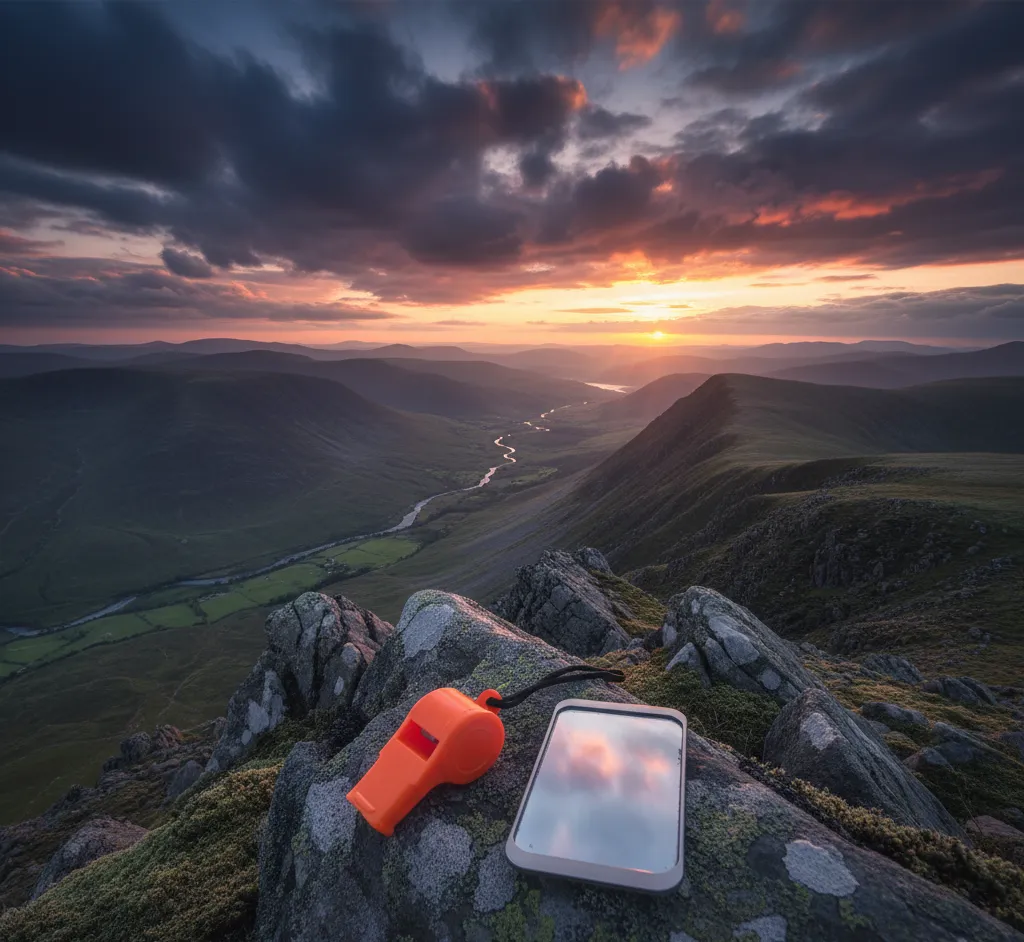
Signalling for Help: How to Get Rescued in the UK
Nobody plans on needing rescue. But injuries happen, weather closes in, and people get lost. Knowing how to signal for help — and how the rescue system actually works — could make the difference between a few uncomfortable hours and a genuinely dangerous situation.
The International Distress Signal
Six blasts of a whistle (or six flashes of a torch) in one minute, followed by one minute of silence. Repeat.
The reply from rescuers is three blasts/flashes per minute.
This is the universal mountain distress signal recognised across the UK and Europe. Every hill walker should know it.
Your Phone: The First Line
In most UK outdoor emergencies, your phone is your best signalling device — if it works.
Calling for Help
- Dial 999 (or 112 — both work)
- Ask for Police, then Mountain Rescue
- Give your location — a six-figure grid reference if possible, or describe landmarks
- State the nature of the emergency — injury, lost, exposure
- Give the number of people in your group and their condition
- Describe the weather at your location
- Stay on the line if possible
When You Have Weak Signal
- Try texting 999. You need to pre-register for this by texting "register" to 999 and following the instructions. Do this BEFORE you go out. Text requires less signal than a voice call
- Move to high ground if safe — even 10–20 metres higher can make a difference
- Try different networks — switch your phone to manual network selection and try each available network
- Turn off wifi and turn on airplane mode for 30 seconds, then off — this forces the phone to reconnect and may find a network
- Hold your phone above your head — sounds daft, but the extra height can sometimes catch a signal
Conserving Battery
If you're in an emergency situation with low battery:
- Switch to airplane mode between attempts to call/text
- Reduce screen brightness to minimum
- Close all apps
- Turn off Bluetooth and wifi
- If your phone has a power-saving mode, use it
- Keep the phone warm — cold drains batteries faster. Keep it inside your jacket, close to your body
Pre-register your phone for the 999 text service before you need it. Text "register" to 999, reply "yes" to confirm. It works on all UK networks and could be vital when voice signal is too weak for a call.
Whistle Signals
A whistle carries much further than a shout, uses less energy, and works when your voice is hoarse or weak.
Carry a whistle on every walk. Attach one to your rucksack strap or jacket. Many rucksacks have a whistle built into the chest strap buckle.
- Six blasts in a minute = distress
- Three blasts in a minute = rescue team reply ("we've heard you, we're coming")
- Keep signalling until rescuers reach you
A whistle's sound carries roughly 1.6 km in still air — far further than even the loudest shout.
Visual Signals
Torch/Head Torch
At night, the same principle as the whistle: six flashes in a minute, one minute pause, repeat.
A head torch on flash mode (if it has one) is visible for miles in the dark, especially from the air.
Signal Mirror
A small mirror or reflective surface can signal to helicopters and distant rescuers in daylight. The flash of reflected sunlight is visible for 10+ miles.
How to use:
- Hold the mirror near your eye
- Extend your other hand towards the target (helicopter, rescuer)
- Angle the mirror so the reflected light hits your extended hand
- Lower your hand — the reflected beam is now pointed at the target
- Flash it: three deliberate flashes, pause, repeat
Any reflective surface works — a phone screen, a foil survival blanket, even a belt buckle.
Ground Signals
If you're in open terrain and a helicopter is searching:
- Lay out brightly coloured kit in a large V shape (= need assistance) or X shape (= need medical help)
- Stamp out signals in snow
- Use rocks or branches to create contrast against the ground
- Make signals at least 3 metres across — smaller ones are invisible from the air
Smoke and Fire
A fire with green vegetation piled on top creates thick smoke visible for miles. This is a last-resort signal — it's slow to set up and requires fire-starting skills — but in a remote location with no phone signal, it works.
Three fires in a triangle is the international distress signal from fire, but in practice, one smoky fire is effective enough in the UK.
How Mountain Rescue Works
Mountain Rescue Teams (MRTs) are volunteers. They're not paid. They give up their time, often in terrible conditions, to help people who are in trouble. Every team member deserves your respect.
The process:
- You call 999 and request Mountain Rescue
- The Police handle the initial call and alert the local MRT
- The team leader assesses the situation and mobilises members
- The team may deploy on foot, by vehicle, or request helicopter support (Coastguard or RAF)
- They locate you, provide first aid, and evacuate you
Typical response time: 1–3 hours depending on location, weather, and severity. In remote areas, it can take longer. This is why self-care while waiting is critical.
Mountain Rescue is a free service, but it relies entirely on donations and volunteers. Never hesitate to call if you're in genuine danger — that's what they're there for. But don't call because you're a bit tired or it's getting dark. Self-reliance is the first line of defence.
While You Wait for Rescue
- Stay where you are unless your location is dangerous
- Keep warm — put on every layer you have, sit on your rucksack (insulate from the ground)
- Eat and drink — your body needs fuel to generate heat
- Shelter from wind — behind a wall, rock, or in your survival bag
- Keep signalling at intervals
- Stay visible — don't shelter somewhere rescuers can't find you
- Talk to each other — if you're in a group, keep morale up and watch for signs of hypothermia
Your Emergency Kit
Every walker should carry:
- Whistle — attached to your person, not buried in your pack
- Fully charged phone — with 999 text pre-registered
- Survival bag or bivvy bag — a £5 plastic survival bag weighs 100g and could save your life
- Head torch — with fresh batteries
- Small mirror or reflective surface — for daytime signalling
This kit weighs almost nothing and costs under £20. There's no excuse for not carrying it.
Recommended Signalling Kit
This lot weighs under 200g combined and costs less than a takeaway. There's genuinely no excuse not to carry it.
Acme Tornado 2000 Whistle
Amazon UK122dB
ABS plastic
15g
Pros
- +Loudest pealess whistle made
- +Works when wet or frozen
- +Audible over 1.5km in still air
Cons
- −Bright orange colour — though that's a pro in an emergency
The whistle mountain rescue teams use. Ear-splittingly loud and completely reliable.
View dealAffiliate link — we may earn a small commission at no extra cost to you
Lifesystems Survival Bag
Amazon UK210 x 90cm
100g
Polythene
Pros
- +Weighs almost nothing
- +Reflects body heat
- +Bright orange — visible to rescuers
Cons
- −Single use — tears easily
- −Condensation builds up inside
A five-quid, 100-gram life-saver. Carry one in your pack at all times, no arguments.
View dealAffiliate link — we may earn a small commission at no extra cost to you
Bushcraft Essentials Signal Mirror
Amazon UK10 x 7cm
Glass with aiming hole
80g
Pros
- +Visible for 10+ miles in sunlight
- +Aiming hole for accurate signalling
- +Works indefinitely — no batteries
Cons
- −Only works in sunshine
A simple, effective signalling tool with no batteries to die. The aiming hole makes it surprisingly accurate.
View dealAffiliate link — we may earn a small commission at no extra cost to you
The best emergency strategy is never needing rescue in the first place — good planning, proper kit, navigation skills, and knowing when to turn back. But when things go wrong, knowing how to signal effectively gives you the best chance of a quick rescue.
Ready to gear up?
Use our kit builder to get a complete packout list tailored to your trip type, terrain, and budget — with prices and buy links.
Related reading
Bushcraft & Survival Skills: The Complete UK Guide
A practical guide to bushcraft and survival skills for UK conditions — from fire-starting and shelter-building to navigation and wild food.
Navigation Without GPS: Map, Compass & Natural Navigation
How to navigate with a map, compass, and natural signs when GPS fails — essential skills for UK hill walking and bushcraft.
Night Hiking: A Practical Safety Guide for UK Walkers
How to hike safely at night in the UK — head torch selection, route planning, navigation in the dark, and essential safety advice.
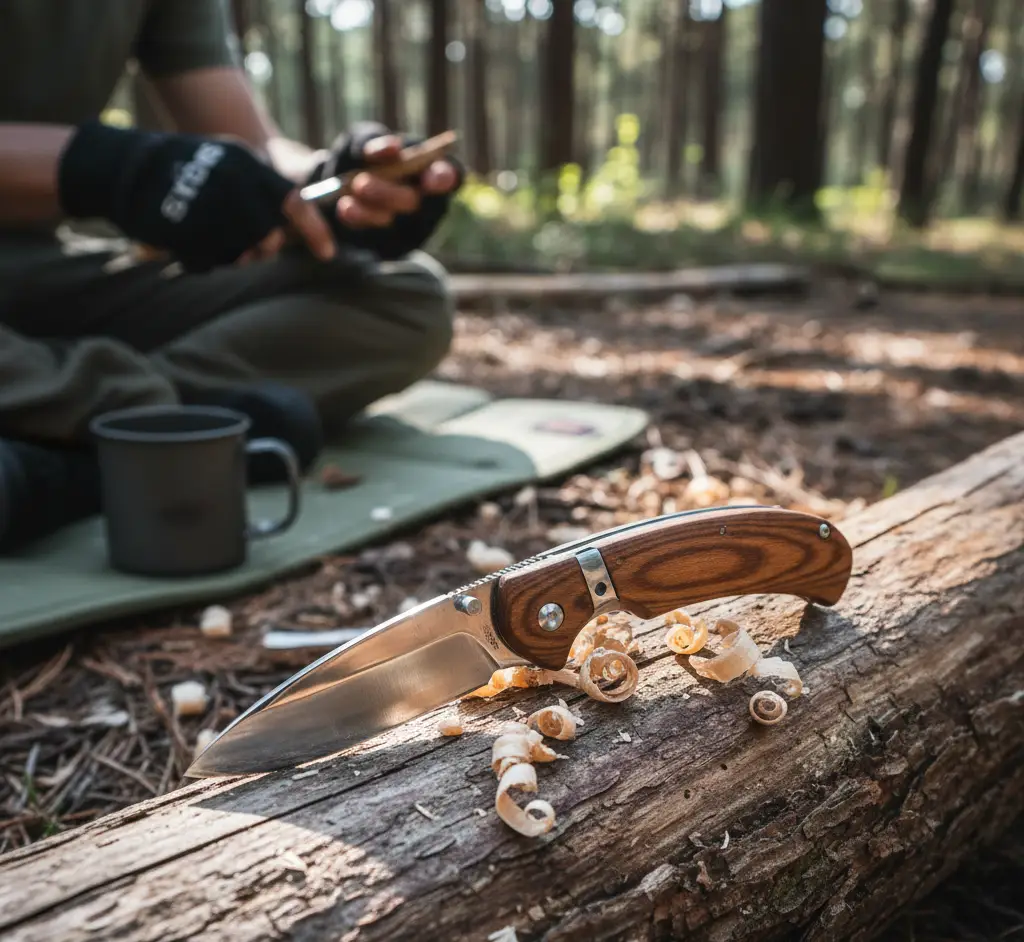
Best Legal Survival Knives for UK Bushcraft and Camping 2026
Best legal survival and bushcraft knives in the UK. UK knife law explained and the best fixed-blade and folding knives compared.