This page contains affiliate links. If you purchase through them we may earn a small commission at no extra cost to you. Learn more
Thermarest vs Exped Sleeping Mats Compared UK 2026
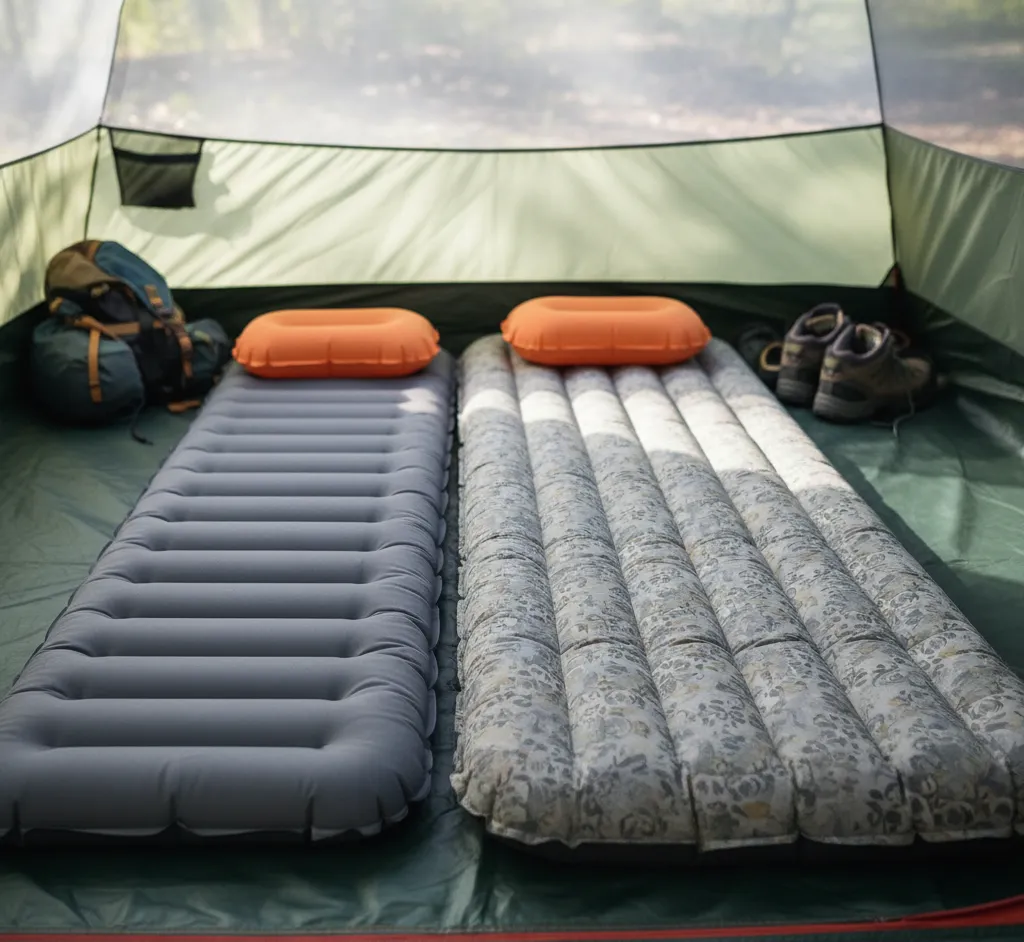
Brand Overview
Thermarest — The original. Invented the self-inflating mat in 1972. Dominant market position with models from budget (Trail Scout) to ultralight (NeoAir XLite) to winter (NeoAir XTherm).
Exped — Swiss brand. Known for exceptionally comfortable mats with downproof baffles and quiet sleeping surfaces. Strong following among comfort-focused backpackers.
Head-to-Head: Ultralight
| Feature | Thermarest NeoAir XLite | Exped Ultra 5R |
|---|---|---|
| Price | ~£200 | ~£210 |
| Weight (Regular) | 340g | 415g |
| R-Value | 4.2 | 5.0 |
| Thickness | 6.4cm | 9cm |
| Noise level | Some (improved) | Quiet |
| Packed size | Very small | Small |
| Inflation | Mouth/pump sack | Pump sack included |
| Comfort | Good | Excellent |
Head-to-Head: Comfort
| Feature | Thermarest Trail Pro | Exped SynMat UL MW |
|---|---|---|
| Price | ~£100 | ~£140 |
| Weight | 740g | 490g |
| R-Value | 4.4 | 3.3 |
| Thickness | 7.6cm | 7cm |
| Type | Self-inflating | Air (synthetic insulation) |
| Comfort | Excellent | Very good |
Thermarest: Strengths and Weaknesses
Strengths:
- NeoAir XLite is the benchmark ultralight mat — everyone compares to it
- Widest range covering every price point and use case
- NeoAir XTherm (R-value 6.9) is the best winter mat available
- Trail Pro is the best self-inflating mat for comfort
- Excellent warranty and customer service
Weaknesses:
- NeoAir XLite has a "crisp packet" noise reputation (improved but still present)
- Air mats can feel bouncy/unstable compared to self-inflating
- Premium models are expensive
- Valve design could be better on some models
Exped: Strengths and Weaknesses
Strengths:
- Quieter sleeping surface than Thermarest air mats
- Thicker mats — 9cm on the Ultra is genuinely comfortable
- Pump sack often included (Thermarest charges extra)
- Synmat range uses synthetic insulation — works even if punctured
- Flat Valve technology inflates and deflates efficiently
Weaknesses:
- Slightly heavier than Thermarest equivalents at similar R-values
- Less widely available in UK shops
- Smaller range overall
- Brand recognition lower — harder to find reviews and comparisons
Verdict
Choose Thermarest if: You want the lightest mat possible (NeoAir XLite), the warmest mat possible (NeoAir XTherm), or the best value self-inflating mat (Trail Pro). Wider range means something for every need.
Choose Exped if: Comfort and quiet sleep matter more than saving 50g. The Synmat and Ultra ranges are genuinely more comfortable to sleep on, and the included pump sacks are a nice touch.
Product Recommendations
Thermarest NeoAir XLite
Amazon UK340g
4.2
Pros
- +340g benchmark
- +R-value 4.2
- +Packs tiny
Cons
- −Crinkly noise
- −Not thickest
The ultralight mat everyone is measured against.
View dealAffiliate link — we may earn a small commission at no extra cost to you
Exped SynMat UL MW
Amazon UK490g
3.3
Pros
- +Insulation works if punctured
- +Quieter
- +Pump included
Cons
- −Heavier
- −Lower R-value
Quieter with puncture insurance.
View dealAffiliate link — we may earn a small commission at no extra cost to you
Puncture Insurance
Exped SynMat retains insulation when punctured. On a cold night, this matters enormously.
Making Your Decision
When choosing between these two options, consider your actual use case rather than aspirational use. Where do you walk most often? What conditions do you typically face? How much weight are you willing to carry? The best gear is the gear that matches your real-world needs, not the gear with the most impressive specifications.
Both options reviewed here have proven themselves across thousands of UK outdoor enthusiasts. Neither is objectively wrong. The question is which one suits your specific combination of budget, planned activities, and personal preferences.
Where to Buy
Both brands are available through specialist UK outdoor retailers including Cotswold Outdoor, Go Outdoors, and Blacks. Online retailers like Amazon UK, Ultralight Outdoor Gear, and the brands' own websites also stock these items. Try before you buy where possible, especially for items like packs and boots where fit is personal.
Long-Term Value
Consider the total cost of ownership, not just the purchase price. A more expensive item that lasts 10 years costs less per year than a cheaper item that lasts 3 years. Factor in maintenance costs, replacement parts, and warranty coverage when making your decision. Quality outdoor gear is an investment that pays dividends in comfort, safety, and enjoyment over years of use.
Ready to gear up?
Use our kit builder to get a complete packout list tailored to your trip type, terrain, and budget — with prices and buy links.
Related reading

Autumn Camping Guide for the UK — Tips, Gear and Best Spots
Autumn camping in the UK — shorter days, stunning colours, and quieter trails. How to camp comfortably from September to November.

Beginner's Guide to Wild Camping in the UK — Getting Started
A complete step-by-step guide to wild camping for first-timers — what you need, how to find a spot, and how to have a brilliant first night outdoors.

Best Wild Camping in the Brecon Beacons (Bannau Brycheiniog)
Wild camping in the Brecon Beacons — best areas for mountain and moorland camping in Wales's most accessible mountain national park.
Build your kit
Get a tailored packout list with prices and buy links.
Start building