This page contains affiliate links. If you purchase through them we may earn a small commission at no extra cost to you. Learn more
Spring Camping Gear UK: What to Pack for March–May
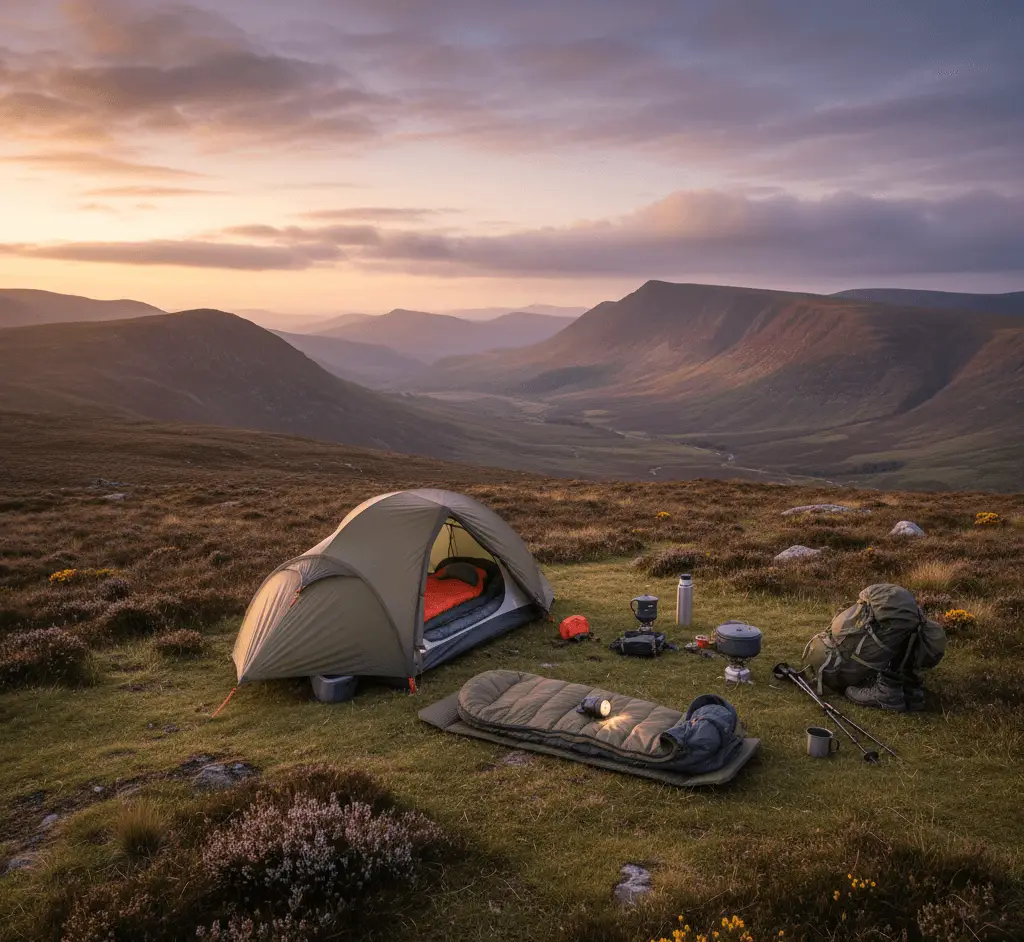
Why Spring Is the Trickiest Season
March, April, and May are genuinely unpredictable in the UK. The days are lengthening, the ground is still cold, and the weather has no obligation to be kind. You can wake to frost in your tent at 4°C, reach a ridge in sunshine at 16°C, and get hit by horizontal sleet on the descent. This is not a hypothetical — it's a normal British spring weekend.
The gear error most people make in spring is dressing for the season they want, not the one they have. Light kit packed assuming mild conditions is the fast track to a miserable night. Pack for winter, prepare to strip layers, and you'll have a great time.
The Layering System — Non-Negotiable
Spring is where the layering system earns its keep. Three layers, three jobs:
- Base layer — moves sweat away from skin (merino or synthetic, never cotton)
- Mid-layer — traps warmth (fleece or light synthetic insulation)
- Shell — blocks wind and rain
The key spring addition is flexibility. You need layers you can add and remove quickly during a day that might span 5°C to 18°C. Alpkit's Gravitas fleece (~£65) is a good mid-layer choice — light enough not to overheat but warm enough for cold mornings. Pair it with a Berghaus Paclite or similar GORE-TEX shell for rain protection.
A thin merino base layer (150–175gsm) works across the spring range. The Rab Merino+ 120 tee (~£45) is a solid option that handles both cool nights and warmer afternoons without becoming suffocating.
Shelter: Three-Season Tents and Inner Tension
For spring, a three-season tent is the right call. Four-season tents are overkill unless you're on high ground in March. Look for:
- Double-skin construction — condensation management matters when nights are cool
- Decent pole geometry — spring storms are windy
- Good ventilation — you'll have warmer nights than winter but still need airflow
The Vango Zenith 200 (£220) is a strong mid-range choice for spring couples camping. Geodesic enough to handle wind, light enough not to punish you on the approach. For solo wild camping, the Alpkit Ordos 1 (£170) is a well-tested one-person tent that pitches quickly when a squall rolls in.
Avoid budget single-skin tents in spring — condensation dripping onto your sleeping bag is miserable and guaranteed.
Sleeping System: The -2°C Problem
Ground temperatures in March and April can pull warmth out of you even when air temperatures are mild. A sleeping bag with a comfort rating of -2°C to -5°C covers most spring scenarios. The Rab Ascent 500 (~£185) hits this range well — synthetic fill means it keeps working when the condensation of a spring night inevitably makes it slightly damp.
If you run cold, pair any bag with a lightweight liner (Sea to Summit Thermolite adds 5-7°C for ~£35).
Your sleeping mat is equally important. Spring ground is often cold and damp. An R-value of 3+ is the minimum — the Alpkit Numo (~£85) self-inflating mat sits at R3.5 and is a practical choice for three-season use.
Footwear and Ground Conditions
Spring trails in the UK are frequently boggy. The Peaks, Highlands, Dartmoor — all will have standing water well into May. GORE-TEX walking boots are not optional, they're the sensible baseline. The Salomon X Ultra 4 GTX (~£130) handles everything from woodland tracks to rocky ridges and dries out quickly if you do get them soaked.
Gaiters are worth considering for anything off-path in spring — short trail gaiters rather than full mountaineering ones. They keep mud and water out without adding much weight.
Navigation and Weather Tools
Spring daylight is generous by May but patchy in March. Carry a head torch (the Petzl Actik at ~£35 is the sensible default) and charge it the night before. Weather changes fast in spring — check the Mountain Weather Information Service (MWIS) before any hill trip, not just a general weather app.
A quality compass and 1:25,000 OS map remain the most reliable navigation tools when low cloud comes in. Smartphones work well as backup but batteries suffer in cold.
The Spring Camping Essentials
Beyond the layering system and shelter, spring camping rewards a few specific items:
- Waterproof trousers — easily the most underrated item. Wet legs in wind chill dangerously. Berghaus Deluge trousers (~£40) are cheap and effective.
- Extra tent pegs — spring ground varies wildly from concrete-hard to peat-soft. MSR Ground Hog Mini pegs handle most conditions.
- Dry bags — for sleeping bag and spare clothes. Alpkit make good value drybags.
- Insoles — spring miles add up quickly. Superfeet Green insoles make a noticeable difference.
What to Leave at Home
Spring trips don't need a four-season sleeping bag (-10°C or below) — you'll bake on any mild night and the extra weight isn't worth it. Leave the technical mountaineering gear unless you're specifically heading to winter-condition mountains. A lightweight approach beats the "prepare for everything" philosophy that results in a 20kg pack.
Budget vs. Premium Spring Kit
| Item | Budget | Premium |
|---|---|---|
| Tent | Vango Zenith (~£220) | Terra Nova Laser (~£400+) |
| Sleeping bag | Alpkit Pipedream 400 (~£100) | Rab Ascent 500 (~£185) |
| Waterproof jacket | Decathlon MH500 (~£50) | Berghaus Paclite 2.0 (~£130) |
| Boots | Decathlon Forclaz MT100 (~£55) | Salomon X Ultra 4 GTX (~£130) |
Budget spring kit works. The Decathlon options are genuinely waterproof and warm. Upgrade the waterproof jacket first — that's the item that defines your comfort when conditions turn nasty.
Ready to gear up?
Use our kit builder to get a complete packout list tailored to your trip type, terrain, and budget — with prices and buy links.