This page contains affiliate links. If you purchase through them we may earn a small commission at no extra cost to you. Learn more
Best Portable Power Banks for UK Camping and Hiking 2026
How Much Power Do You Actually Need?
A typical smartphone battery is 4,000–5,000mAh. A 10,000mAh power bank gives you roughly two full charges (accounting for conversion losses). For a weekend trip, that's usually plenty. For longer trips, either carry more capacity or reduce phone usage with aeroplane mode.
The biggest drain on your phone while hiking is the screen and GPS. If you're using your phone for navigation, expect it to die within 4-6 hours of continuous GPS use. A 10,000mAh bank extends that to a comfortable weekend. A 20,000mAh bank covers a week.
| Trip Length | Recommended Capacity | Approximate Weight |
|---|---|---|
| Day walk | 5,000mAh | 100–130g |
| Weekend | 10,000mAh | 150–230g |
| Week-long trek | 20,000mAh | 350–500g |
| Base camp | 26,800mAh+ | 500g+ |
Top 5 Power Banks for Camping
1. Nitecore NB10000 — ~£35 (Best Ultralight)
10,000mAh in a 150g carbon fibre body. USB-C and USB-A outputs. Slim enough to slide into a hip belt pocket. The ultralight hiker's standard power bank.
Pros: Incredibly light for capacity, slim design, dual output, quality brand Cons: More expensive than Anker, no fast charging on USB-A, can be hard to find
2. Anker PowerCore 10000 — ~£20 (Best Value)
10,000mAh, 180g, reliable. Anker's quality control is excellent and the price is unbeatable. Not the lightest but the best value.
Pros: Cheap, reliable, well-made, widely available Cons: Heavier than Nitecore, no USB-C input on older versions, basic design
3. Anker 622 MagGo — ~£30 (Best for iPhone)
MagSafe wireless charging, 5,000mAh, sticks to the back of your iPhone. Convenient for quick top-ups without cables.
Pros: Wireless charging, convenient, compact, built-in stand Cons: iPhone only (MagSafe), lower capacity, wireless charging is inefficient
4. BioLite Charge 40 PD — ~£40 (Best Rugged)
USB-C PD fast charging, 10,000mAh, with integrated cable management. Slightly rubberised body handles drops.
Pros: Fast charging, rugged build, integrated cables, reliable Cons: Heavier (240g), more expensive, bulkier
5. Goal Zero Sherpa 100AC — ~£200 (Best for Base Camp)
25,600mAh, AC outlet (charges laptops), 100W USB-C PD, wireless charging pad. Overkill for backpacking but perfect for car camping.
Pros: Massive capacity, AC outlet, fast charging, wireless pad Cons: Expensive, heavy (700g), too big for backpacking
Nitecore NB10000
Amazon UK10,000mAh
150g
USB-C + USB-A
USB-C
Pros
- +150g — lighter than most smartphones
- +Slim enough for hip belt pockets
- +Carbon fibre body is strong and light
Cons
- −More expensive than Anker for similar capacity
- −USB-A output doesn't support fast charging
The power bank for weight-conscious hikers. 150g for two phone charges is outstanding.
View dealAffiliate link — we may earn a small commission at no extra cost to you
Anker PowerCore 10000
Amazon UK10,000mAh
180g
USB-A
Micro-USB / USB-C
Pros
- +Twenty quid for a reliable 10,000mAh bank
- +Anker's quality control is consistently excellent
- +Widely available — Amazon, supermarkets, phone shops
Cons
- −30g heavier than Nitecore NB10000
- −Older versions use Micro-USB input
The default recommendation for most people. Cheap, reliable, and widely available.
View dealAffiliate link — we may earn a small commission at no extra cost to you
BioLite Charge 40 PD
Amazon UK10,000mAh
240g
USB-C PD + USB-A
USB-C PD
Pros
- +USB-C PD fast charging — 50% charge in 30 minutes
- +Rubberised body handles drops and rain
- +Integrated cable management keeps things tidy
Cons
- −240g is heavier than ultralight options
- −More expensive than Anker for similar capacity
The power bank for people who want fast charging and don't mind carrying an extra 60g.
View dealAffiliate link — we may earn a small commission at no extra cost to you
Power Bank Tips
- Turn off unnecessary phone features — Bluetooth, Wi-Fi, location services drain battery fast
- Aeroplane mode when you don't need signal — saves massive amounts of power. Your phone constantly searching for signal in areas with poor reception is the biggest battery drain.
- Charge overnight while you sleep — your phone and torch will be full by morning
- Cold reduces capacity — keep your power bank warm (inside sleeping bag) in cold weather. Lithium batteries can lose 20-30% capacity in freezing conditions.
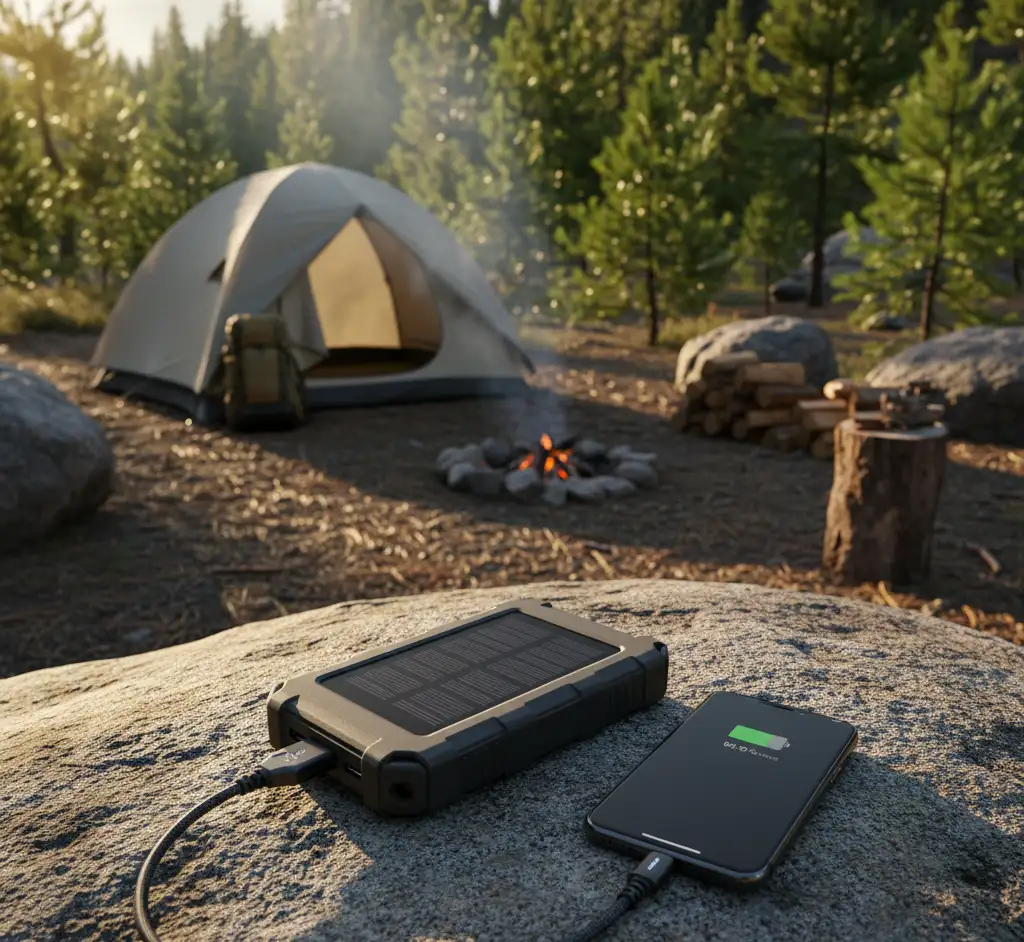
- Solar panels sound great but are mostly disappointing in the UK — limited sun and slow charging make them a backup at best, not a primary strategy. A good panel might produce 2,000mAh on a sunny UK day. On a cloudy day: almost nothing.
If you're serious about solar charging for camping, our sister site IWantSolar has detailed guides on portable solar panels and camping power setups.
Extending Phone Battery on Trail
Before investing in a bigger power bank, try these:
- Download offline maps before you leave — no data usage
- Screen brightness to minimum — the screen is the biggest drain
- Close background apps — especially social media
- Use a dedicated GPS instead of your phone — the Garmin eTrex SE lasts 168 hours
- Carry a watch for time instead of checking your phone
Ready to gear up?
Use our kit builder to get a complete packout list tailored to your trip type, terrain, and budget — with prices and buy links.