This page contains affiliate links. If you purchase through them we may earn a small commission at no extra cost to you. Learn more
Bikepacking Kit Guide: Essential Gear for UK Routes
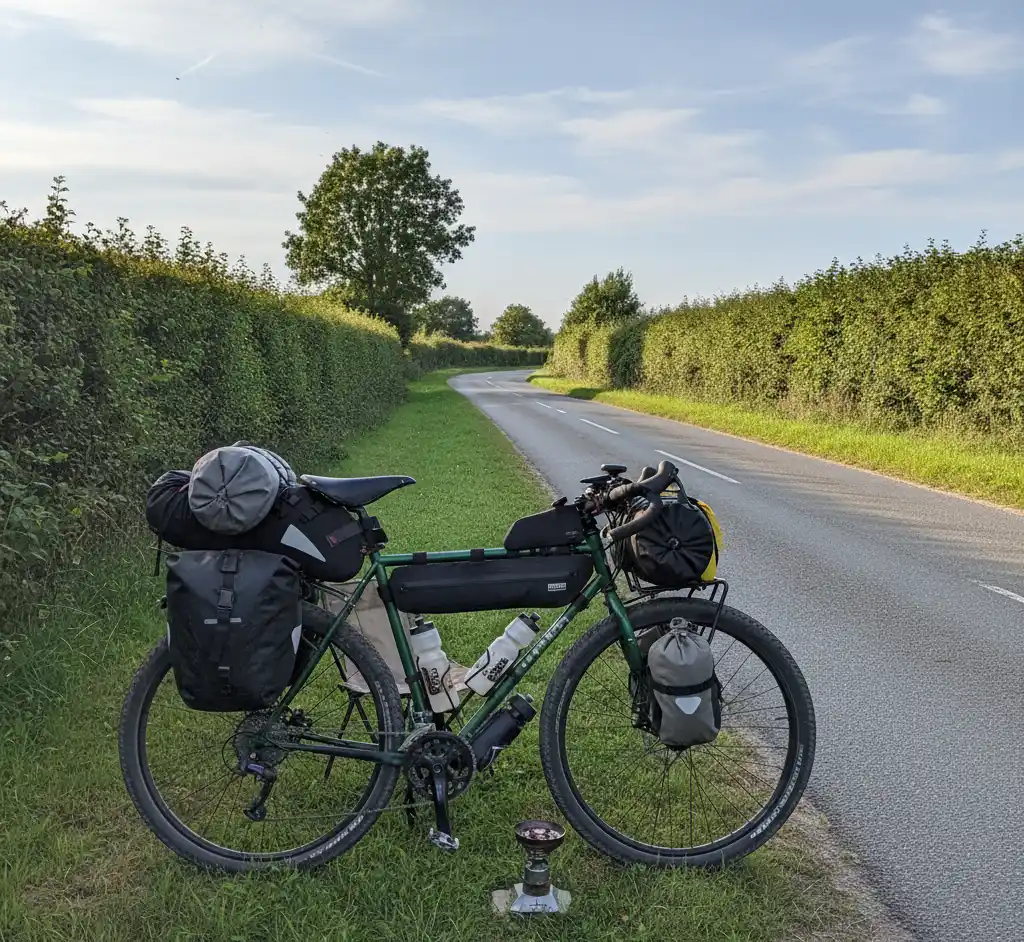
Bikepacking vs. Touring
Touring uses panniers and racks — heavy, stable, spacious. Bikepacking uses frame bags — lighter, more agile, limited space. This guide is for bikepacking.
Bikepacking Weight Distribution
| Bag | Contents | Target Weight |
|---|---|---|
| Handlebar roll | Tent/shelter | 1.5–2kg |
| Saddle bag | Sleeping bag + mat + clothes | 2–3kg |
| Frame bag | Food, tools, heavy items, water | 2–3kg |
| Top tube | Phone, snacks, money | 0.5kg |
| Total | 6–8.5kg |
Keep weight centred and low. Heavy items in the frame bag, bulky-but-light items in handlebar and saddle bags.
UK Bikepacking Routes to Try
- King Alfred's Way — 350km loop through southern England
- Badger Divide — Glasgow to Edinburgh off-road
- Pennine Bridleway — Derbyshire to Cumbria
- Lon Las Cymru — Cardiff to Holyhead through Wales
Key Product Recommendations
Alpkit Fuel Pod Frame Bag
Amazon UK3.5L
180g
Frame
Pros
- +Low centre of gravity
- +Well-made for the price
- +Waterproof
Cons
- −Fit depends on frame geometry
- −Limited volume
The best-value frame bag for bikepacking. British brand, fair price.
View dealAffiliate link — we may earn a small commission at no extra cost to you
TOAKS Titanium 750ml
Amazon UK103g
Titanium
750ml
Pros
- +103g complete kitchen
- +Doubles as mug
- +Indestructible
Cons
- −Hot spots
- −Small
The ultralight cooking solution for weight-conscious bikepackers.
View dealAffiliate link — we may earn a small commission at no extra cost to you
Thermarest NeoAir XLite
Amazon UK340g
4.2
Pros
- +340g packs tiny
- +R-value 4.2
- +Packs into frame bag
Cons
- −Expensive
- −Can puncture
The sleeping mat that fits into bikepacking setups where space is critical.
View dealAffiliate link — we may earn a small commission at no extra cost to you
Bikepacking Weight Distribution
The key to comfortable bikepacking: keep weight low and centred. Heavy items in the frame bag, medium items in the saddle bag, light items in the handlebar bag. Total kit weight target: under 8kg for overnight, under 12kg for multi-day.
UK Bikepacking Routes
Britain has outstanding bikepacking routes: the King Alfred Way (350km through southern England), the Highlands Trail (550km across Scotland), and numerous shorter routes through the Peak District, Lake District and Wales. Many follow established cycle paths and bridleways.
Building Your Kit Gradually
You do not need to buy everything at once. Start with shelter and sleep (the most critical items for comfort and safety), then add cooking, then upgrade clothing. Most experienced campers have built their kit over years, upgrading one item at a time as budget and experience allow.
Second-Hand Gear
Quality outdoor gear holds its value and lasts for years. Check eBay, Facebook Marketplace, Alpkit's Used Gear section, and outdoor gear swap meets for second-hand bargains. A used Osprey pack at half price is often better value than a new budget pack at full price. Inspect zips, seams, and waterproofing before buying.
Weight vs Comfort Balance
Every camping trip involves a weight-comfort trade-off. Car camping: maximise comfort, ignore weight. Weekend backpacking: balance both. Ultra-distance: minimise weight ruthlessly. Match your gear choices to your trip type. There is no virtue in carrying ultralight gear when you are car camping, and no sense carrying luxury items when you are hiking 25km per day.
Seasonal Adjustments
UK camping spans temperatures from -10C to 25C depending on season and altitude. No single kit covers everything perfectly. Build a modular system: core items (tent, pack, stove) that work year-round, plus seasonal additions (warmer bag, insulated mat, extra layers for winter; lighter bag, sun protection for summer). This is more efficient and cheaper than owning separate summer and winter kits.
Ready to gear up?
Use our kit builder to get a complete packout list tailored to your trip type, terrain, and budget — with prices and buy links.